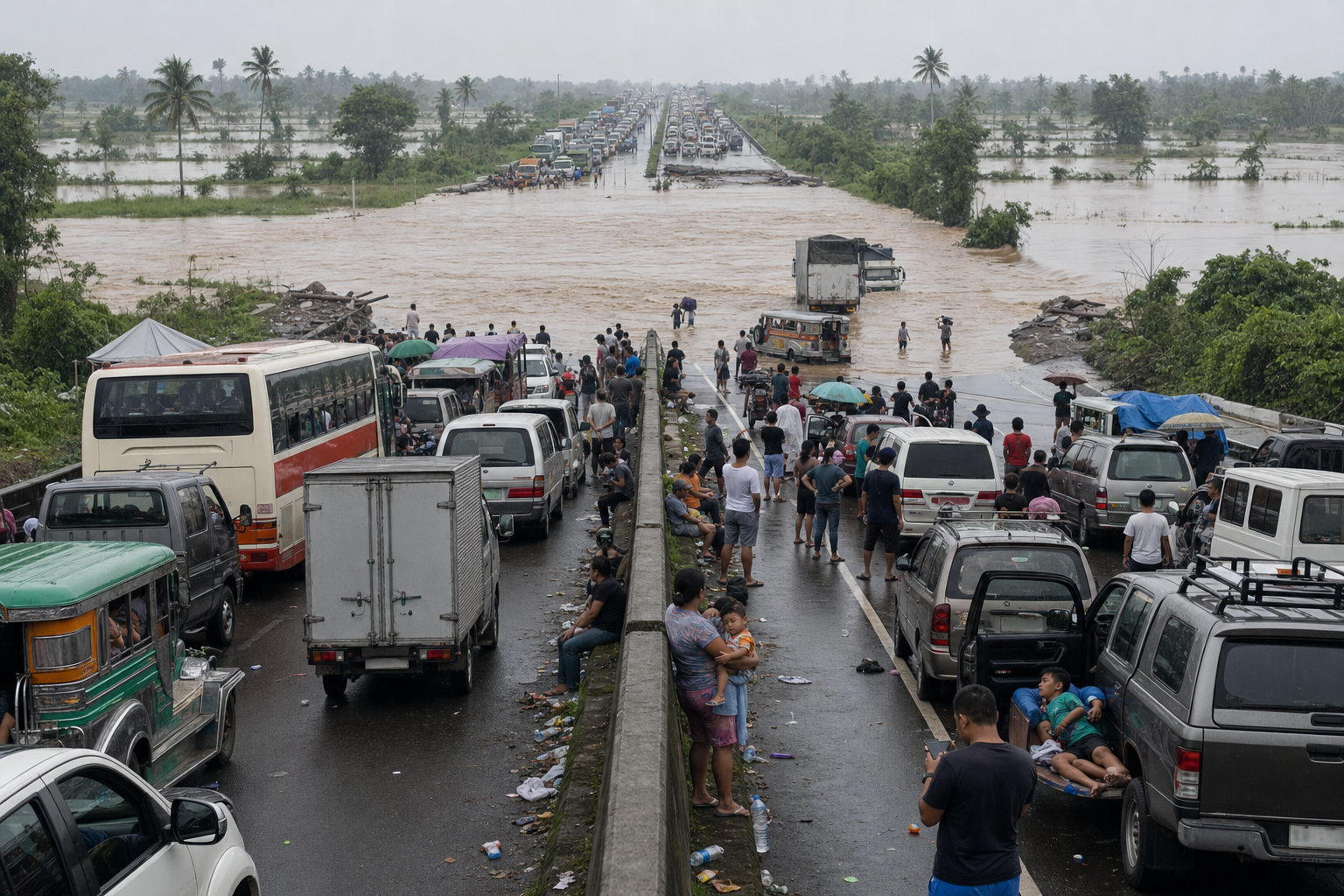
Packing a go-bag for a newborn or infant: the caregiver's checklist
What to pack beyond the standard go-bag when there's a baby under two in the house, and how to size it so one adult can carry both the child and the bag.
What you’ll be able to do
A barangay evacuation order, a sudden flood, or a strong earthquake doesn’t wait for a good time. If you’ve got a baby or toddler under two, you need a bag that is ready the moment someone says “lumikas na tayo.” This guide helps you build a go bag para sa baby that covers what a standard adult go-bag misses: sizing for a growing child, feeding, medicine, and how to carry both the bag and the baby without your hands being full.
A baby who is dry, fed and calm makes everything else easier. A bag that’s too heavy or oddly shaped makes everything harder.
What you need
Start from your household’s main go-bag, the one with water, a flashlight, a whistle, first aid basics and documents for the adults. This article covers what you add on top of that, specific to the baby.
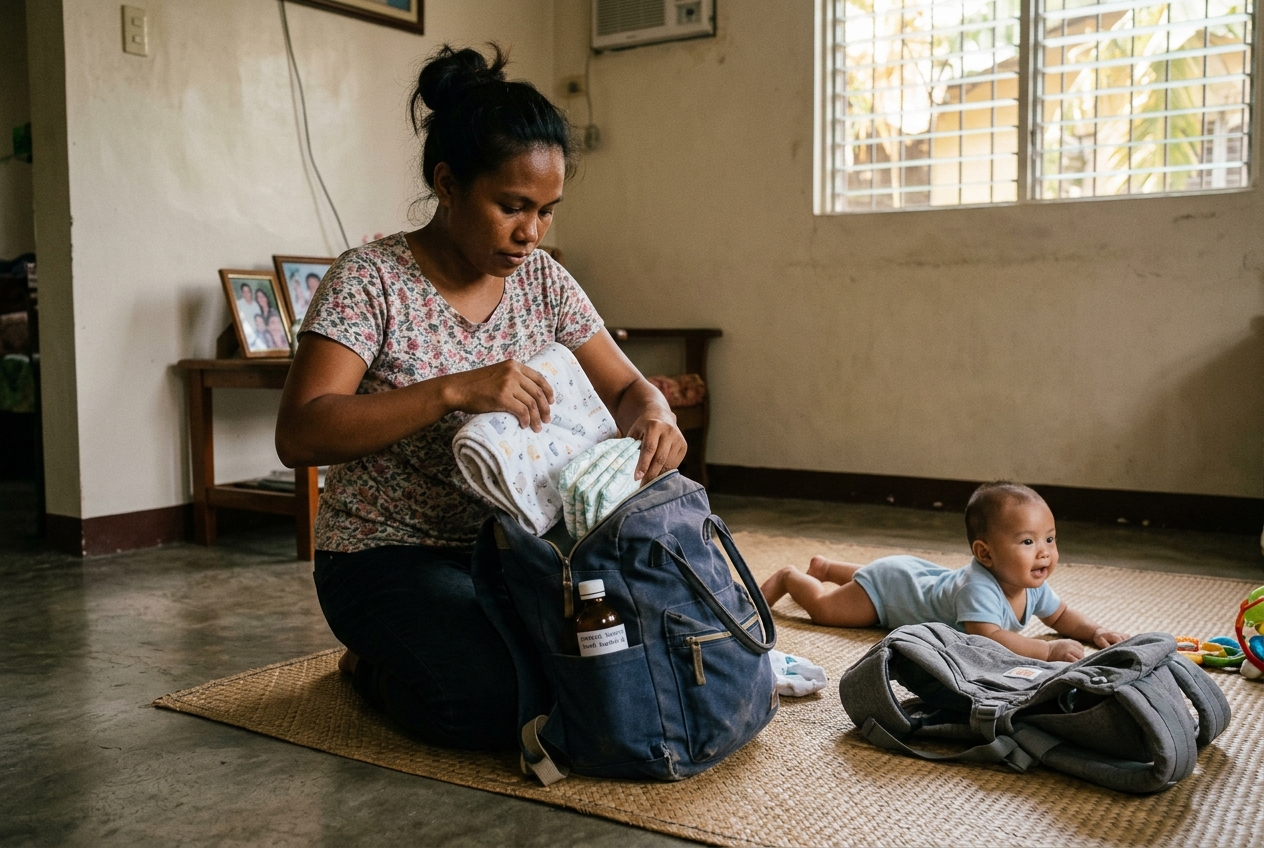
Diapers and wipes, sized for a few days. Pack enough diapers for about three days, plus a full pack of wipes. Diapers that fit now won’t fit in two months, so this is the item you’ll rotate most often.
A change of clothes for each day you’re packing for. Three to five full outfits, including socks and a hat if you’re expecting sun or air-conditioned evacuation centers. Infants soil clothes fast and you won’t have a washing machine at a covered court.
A thin blanket or swaddle. Evacuation centers are often crowded, noisy and either too warm or oddly drafty near open doors. A light blanket does double duty as a changing surface, a sunshade, or something familiar to calm the baby.
Formula and bottles, or breastfeeding supplies. If you formula-feed, pack about three days’ worth of formula in its original container, clean bottles, a bottle brush, and a way to sterilize.
A ziplock bag for cold-water sterilizing tablets works if that’s already your usual method. If you breastfeed, pack nursing covers, a hand pump if you use one, and breast pads instead. Questions about formula substitutes or feeding during a shortage belong with your pediatrician or your barangay health center, not with a go-bag checklist.
A few days of any prescribed infant medication, in the original labeled container. Keep the box or bottle with the label intact, not repacked into a pillbox. Evacuation center staff and any doctor you see there will need to know exactly what it is, and medicine out of its original container is hard to verify.
Don’t change the schedule or amount on your own. If you run low or have questions, ask your pediatrician or the barangay health center, not this checklist.
A baby carrier or sling. This is the item most households forget and the one you’ll be most grateful for. A soft structured carrier or simple wrap lets one adult carry the baby hands-free while also carrying the go-bag.
That matters when you’re climbing stairs, wading through standing water near a flooded street, or walking a long distance to higher ground. In search-and-rescue work, we learned never to trust a plan that needed both your hands free and busy at once; a parent carrying a child through a crowded, uneven evacuation route faces the same problem, and the carrier is what solves it.
Copies of the birth certificate and vaccination card, in a waterproof sleeve. A resealable plastic bag or a proper waterproof document pouch both work. You’ll need these for registering at the evacuation center, for any medical care, and for school or benefit paperwork later. Keep copies, not the only originals, if you can.
If you’re also assembling a bag for an older relative or someone with mobility limits, our go-bag guide for a bedbound or mobility-limited family covers that separately. And if you’re deciding what two adults without kids should pack, see how couples in the Philippines should pack a go bag.
The method
-
Pick the bag first. Choose one bag that one adult can carry on their back or across the body, leaving both arms free. A single backpack with a chest strap works better than a duffel, because a duffel fights you when you’re also holding a baby.
-
Weigh it loaded, then test-carry it. Pack the bag fully, then have the adult who’ll most likely carry it wear it while also holding the baby (or a stand-in weight for a dry run).
If they can’t comfortably climb a flight of stairs like that, the bag is too heavy or too bulky. Trim diaper count or swap a container for a lighter one before you trim anything medical.
-
Put the carrier where you can reach it without opening the bag. A side pocket or the top flap. In a real evacuation you may need to free your hands before you’ve had time to dig through the main compartment.
-
Separate feeding and medicine into their own small pouch. This keeps formula, bottles and medication together and easy to hand to a health worker or relative if you need to pass the baby to someone else briefly.
-
Put documents in the waterproof sleeve last, closest to your body. This keeps them from being the first thing soaked if the bag gets dropped near water or left out in rain.
-
Write the packing date on a sticky note inside the bag. This is your reminder for the rotation step below.
Variations & conditions
Newborn (0 to 6 months). Pack more diapers relative to clothes, since newborns soil clothes and diapers constantly. Favor the carrier over a stroller; most evacuation routes aren’t stroller-friendly once there’s rubble, mud or stairs involved.
Older infant or toddler (6 months to 2 years). Add a few familiar snacks if your child is already eating solids, plus a favorite small toy or comfort object. Toddlers walk, so pack sturdy shoes, not just socks, and expect the carrier to still matter when crowds or floodwater make walking unsafe.
Twins or two children close in age. Don’t try to fit two children’s worth of supplies into one bag carried by one adult. Split into two lighter bags carried by two adults where possible, each sized the same way.
High-rise or condo households. If you’re on a high floor and the lift is out during a brownout or earthquake, the carrier becomes essential, since you may be walking down many flights with your hands otherwise full. Keep the go-bag near the door, not in a storage room.
Low-lying or flood-prone barangay. Check PAGASA updates and your barangay’s advisories before a storm, and leave as soon as your barangay or local government calls for evacuation rather than waiting for water to rise. Keep diaper and formula supplies a little above the three-day baseline if you’re in an area that floods often, since blocked or flooded roads can delay deliveries and store restocking for more than a day.
Common mistakes
- Packing diapers and clothes sized for last month. Babies grow fast. A bag packed in January can hold the wrong diaper size by March.
- Repacking medicine into a generic container. Keep it in the original labeled bottle or box so anyone helping you can identify it quickly.
- Choosing a bag that needs two hands. If you can’t zip it shut, sling it on, and still hold the baby, it’s the wrong bag.
- Forgetting the carrier entirely. It’s easy to assume a stroller will do, but stairs, mud, debris and crowds often rule that out.
- Leaving documents loose in a folder. Paper gets wet fast in a flood evacuation; a proper waterproof sleeve is worth the ₱50 to ₱150 it usually costs at a bookstore or hardware stand.
- Never testing the bag’s weight. A bag that feels fine sitting on a shelf can feel very different after twenty minutes of walking with a baby on your hip.
How to rotate supplies as baby grows
Set a reminder every two months to open the bag and check three things: diaper size, clothes size, and formula or medicine expiry dates. Babies move up a diaper size faster than most adults expect, often every couple of months in the first year.
Swap out formula and diapers before they expire or before the size is clearly too small, rather than waiting until the bag is needed. Keep the older stock in daily use at home so nothing goes to waste; just replace what you take out.
Update the sticky note with the new packing date each time you rotate. This turns a one-time packing job into a simple habit, which is what actually keeps a go-bag useful a year or two later instead of outdated and forgotten in a closet.
How to practise safely
Do one practice evacuation walk around your block or building stairwell, carrying the loaded bag and the baby (or a stand-in weight) together. This tells you honestly whether the bag and carrier combination works for your body, your stairs and your distance to the evacuation center.
No equipment beyond what’s already in the bag is needed for this practice. The point isn’t to simulate a disaster; it’s to find out now, calmly, whether you can actually carry what you’ve packed.
The one thing to remember
Size the bag so one adult can carry the baby and the bag together, and check it every couple of months as the baby grows. Everything else in this checklist supports that one point.
Galing Gear shares general preparedness and first aid information based on sources such as the DOH, WHO and the Philippine Red Cross. It is not a diagnosis or prescription, and it does not replace a doctor, nurse, pharmacist or trained responder. We never give medicine doses. Follow the latest advice of the DOH, your local health office and your medicine’s label. In an emergency, call 911. Philippine Red Cross: 143. Mental health crisis (NCMH): 1553 (landline). When unsure, get checked.