

Philippine heat wave guide: staying safe without aircon
No aircon during a Philippine heat wave? Learn to read PAGASA's heat index and keep your family safe from heat exhaustion this summer.
The situation
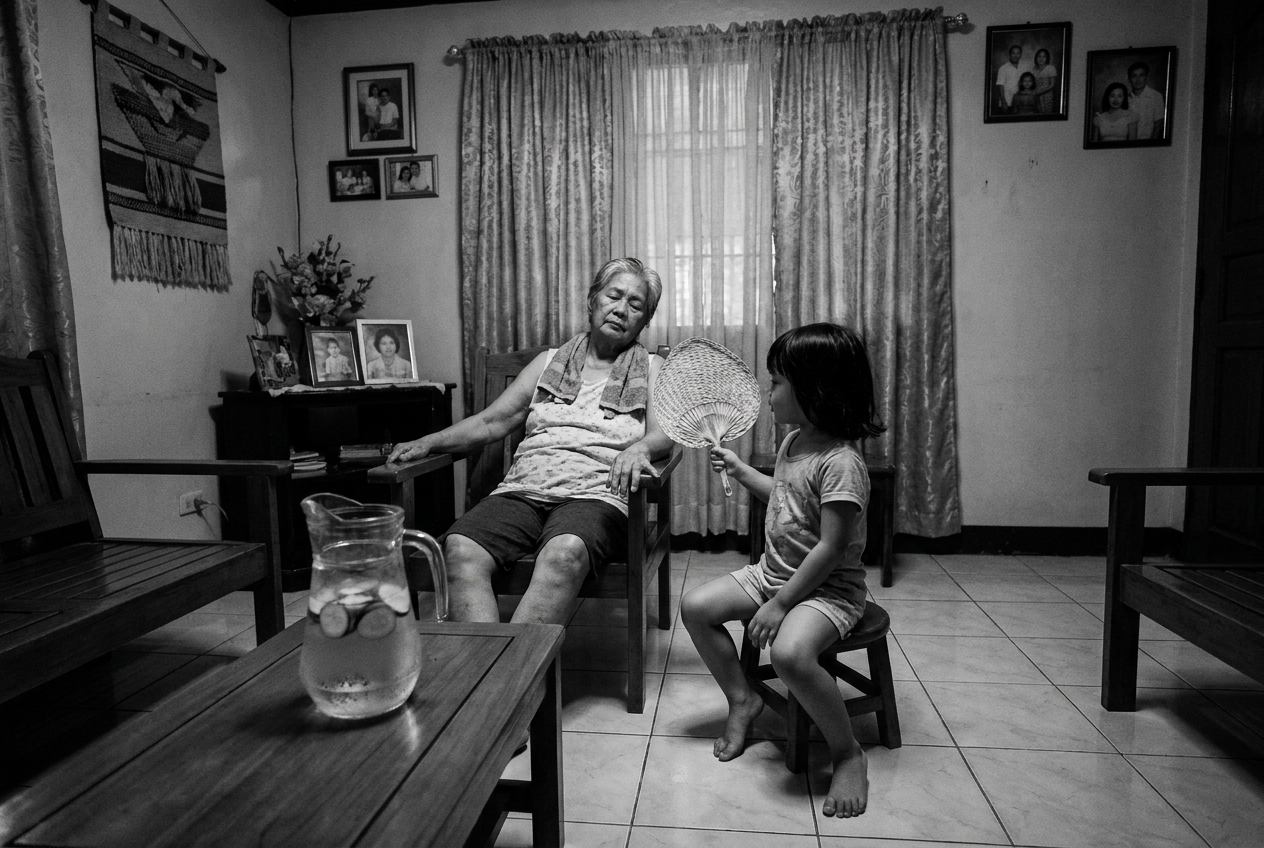
Summer in the Philippines has always been hot. What’s changed is how often it now crosses from “uncomfortable” into “dangerous.” El Niño years stack dry heat on top of our usual humidity, and the combination is what actually hurts people — not the raw temperature on the thermometer, but the heat index, which factors in humidity to show what the heat actually feels like on your body, and how hard your body has to work to cool itself.
I check the PAGASA heat index bulletin the same way I check the weather before a hike — not out of worry, just habit. It only takes a few seconds, and it tells you what kind of day you’re actually walking into.
PAGASA classifies heat index like this:
- 27–32°C — Caution. Fatigue is possible with prolonged activity.
- 33–41°C — Extreme Caution. Heat cramps and heat exhaustion become possible.
- 42–51°C — Danger. Heat cramps and heat exhaustion are likely; heat stroke is possible with continued exposure or physical activity.
- 52°C and above — Extreme Danger. Heat stroke is imminent.
Many parts of the country sit in the Caution or Extreme Caution range most summer afternoons. But during a strong El Niño, we’ve seen barangays hit the Danger bracket for days in a row — and that’s when ordinary households, especially ones without aircon, start to feel real strain.
This isn’t a typhoon. Nobody boards up windows for heat. That’s exactly why it catches families off guard.
What actually matters
Strip away the noise and three things decide whether a hot day stays merely uncomfortable or turns dangerous:
- Airflow. Moving air evaporates sweat, and evaporation is how your body actually cools down. A fan doesn’t lower room temperature — it speeds up evaporation. That’s still useful, but it stops being useful once humidity gets very high and there’s nowhere for the moisture to go.
- Hydration, steady and early. Waiting until you’re thirsty means you’re already behind. Heat depletes water and electrolytes together — replacing only one is why “pero umiinom naman ako ng tubig” people still end up dizzy.
- Who’s most at risk. Heat doesn’t hit everyone in a household the same way. Infants, the elderly, pregnant women, and anyone with heart or kidney conditions lose their margin for error much faster than a healthy adult does.
Everything else — cooling towels, timing of chores, what to eat — is just tactics in service of those three things.
What to do (and what not to)
Read the bulletin, make it routine. Check PAGASA’s heat index update the way you’d check for a storm signal. If your area is forecast Danger level, plan the day around it: heavy chores early morning or after sunset, outdoor errands avoided between 11 a.m. and 3 p.m.
Work with your house, not against it. Open windows on opposite sides of the house early morning and at night to flush out trapped heat, then close curtains or blinds on the sun-facing side once the sun is up. A dark curtain blocking direct sun does more for a room than people expect. If you’re on a high floor of a building and the lift is out, understand that heat rises — the top floor of an un-airconded building can run several degrees hotter than the ground floor by afternoon.
Cool the person, not just the room. A damp towel on the back of the neck, wrists, or inside the elbows cools blood close to the skin faster than most people realize. A lukewarm shower (not ice-cold — that just makes your body work harder) brings core temperature down efficiently. Wet feet in a basin works when a shower isn’t practical.
Hydrate on a schedule, not a feeling. Small amounts often, rather than one big glass when you remember. If you’re sweating heavily all day, use an ORS sachet mixed exactly as the packet says. If someone stays very weak or keeps vomiting, take them to the health center.
Eat lighter, eat wetter. Fruit high in water content — watermelon, melon, cucumber — helps more than a heavy rice meal at midday. Save the heavier cooking for cooler hours; a hot kitchen just adds another heat source to the house.
Don’t push through it. The instinct to “tiyaga lang” through housework or errands during a Danger-level afternoon is exactly the instinct that leads to heat exhaustion. No task is worth doing at 2 p.m. that can be done at 6 a.m. instead.
The brownout-during-heatwave double threat
This is the scenario that actually worries me most, because it’s common and it’s underestimated: a heat wave that coincides with a power outage. Grid demand spikes hardest exactly when everyone’s aircon and fans are running full blast, and that’s precisely when brownouts tend to happen. Suddenly the one cooling tool most households actually rely on — the electric fan — goes silent, right when the heat index is at its worst.
Plan for this specifically, not generically:
- Keep a battery or hand-crank fan as backup — not a luxury item, just a plan B for the hours the grid drops out.
- Keep a stock of frozen water bottles or ice packs in the freezer at all times during summer, not just when a brownout is announced. They double as instant cooling packs and as slow-melting drinking water.
- Know the coolest room in your house without power — usually a ground-floor room away from direct sun, tile floor rather than carpet — and move vulnerable family members there first.
- If the outage stretches on, a battery pack that can run a small USB fan for a few hours is worth far more during a heat wave than the same battery used for charging phones.
A power outage during typhoon season is an inconvenience. A power outage during a Danger-level heat day is a health risk, especially for infants and the elderly. Treat it accordingly.
The gear that helps
Nothing here needs to be complicated or expensive. A few categories genuinely earn their keep during summer:
- Battery or rechargeable fans for the hours the grid goes down — check our power outage guide for what else belongs in that same kit.
- A reliable oral rehydration supply — sachets store for years and take up almost no space, worth having well before summer starts.
- A basic digital thermometer for checking on anyone showing signs of overheating, particularly children and the elderly.
- Cooling towels or a stack of plain hand towels kept ready, plus a spray bottle for a quick mist when a full towel soak isn’t practical.
- A window fan or cross-ventilation setup planned before the heat arrives, not improvised during it.
We don’t chase gimmicky “cooling gadgets.” Most of what works in a Filipino home during a heat wave is unglamorous: water, airflow, shade, and timing.
Common mistakes
Treating heat like a background condition instead of a forecastable event. PAGASA’s heat index bulletin exists precisely so you don’t have to guess. Check it.
Relying entirely on one electric fan with no backup plan. Fine on a normal day, a real gap the moment a brownout lands on a Danger-level afternoon.
Giving only plain water during heavy sweating. It feels like the responsible choice, but electrolytes matter as much as volume once you’re sweating for hours.
Underestimating pregnant women and the elderly. Both groups regulate body temperature less efficiently, and symptoms can escalate faster than in a healthy adult. Check on them specifically, don’t assume they’ll say something.
Waiting to see if it “gets better on its own.” Confusion, hot dry skin, a very high body temperature, or someone who stops sweating despite the heat are not signs to wait out.
If someone shows heat stroke symptoms
This is the one point in this guide I want to state plainly, without hedging: heat stroke is a medical emergency. It is not the same as ordinary heat exhaustion, and it does not resolve with just water and rest.
Watch for confusion, slurred speech, hot and dry (or unexpectedly clammy) skin, a very high body temperature, rapid pulse, or loss of consciousness. If you see this:
- Call 911 immediately.
- While you wait, give first aid as PAGASA advises: move the person to shade, lay them down with legs raised, and give cool water if they are awake; remove extra clothing, wet the skin and fan them; put ice on the armpits, wrists, ankles and groin.
- Take them to a hospital right away if help hasn’t arrived.
- Keep watching them closely. Heat stroke can worsen quickly.
No amount of gear replaces getting a person to proper medical care fast. The towels and fans in this guide are what you do in the minutes before and while help is on the way — not a substitute for it.
The one thing to remember
Heat waves don’t announce themselves the way a typhoon does — no signal number, no warning to board up windows. That’s exactly why they need their own quiet discipline: check the bulletin, plan the hot hours around the cool ones, keep water and airflow ahead of need instead of chasing them after. None of it is complicated. It just has to become habit before the Danger days arrive, not during them.
Galing Gear shares general preparedness and first aid information based on sources such as the DOH, WHO and the Philippine Red Cross. It is not a diagnosis or prescription, and it does not replace a doctor, nurse, pharmacist or trained responder. We never give medicine doses. Follow the latest advice of the DOH, your local health office and your medicine’s label. In an emergency, call 911. Philippine Red Cross: 143. Mental health crisis (NCMH): 1553 (landline). When unsure, get checked.