Floodwater to drinking water: pre-filter, treat, store
How to make floodwater safe to drink after a typhoon: pre-filter, treat with purification tablets as labeled or by boiling per DOH guidance, then store it right so it lasts.
What you’ll be able to do — and why it matters
After a big typhoon, the tap often keeps running. That’s the trap. The water coming out of the pipe can look normal and still not be safe, because floodwater gets into the distribution system through broken lines, low pressure, and submerged valves. PAGASA will tell you the storm has passed. It won’t tell you the water utility is still flushing sediment and sewage out of its own pipes — that can take days, not hours.
This guide walks you through a simple three-step sequence: pre-filter, treat, store. It’s the order that matters. Skip a step and you’re either wasting tablets on mud or storing treated water in a way that lets it go bad again. None of this is complicated, and none of it needs electricity. That’s the point — it has to work when the power and the water pressure are both unreliable.
What you need
You don’t need much, and none of it is expensive. Buy it before typhoon season, not during.
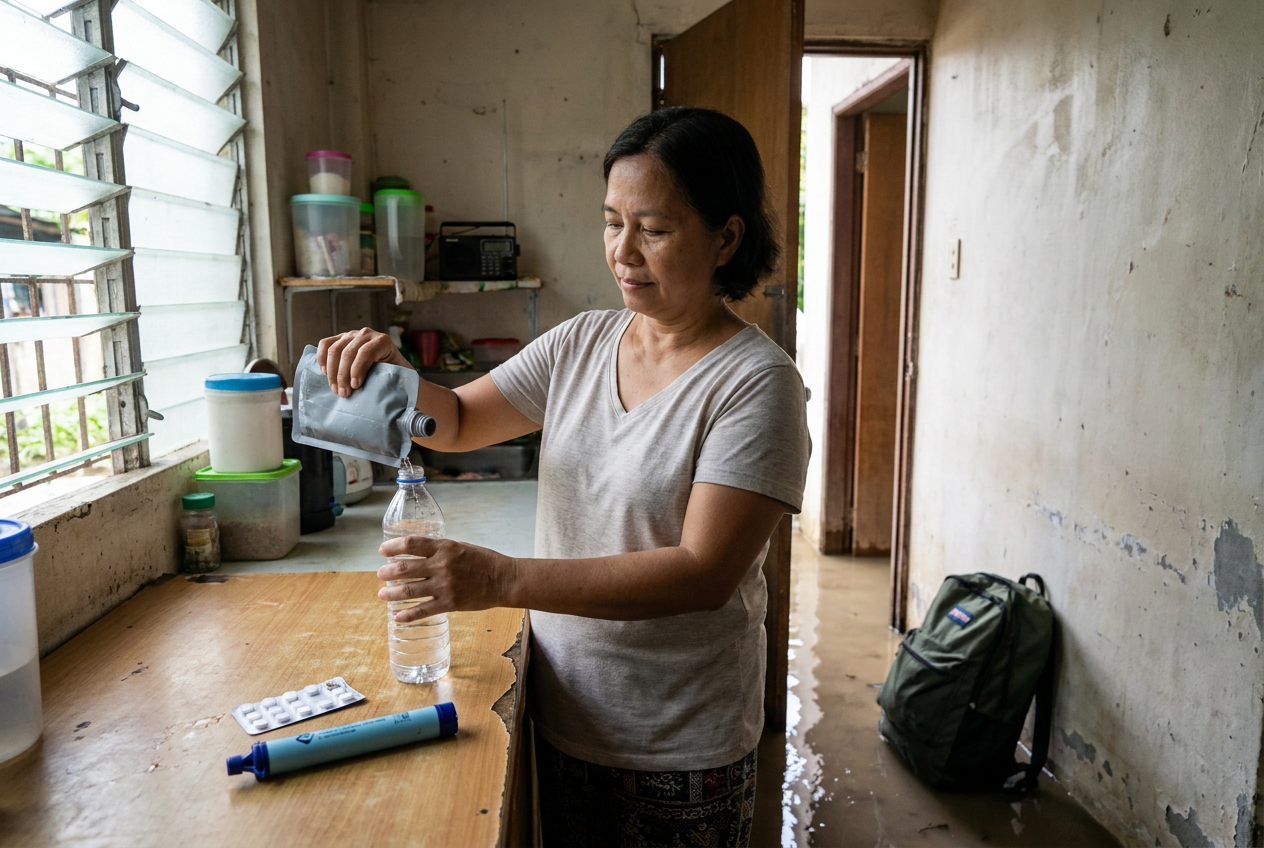
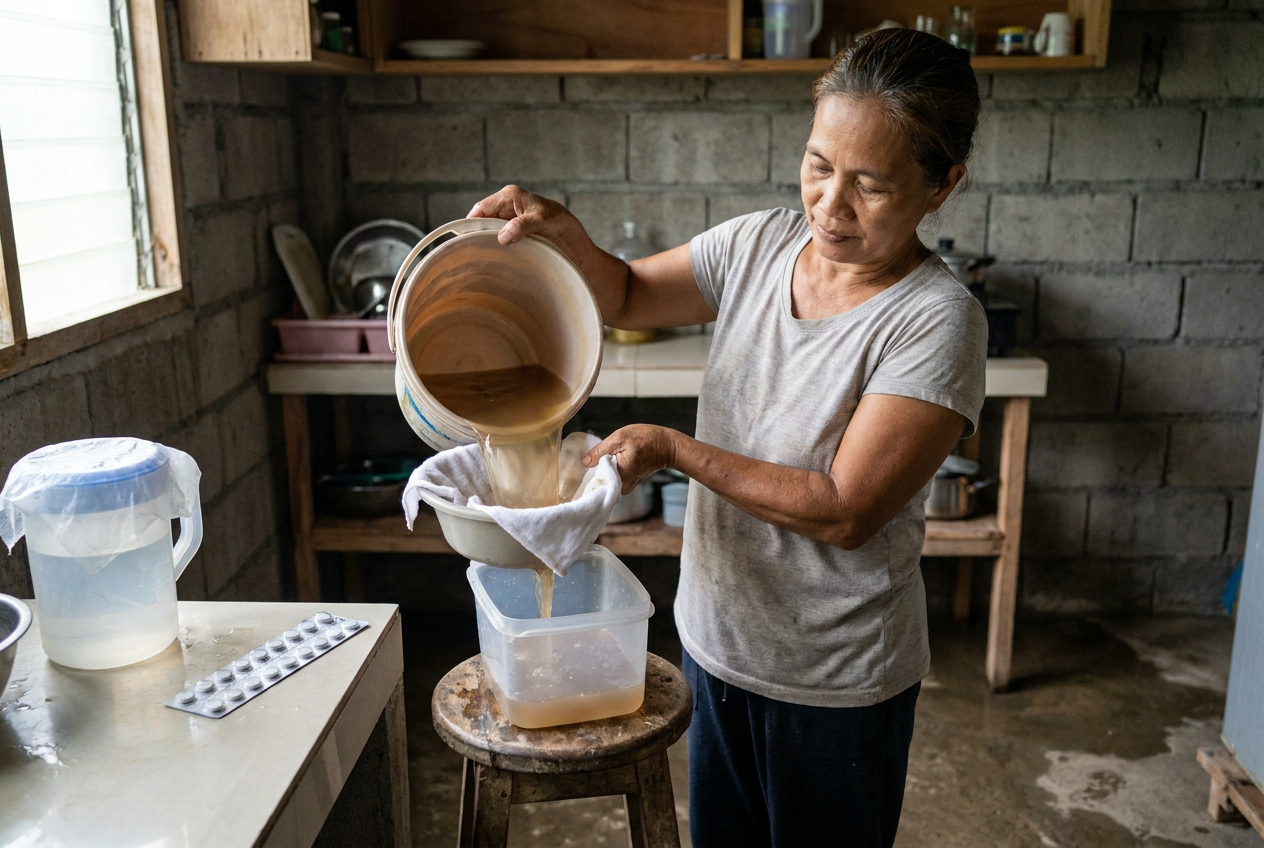
- A pre-filter. This can be as simple as a clean cloth, a coffee filter, or several layers of fine mesh over the mouth of a container. Its only job is to take out visible dirt, silt, and floating debris — it doesn’t purify anything.
- Purification tablets. Aquatabs (chlorine-based) are the common one here, sold in strips or tubs for around ₱200–₱350 depending on tablet count and strength. They’re labeled to address bacteria, viruses, and most parasites that cause diarrhea and typhoid — always use them exactly as the packet instructs.
- A way to boil water as backup. A gas stove, camping stove, or butane burner. If the brownout runs alongside the flood, this is your fallback when you’re out of tablets.
- Food-grade storage containers. Covered jerry cans or drums, ₱300–₱600 depending on size, ideally ones sold specifically for water rather than repurposed containers that held chemicals or paint.
All three items show up on Lazada and Shopee. Buy from sellers with a real storefront and reviews, not the lowest-priced listing with no brand name — there are counterfeit purification tablets in circulation that either underdose or don’t dissolve properly. If a listing has no expiration date printed on the tablet strip in photos, skip it.
The method
Step 1 — Pre-filter first, always. If the water is cloudy, muddy, or has visible particles, pour it through cloth or a coffee filter into a clean container before you do anything else. Let it sit for 30 minutes to an hour afterward so heavier sediment settles to the bottom, then pour off the clearer water on top, leaving the sediment behind. This step doesn’t make water safe — it makes your next step actually work. Chlorine tablets struggle in turbid water because the chlorine binds to suspended particles instead of killing pathogens.
Step 2 — Treat what you’ve pre-filtered. For purification tablets like Aquatabs, follow the dosage and contact time printed on your specific product’s label — not a number from memory, and not what worked for a different brand or strength. Different products and strengths are mixed differently, and the label is written for the tablet in your hand. Drop it in, stir, and wait the full contact time stated on the label before drinking.
If you don’t have tablets, bring the pre-filtered water to a rolling boil for 2 minutes, then let it cool with the lid on before pouring it into a clean, covered container to drink or store. This is the boiling guidance from the Department of Health — don’t shorten it to save gas.
Step 3 — Store it properly. Move treated water into a food-grade, covered container. Keep it elevated off the floor — floodwater can still be sitting or seeping at ground level even after the rain stops, and a container sitting in it can get contaminated again through a loose lid or a hairline crack. Keep it out of direct sunlight, since heat and UV degrade the residual chlorine faster and encourage algae growth in clear containers. Label the container with the date treated. Chlorinated water is generally good for a few days; boiled water should be used within a day if it’s not sealed and refrigerated.
Variations & conditions
Very turbid or muddy water. One pass through cloth often isn’t enough after a major flood. Filter twice, or let it settle overnight in a covered container before you filter and treat. Don’t rush this — it’s the step people skip when they’re tired and thirsty, and it’s the step that determines whether the tablets actually work.
No stove, no tablets. If you’re caught without either, prioritize getting bottled water or a relief distribution point over drinking untreated floodwater, even briefly boiled water is far safer than nothing, but skipping treatment entirely should be a last resort, not a plan.
Suspected chemical or fuel contamination. This is the hard limit of both tablets and boiling, and it’s worth saying plainly: neither removes heavy metals, fuel, pesticides, or industrial runoff. If floodwater smells like gasoline, has an oily sheen, or came from an area near a flooded gas station, junk shop, or industrial site, don’t try to treat it for drinking at all. Source drinking water elsewhere until the local water district or Department of Health confirms the supply is safe.
Extended outages. In search-and-rescue we never built a plan around one method working — the water plan that held up in the field was the one with a backup that didn’t depend on the first method’s ingredients running out. Tablets run out. Gas runs out eventually too, but slower, and a stove and a lighter are things most households already have. Keep both options live rather than betting the household on one.
Common mistakes
- Treating without pre-filtering. Dropping a tablet into a jug of muddy water and expecting it to work the way it does on clear water. It doesn’t — the chlorine gets used up on the dirt.
- Not waiting out the full contact time. The wait printed on the label feels long when you’re thirsty. Drinking early means the chlorine hasn’t finished its job.
- Storing treated water uncovered or on a wet floor. This undoes everything you just did. Floodwater residue on the floor can wick into a loosely sealed container.
- Assuming the tap is safe once the rain stops. Water utilities in flood-affected areas often issue a boil-water advisory that lasts days after the storm has cleared. Check for local announcements from your barangay or water district before assuming normal service means safe service.
- Buying tablets during the emergency instead of before it. Prices go up and stock runs out fast on Lazada and Shopee once a storm is in the news. Buy before the PAGASA bulletins start naming a system headed toward the country, not after.
How to practise safely
Do a dry run before you actually need it. Fill a container with tap water, deliberately muddy a portion of it with garden soil, and practice the full sequence — filter, settle, treat, store — so the steps are familiar under normal conditions rather than during a brownout with a fussy toddler and low battery on your phone. Time how long the settling and contact steps actually take in your own kitchen. Check your tablet strip’s expiration date every typhoon season and replace it if it’s aging out, chlorine tablets lose potency over time, especially in humid storage. None of this replaces good judgment about when water simply isn’t worth the risk — no filter or tablet replaces sourcing clean water when you have the choice.
For the wider picture on getting a household through the outage itself, see our guides on flood ready and typhoon season preparation, and our main clean water hub for related gear notes.
The one thing to remember
Pre-filter, then treat exactly as your tablet’s label says or boil for the full 2 minutes, then store covered and off the floor — skip the order and you’re just wasting tablets on mud or risking water that never got clean in the first place.
Galing Gear shares general preparedness and first aid information based on sources such as the DOH, WHO and the Philippine Red Cross. It is not a diagnosis or prescription, and it does not replace a doctor, nurse, pharmacist or trained responder. We never give medicine doses. Follow the latest advice of the DOH, your local health office and your medicine’s label. In an emergency, call 911. Philippine Red Cross: 143. Mental health crisis (NCMH): 1553 (landline). When unsure, get checked.