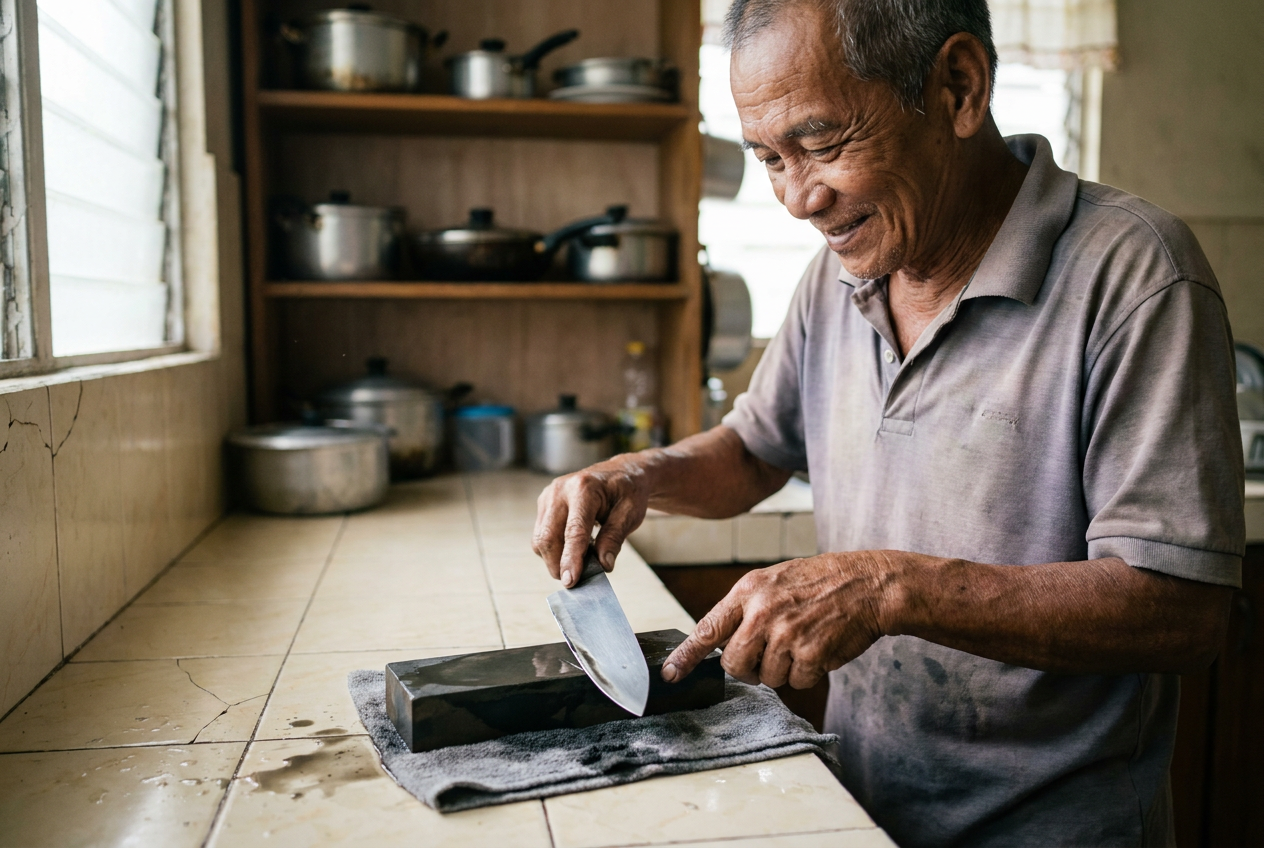
Carrying a pocket knife legally in the Philippines
Carrying a pocket knife or multitool in the Philippines? Here's what national law, local ordinances, and everyday situations actually allow.
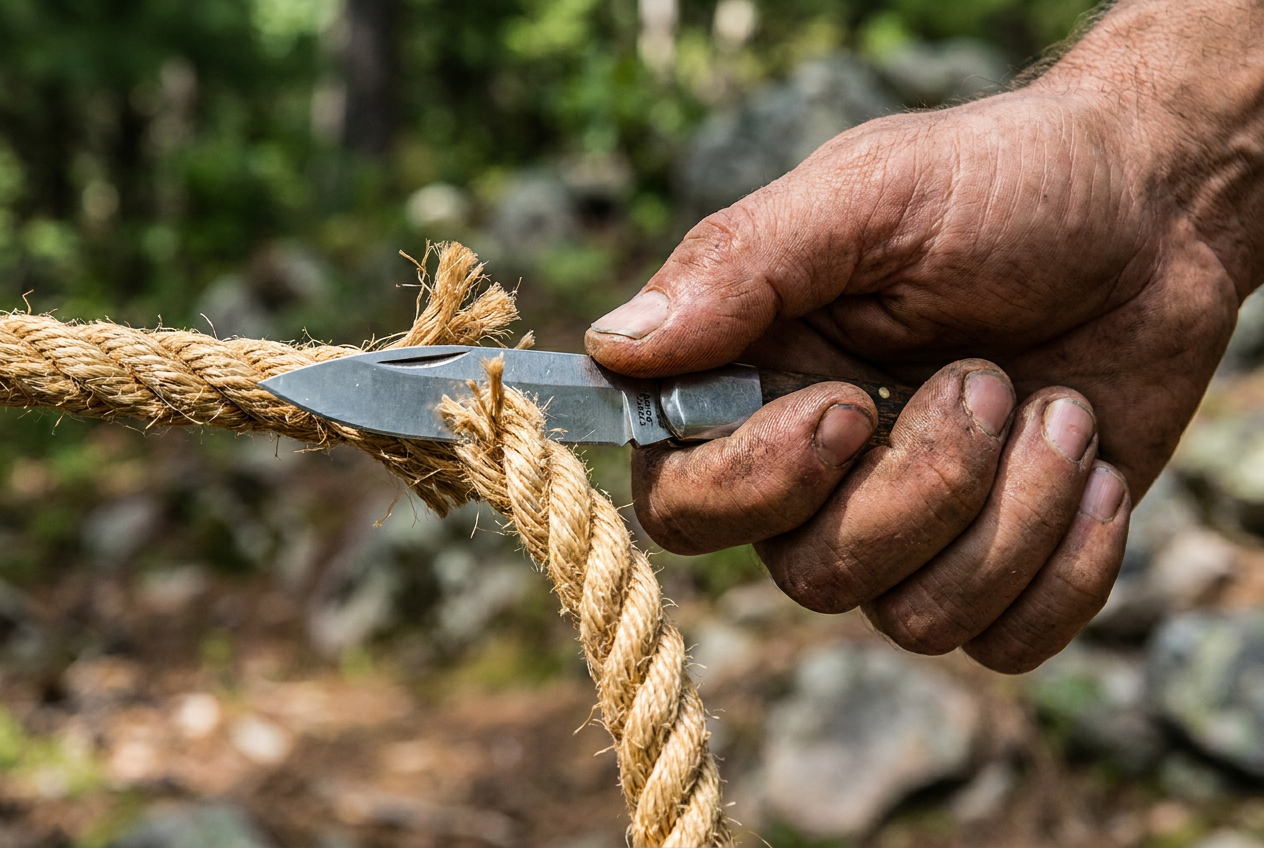
Let me say this clearly before anything else: I am not a lawyer, and this is not legal advice. This is the same kind of conversation I’d have with a neighbor who messaged me asking, “Puwede ko bang dalhin ’yong maliit kong knife papunta ng trabaho?” I’ll tell you what I understand about how this works in general, but for anything specific to your situation, ask your local PNP station or check your city or municipal ordinance. The rules are not written in one tidy place, and that’s actually the first thing worth understanding.
The situation
A lot of us carry a small folding knife or a multitool with a blade in it — in the bag, in the glove compartment, clipped inside a pocket. Not for trouble. For cutting rope, opening boxes, slicing food, freeing a seatbelt, trimming a bandage. It’s a tool, the same category as a screwdriver or a pair of pliers.
But “knife” is also a word that makes security guards, barangay tanods, and airport screeners pay attention, and for good reason — the same object that opens your lunch can also be a weapon in the wrong hands or the wrong moment. So the law treats bladed instruments carefully, and it does it in layers rather than one single rulebook.
There’s national-level law that deals with deadly weapons in general terms — carrying something that can be used to kill or injure, in a manner or place that suggests intent to use it as a weapon. Then there’s a whole separate layer of local ordinances — city and municipal rules that specifically mention bladed weapons, curfews, and peace-and-order concerns, and these vary from one LGU to the next. Quezon City’s rules aren’t necessarily Manila’s, and a small town in Bohol may have its own barangay-level ordinance nobody outside it has heard of. On top of that, there are situational rules: gun bans around elections that sometimes extend to bladed weapons, and screening rules at airports, ports, malls, and government buildings that apply regardless of what the general law says, because a private or secured venue can simply say “no blades past this point.”
What all of this adds up to is: legality isn’t just about the knife. It’s about the knife, plus where you are, plus what you’re doing, plus how it looks to the person who just saw it.
What actually matters
Four things decide which side of the line you’re on, and they matter far more than the brand or price of the knife.
Blade type. A small folding utility knife reads very differently from a fixed-blade knife or anything shaped like a combat weapon. Folding, plain, and functional is a different conversation than fixed and aggressive-looking, even if both could technically cut the same rope.
Intent. The law generally cares about whether you were carrying something as a tool or as a weapon. A knife on your belt in a work uniform, clearly used for your trade, is not the same as a knife tucked into a waistband in a way meant to be ready for a fight.
Where you are. A pocket knife in your bag on a normal weekday is a different situation than the same knife at a school gate, a courthouse, or the security line at NAIA. Screened venues get to set their own rules on top of whatever the general law says, and they usually just say no.
How it’s carried. Sheathed, closed, out of sight, and not brandished is the baseline that keeps a utility knife looking like a utility knife. A blade held open, or displayed, or waved around — even as a joke — changes how everyone around you reads the situation, including the police.
What to do
- Keep it closed and out of sight. A folded knife in a pocket, pouch, or bag is not making a statement. An open blade in your hand in public is.
- Know your LGU’s rules if you carry regularly. If you commute daily through a particular city or barangay, it’s worth a five-minute check of that LGU’s ordinance, or a quick, polite question at your local PNP station. Rules genuinely differ by city.
- Carry something plain. A basic folding utility or pocket knife does the job and doesn’t invite a second look. Anything styled to look tactical or combat-ready draws more scrutiny for no real functional gain — we’ve written separately about why a plain utility knife beats a tactical knife, and that advice applies here too, not just as a buying tip but as a legal-comfort one.
- Keep it tied to a clear, ordinary use. Work tools, food prep, emergency kit, car kit — these are all reasonable, explainable reasons to have one.
- Declare it if asked. If a guard or officer asks whether you’re carrying anything sharp, say so plainly. Volunteering the information almost always goes better than being found with it.
What not to do
- Don’t carry a fixed blade in public without a clear reason. A folding knife you can close and pocket looks and behaves differently, legally and socially, from a sheathed fixed blade worn openly.
- Don’t carry anything designed to look like a weapon. Combat-styled blades, anything with aggressive tactical branding, anything that looks like it belongs in a movie rather than a toolbox — this is exactly the category to avoid for EDC, regardless of how “cool” it looks online.
- Don’t brandish it, ever, even as a joke. Taking it out to show a friend, flipping it open in a queue, resting a hand on it while annoyed at someone — all of these can turn a legal utility knife into a reportable incident.
- Don’t bring it near schools, government offices, or transport security points. These are near-universal no-go zones for blades of any kind, tool or otherwise. If your day’s route includes one of these, plan to leave the knife at home or in the car.
What you can generally do
In most everyday, non-secured contexts — home, street, market, office without a metal detector, your own vehicle — carrying a small folding utility knife for work, food prep, or preparedness reasons is broadly understood as normal and legal. This is the same category of object as a pocket screwdriver or a pair of scissors in your bag: unremarkable, provided it stays a tool and not a display.
What you can’t do
- Carry it concealed with the intent to use it against another person. Intent changes everything, and once a blade is framed as a weapon, national provisions on deadly weapons come into play.
- Bring any blade into a secured or screened venue — airports, ports, courts, many government buildings, malls that screen bags, some schools and stadiums. These venues can and do confiscate knives regardless of size or purpose, and getting them back is not guaranteed.
- Carry during declared gun-ban periods or heightened security windows if the specific declaration extends to bladed weapons, which election-period gun bans sometimes do. These are announced by local authorities and the PNP, and it’s worth checking rather than assuming your everyday carry is automatically exempt.
If you’re stopped and questioned
If a barangay tanod, mall guard, or police officer asks about the knife, the moment to stay calm is exactly then, not after.
Stay polite. State plainly what it is and why you have it — “Pocket knife po, gamit sa trabaho” or “Panggupit lang ng lubid, preparedness kit ko po.” Comply if asked to store it, surrender it temporarily, or leave it at a front desk. Don’t argue about your rights in the moment, and don’t reach for it to demonstrate anything. In search-and-rescue work, we were trained that the calmest person in a tense moment is the one who controls how it ends — the same principle applies here. A five-minute polite conversation with a guard is a non-event. An argument is how a non-event becomes a report.
The gear that helps
For everyday carry and disaster preparedness, the knife that earns its place is boring by design: a small folding utility knife or a multitool with a modest blade, nothing branded as tactical, nothing that needs explaining twice. We’ve covered the buying side of this in our pocket utility knives for everyday carry guide, and the reasoning behind picking plain over tactical in why a plain utility knife beats a tactical knife. This article is the legal companion to those — the “where you stand” piece, not the “what to buy” piece. If you’re building out a go bag or thinking through general EDC, the knife question sits alongside how you handle documents and cash — small, boring, legal items that matter more than they look like they should.
Common mistakes
The most common mistake I see is people buying a knife that looks aggressive because it looks “more prepared,” when a plain folding blade does the same cutting job with none of the social or legal friction. The second is forgetting the knife is in the bag entirely — until it beeps at a mall scanner or gets flagged at a building entrance, at which point it becomes a bigger conversation than it needed to be. The third is arguing with security staff about whether a rule “really” applies — venues that screen bags get to set their own policy regardless of what you believe the general law allows, and arguing rarely changes the outcome, it just extends it.
The one thing to remember
A small utility knife earns its place in a bag the same way a headlamp or a first aid kit does — cutting a jammed seatbelt strap, freeing rope after a storm, opening food packaging when the power’s out, cutting a bandage or torn clothing in a first aid moment. That’s the whole case for carrying one, and it’s a strong case on its own, with nothing tactical or self-defense-flavored needed to justify it. Carry it plain, carry it closed, carry it for a reason you could explain to a tanod in one sentence — and check your own city’s ordinance if you carry it often, because the details genuinely vary by LGU. That’s the whole discipline. Nothing here replaces actually asking your local PNP station if you have a specific concern; this is general orientation, not a legal opinion on your situation.