Utility knife vs tactical knife: best EDC for PH emergencies
Utility knife vs tactical knife: why plain-edge, full-tang blades work better for PH typhoon and flood emergencies than combat-styled knives.

The situation
Every wet season, somewhere in my feed, a “survival knife” ad shows up — serrated spine, spike tip, finger holes in the handle, maybe a glass-breaker screwed onto the butt end. It looks like it was built for something serious. And that is exactly the problem: it was built to look serious, not to work.
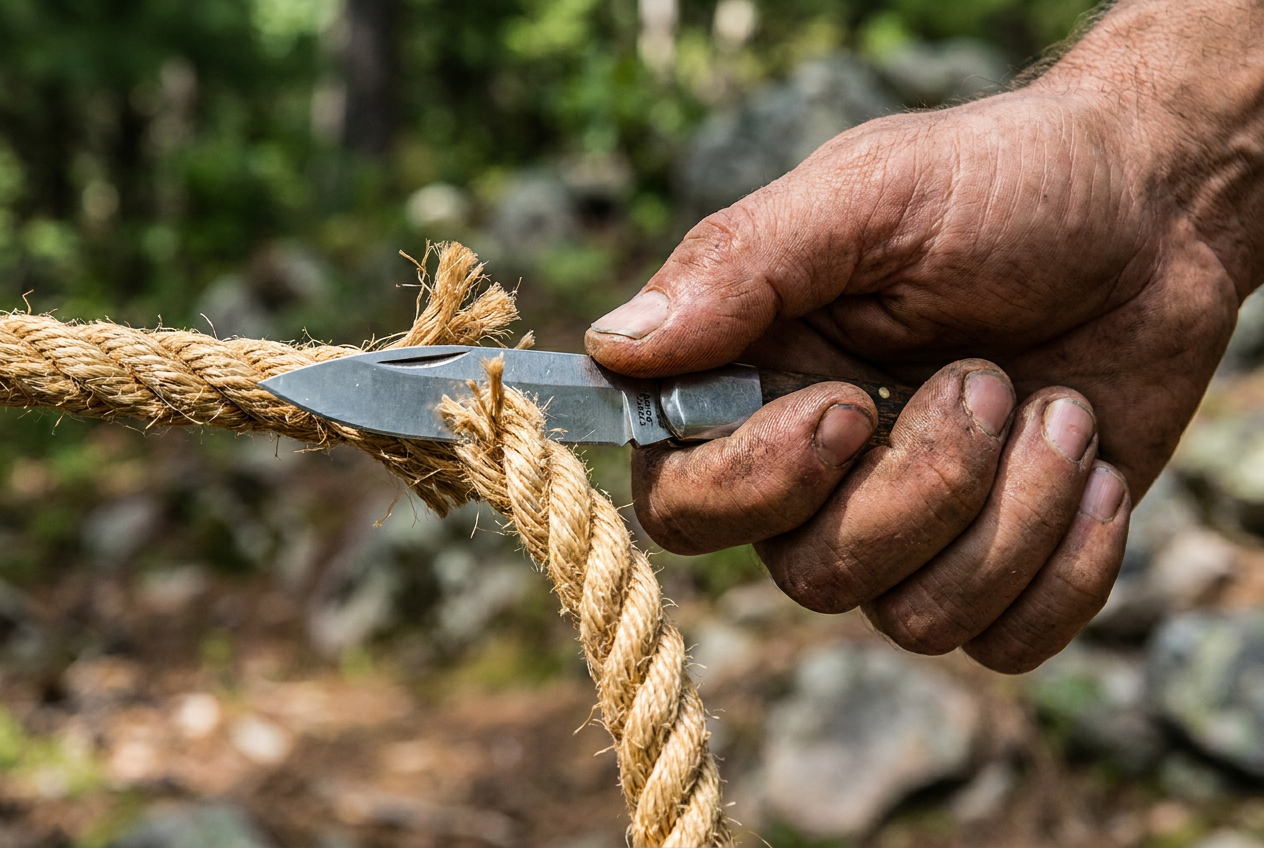
Here is what actually happens to a knife during a typhoon, a flood, or just a bad week: you cut the rope holding down the tarp on the roof. You slice open the packing tape on relief goods. You open a can because the electric opener is dead with the power out. You cut a seatbelt if a vehicle floods or rolls. You pry a swollen door that will not budge after the rain got into the frame. Not once in any of that is the knife used on a person. It is a tool for material, not a weapon for people — and every good knife I have ever relied on was chosen with that single job in mind.
The gap between what “tactical” knives are designed for and what Filipino households actually need them for is wide. Closing that gap is the whole point of this article.
What actually matters
A few plain qualities decide whether a knife works when you need it, and none of them are about looking fierce.
A plain edge, not serrated. Serrations are great for one thing — sawing through soft fibrous material like rope in a single stroke — and mediocre at almost everything else. They are hard to sharpen with a simple stone, they snag on tape and plastic instead of slicing clean, and they make food prep clumsy. A plain edge, kept reasonably sharp, does rope, tarp, packaging, and food all acceptably well. One edge that does everything decently beats one edge that does one thing brilliantly and everything else badly.
A strong, simple tip. A drop-point or slightly rounded tip is harder to snap and safer to use one-handed in a hurry — prying, popping a stuck buckle, cutting toward yourself away from your body. A spike tip or dagger-style double edge is built for penetration, which is a polite way of saying it is built for stabbing. That is not a task on any list above.
Full or solid tang. This is the part hidden inside the handle, and it is the part that decides whether the knife survives being used as a tool and not a display piece. A full tang — where the steel runs the complete length of the handle — takes prying force and hard chopping without the blade snapping off at the grip. Many showy tactical knives cut corners here because the money went into the finish, the holes, the glass-breaker, not the steel underneath. In the field, a knife that fails at the handle when you lean on it is worse than no knife, because you trusted it.
A comfortable, honest grip. Wet hands, muddy hands, tired hands — the grip needs to stay put without a cutout for your knuckles pretending to be a “combat” feature. Plain textured rubber or grippy plastic works better than anything shaped like a weapon prop.
Nothing that needs explaining. A glass-breaker pommel, a finger-groove knuckle guard, a black tactical sheath with molle straps — none of it helps you cut a tarp rope. All of it makes the knife heavier, pointier in the wrong places, and more likely to draw a second look you did not want.
What to do (and what not to)
Think about your knife the same way you think about your flashlight: it should do its job quietly and never be the reason someone asks you a question.
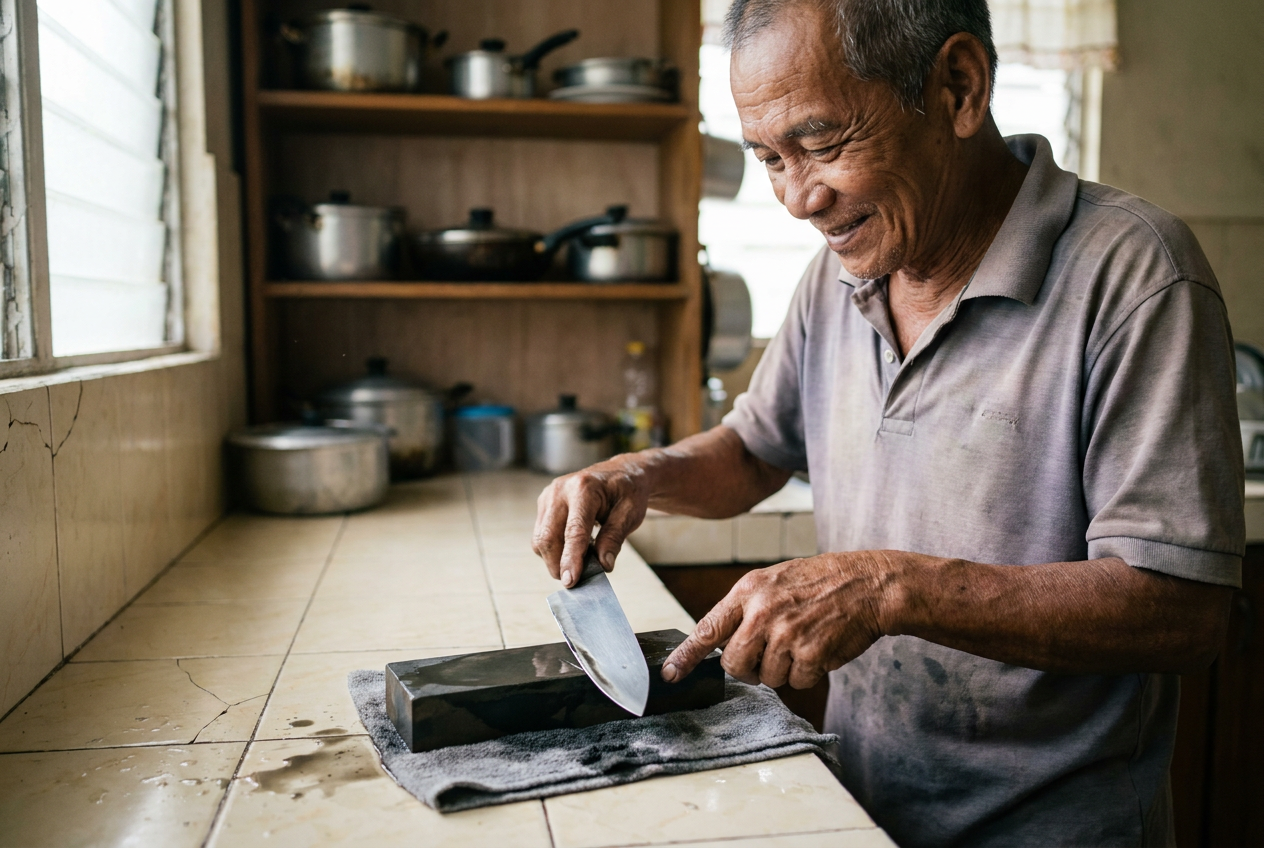
Do choose a knife that looks like it belongs in a kitchen drawer or a hardware store, because that is functionally what it is. Do keep it reasonably sharp — a dull plain blade is more dangerous than a sharp one because you press harder and slip. Do carry it inside your bag, not on your belt in plain sight, when you are moving through checkpoints, terminals, or crowded evacuation centers. Do practice using it for the actual tasks — opening a box, cutting cord, breaking down packaging — so your hands know it before an emergency does.
Do not buy anything marketed with words like “combat,” “tactical,” “tanto,” or “assassin” in the title. That language is aimed at people who want to feel armed, and it will follow the knife into every situation where someone in a uniform has to decide whether you are a problem. A barangay tanod checking bags before a typhoon, a security guard at a bus terminal, a screener at a ferry pier or airport — none of them are trained to distinguish “I use this for rope” from “this looks like a weapon.” A boring blade gets waved through. A dagger-shaped one gets confiscated, and you have just lost your tool during the exact week you needed it, plus a conversation you did not want to have.
Do not carry a knife with the thought that it will protect you from another person. It will not, reliably, and treating it that way changes how you carry it, where you carry it, and how you act — all in the wrong direction. A knife’s job in your kit is cutting things, full stop.
The gear that helps
I think about this in two tiers, and I would rather a household get both right than spend money on one flashy piece that tries to be both.
Tier one: a small folding pocket utility knife for daily carry. This lives in your pocket, bag, or desk — something you would use to open a delivery box, trim a loose thread, cut zip ties, or slice a mango at your desk without a second thought. Plain edge, modest size, a lock that holds when you press on it. Nothing about it should look out of place next to your keys and wallet. We will walk through specific picks for this in a separate roundup — “Best pocket utility knives” — because the right one really does depend on your hand size and how you carry.
Tier two: a sturdier fixed-blade or lock-back knife for the go-bag or car. This is the one that comes out when the rope is thick, the door frame is swollen, or you are breaking down a pallet of relief goods. It should have a full tang, a comfortable grip that works wet, and a sheath that keeps the edge covered and safe among the rest of your gear. It stays in the bag or under the car seat — not on your belt for the world to see. That comparison — fixed blades that hold up to real use without turning into a costume prop — is its own article too: “Best fixed-blade work knives for go-bags.”
Neither tier needs a brand name to be trusted. What it needs is a plain edge, solid construction, and a shape nobody would look at twice.
Common mistakes
The biggest one is buying based on how a knife looks in a five-second video rather than what it will actually be asked to do. A knife that saws, stabs, breaks glass, and has a compass in the handle is a knife that does all of those things poorly and none of them well.
The second is forgetting that the knife travels with you. A blade that reads as a weapon can get you turned away at a ferry terminal, flagged at airport screening, or questioned at a checkpoint during a calamity response when patience is already thin on all sides. That is friction you do not need on a day when everything else is already hard.
The third is neglect — a knife that sits in a go-bag for two years untouched, unsharpened, hinge stiff with rust from humidity. A tool only works if it still works when you reach for it. Check it the same time you check your flashlight batteries.
The one thing to remember
A knife in your go-bag or your pocket is there to cut rope, open boxes, and free a seatbelt — nothing more dramatic than that, and nothing less useful either. The plainest-looking blade on the shelf, with a solid tang and a sharp, honest edge, will outwork anything styled to look dangerous. Choose the tool that does the job and draws no attention doing it. That is the whole philosophy — the specific picks come next.