Emergency radio guide for PAGASA updates in the PH
Choosing an emergency radio for PAGASA typhoon updates in PH: hand-crank vs solar, AM/FM specs that matter when power and signal fail.

Overview
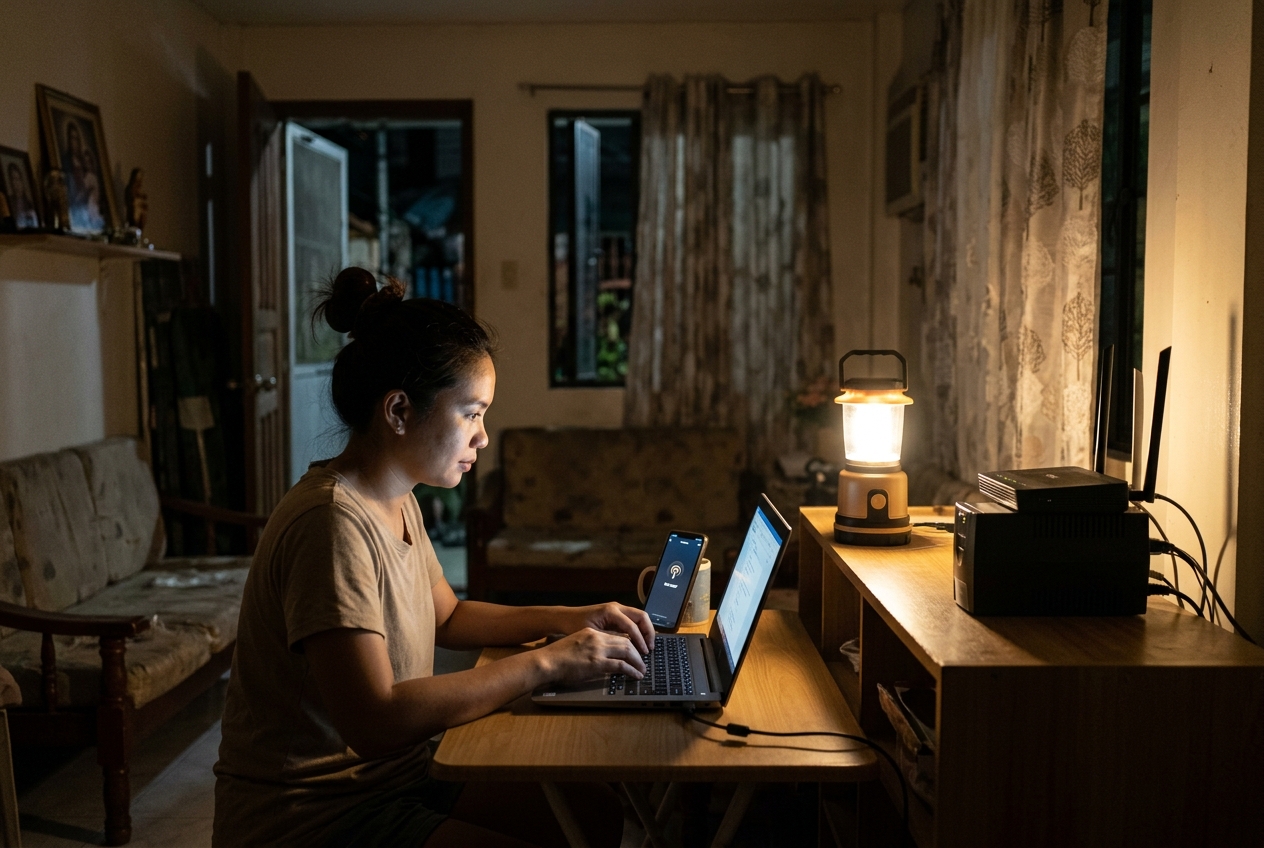
I still remember a neighbor knocking on our gate during a signal-number-three typhoon, phone held up, asking if anyone had a signal because she needed to know if the storm surge warning for her sister’s barangay had been lifted. Nobody did. The power had been out since 2 a.m., the cell towers were overloaded or down, and every phone in the house was a dead weight in someone’s pocket. That is the exact gap this category of gear fills. An emergency broadcast radio does one job: it pulls AM/FM signal out of the air using almost no power, or none at all, and gives you the PAGASA bulletin, the local AM station, or the barangay’s emergency frequency, when your phone has nothing.
To be clear from the start: this is not a review of walkie-talkies. Two-way radios, the kind you use to talk to family across the block or to a neighbor down the road, are a different tool for a different job, and we have covered them separately. Everything here is receive-only. You are not transmitting anything. You are listening.
Why it matters in Philippine conditions
PAGASA still broadcasts typhoon bulletins over AM radio, and AM is exactly the band that survives when everything else fails. Cell towers can lose backup power after extended outages. Fiber and mobile data depend on infrastructure that typhoons are specifically good at knocking over. AM broadcast, by contrast, is a much older and simpler technology — a station with a generator and a tall antenna can keep transmitting for days, and a stack of AA batteries or thirty seconds of hand-cranking is enough to receive it.
This matters most in the exact window when a household is most anxious: the hours right after the lights go out, when nobody knows yet whether the eye has passed, whether a dam is releasing water, or whether the signal number has been raised. A radio does not replace evacuating early when your barangay tells you to. But it does replace the useless ritual of everyone in the house pointing a dead phone at the window looking for one bar.
Key specs: what you get, translated
AM/FM band coverage. This is the one non-negotiable. Some cheaper “emergency” radios sold online lean hard on FM and treat AM as an afterthought, with a weak antenna that pulls in music stations but struggles with distant AM broadcasts. Since PAGASA advisories are commonly relayed over AM, check that AM reception is called out clearly in the listing, not just implied by an “AM/FM” sticker.
Hand-crank charging. A small generator inside the radio that you turn with a crank handle. It never runs out, which is the whole point, but it is slow and it is loud enough that everyone in the room will hear you doing it. A minute of steady cranking typically buys a few minutes of radio use or a trickle of charge to a phone — enough to check a bulletin, not enough to binge a livestream.
Solar charging. A small panel on the casing that tops up an internal battery in daylight. Useful for topping up over a long outage where you have sun during the day, but the panels on these units are small. Treat solar as a slow trickle, not a fast charge, and don’t expect much from an overcast typhoon sky.
USB phone-charging output. Many units include a USB port advertised as a phone charger. Manage your expectations here: the internal battery is small, so this is a few percent of charge in an emergency, not a full charge. It is genuinely useful for the specific job of getting a phone to 15% so you can send one text, not for keeping a phone running all day.
Battery backup. Most units also take standard AA batteries or have a built-in rechargeable pack, so you are not solely dependent on cranking or sun. This is the part that actually gets you through a multi-day outage — crank and solar are backups to the backup.
Flashlight and SOS beacon. Almost every unit in this category bundles an LED flashlight and sometimes a flashing SOS light. Nice to have, but not the reason to buy one.
How the types compare
Basic hand-crank AM/FM units (roughly ₱600–₱1,200). These are the simplest and cheapest units on Lazada and Shopee, and the honest way to describe them is: a radio, a crank, a small light, sometimes a USB port. AM/FM coverage on the better-reviewed ones is adequate for local stations. Build quality varies a lot at this price tier — read the actual listing photos and specs rather than trusting the headline description, since “multi-function” is used loosely. This tier is fit for purpose for a household that mainly wants a backup way to hear the news and doesn’t need extra bands or heavy phone charging.
Multi-band units with NOAA-style weather bands (roughly ₱1,500–₱2,500). Some imported and Philippine-market units include the extra weather bands used for the US NOAA weather radio system. These bands are not used by PAGASA, so they add nothing locally — you are paying for a feature built for a different country’s broadcast system. If a listing leads with “NOAA weather band” as a selling point, treat that as a sign the unit was designed for the US market and re-check that its AM coverage for Philippine stations is still solid, rather than assuming the extra bands are a bonus for you.
Solar-plus-crank hybrids (roughly ₱1,800–₱3,500). These combine a solar panel, a hand crank, a rechargeable internal battery, and usually a larger USB output, often in a more rugged casing with a carry handle or clip. This is the tier that makes sense for a household that expects multi-day outages — after a strong typhoon, when the grid can stay down for the better part of a week in some areas — because you get three independent ways to keep the unit alive: sun, cranking, and swappable or rechargeable batteries. The trade-off is price and, sometimes, bulk; a few of these are noticeably heavier than the basic units, which matters if this is going in a go bag that already has a lot in it.
Because we’re working from published specs and listings rather than a bench test, we’re not naming a single “winner” model — the honest advice is to shop by the checklist above (AM sensitivity, real crank-to-minutes ratio if the listing states one, battery type, and casing quality) rather than by brand name, since the same casing design gets sold under several different labels on Philippine marketplaces.
Pros and cons by type
Basic hand-crank AM/FM
- Pros: cheapest entry point, simple to operate, no battery to hunt for, small enough for any bag.
- Cons: weak or no phone-charging output, no solar backup, build quality inconsistent at the low end.
Multi-band with NOAA-style weather bands
- Pros: broader band coverage if you ever travel abroad or listen to marine/aviation bands out of curiosity.
- Pros: often includes a proper telescoping AM antenna.
- Cons: the weather-band feature is dead weight for Philippine use; don’t pay a premium for it alone.
Solar-plus-crank hybrid
- Pros: three charging paths, better suited to multi-day outages, usually a larger and more useful USB output.
- Cons: highest price in this bracket, heavier, solar panel is small and slow so don’t over-rely on it.
Who it’s for
This category is for any household in a typhoon-prone area that has already been caught once with no way to get official updates when the power and signal both went down at the same time. It is especially worth it for households with elderly members who rely on radio news out of habit, for anyone in a low-lying or coastal barangay where storm surge and evacuation timing matter, and for a go-bag that already assumes the phone might not be usable.
If your household is mostly worried about staying in touch with family members in different rooms or across the street during a disaster, that’s a two-way radio need, and it’s a different purchase — this article and this product category are not about that.
Who it’s not for
If you live somewhere brownouts are rare and short, or if you already have a reliable car charger, a large power bank, and a habit of checking PAGASA online well before the power goes, a dedicated emergency radio may just sit in a drawer. It is also not a good primary tool if what you actually need is two-way communication with people outside your household — no emergency broadcast radio lets you transmit, only receive.
And it is not a phone-charging solution. If your real problem is keeping phones alive through a multi-day outage, a proper power bank or a solar panel sized for that job will do far more than the USB trickle on any radio in this bracket — the radio’s charging port is a convenience for a sip of battery, not the answer.
A note on phones and offline maps
A phone with an offline map downloaded ahead of time and a properly charged power bank is a genuinely useful complement to a broadcast radio — the map helps you navigate if you need to evacuate, and the power bank keeps the phone alive for that one important call if signal returns. But neither replaces the radio’s core advantage: it works off AM airwaves that don’t depend on cell towers, data plans, or signal bars at all. If you want a heavier-duty connectivity solution for genuinely no-signal areas, that’s a different piece of gear and a different budget — we’ve covered satellite internet options like Starlink Mini separately, which sits well above this price bracket and solves a different problem.
The verdict and scores
For most households, a solar-plus-crank hybrid in the ₱1,800–₱2,500 range is the sensible middle ground: it covers AM properly, it doesn’t rely on any single charging method, and it will still be listening to PAGASA bulletins on day four of an outage when a basic unit’s batteries have long since died. A basic hand-crank AM/FM unit is a perfectly honest, cheaper choice if your outages tend to be short and your main goal is simply “don’t be the house with zero access to news.” The multi-band NOAA units are the one to be skeptical of — check that you are not paying extra for weather bands that do nothing for you here, and that AM reception on Philippine stations hasn’t been sacrificed to make room for that feature.
Where to buy
These are widely available on Lazada, Shopee, and local electronics and hardware stores, typically priced ₱600 to ₱3,500 depending on the tier above. As with most gear in this category, buy from a seller with real reviews and photos of the actual unit, and be wary of listings that reuse generic stock photos across wildly different price points — a sign the “brand” printed on the casing changes from batch to batch.