Power banks for Philippine brownouts: what capacity and type actually make sense
A plain-language guide to choosing one power bank that actually earns its place in a Philippine go-bag: how to read real versus fake mAh claims, why PD/QC fast charging matters before an evacuation, and how the 10,000/20,000/30,000mAh tiers trade off.
Overview
A brownout during typhoon season is not the time to find out your power bank was never 20,000mAh to begin with. If you’re searching for the best power bank Philippines brownout shoppers actually trust, the honest answer is: it depends less on the brand and more on whether you can read the label correctly.
Most households don’t need three half-charged power banks rattling in a drawer. They need one genuinely good one that lives in the go-bag, gets topped up before every typhoon advisory, and does its one job: keeping a phone alive when the grid and the lift both go down.
This isn’t about the big portable power stations that run a fan or a router for a day. That’s covered in our existing 72-hour blackout guide. This is about the pocket-sized bank that rides in your sling bag or your pants pocket.
Why it matters in local conditions
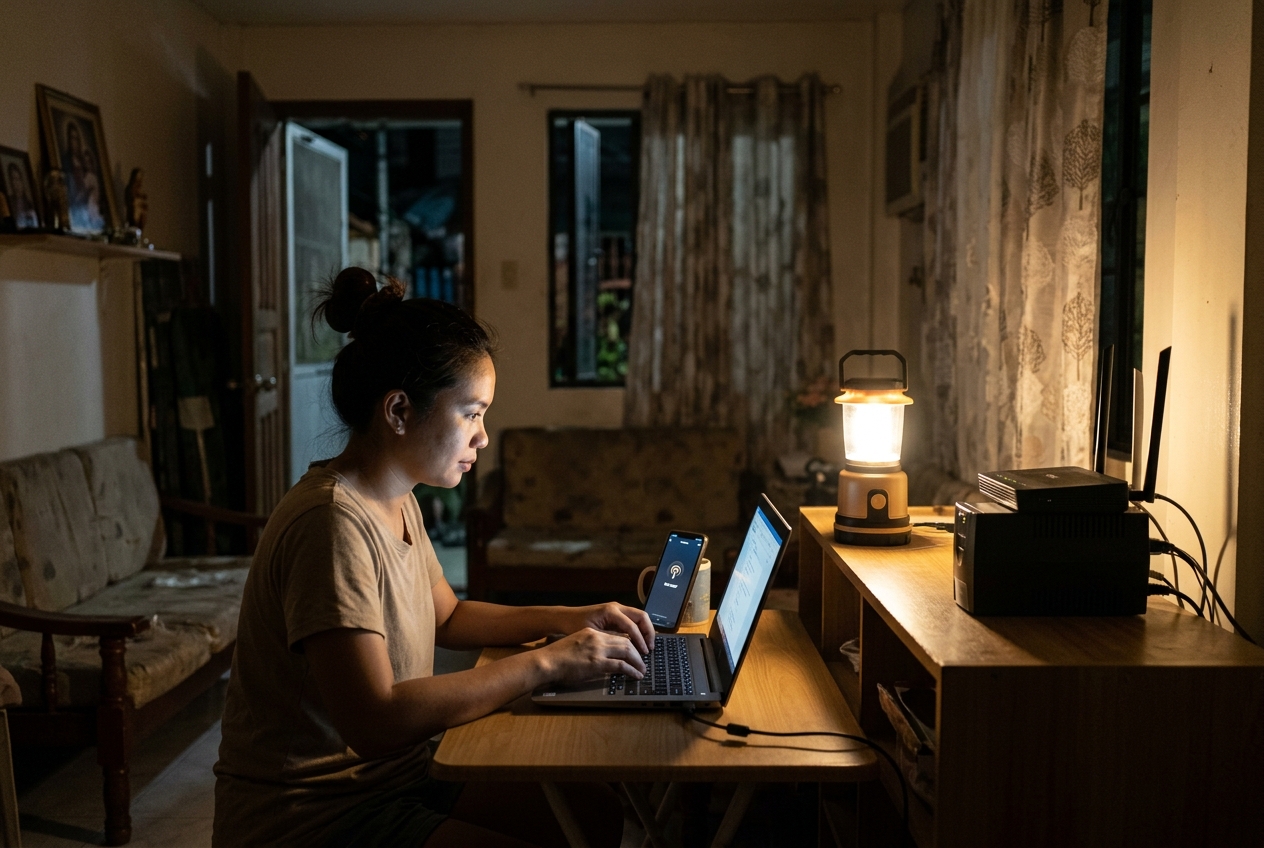
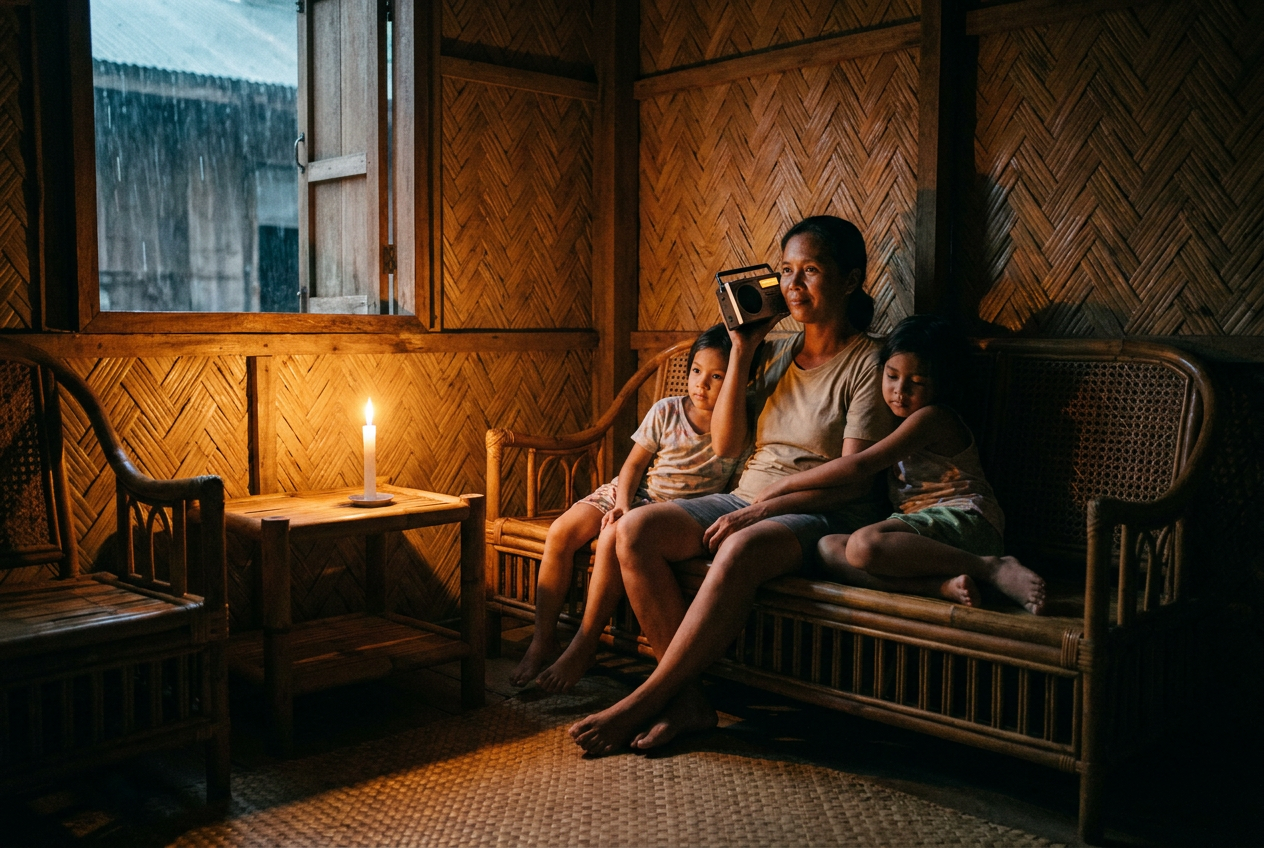
During a PAGASA signal, brownouts often arrive before or during the worst of the wind and rain, sometimes lasting hours, sometimes into the next day. Your phone is how you get storm updates, check on relatives, and call for help if floodwater rises near your barangay. Once it dies, you’re cut off.
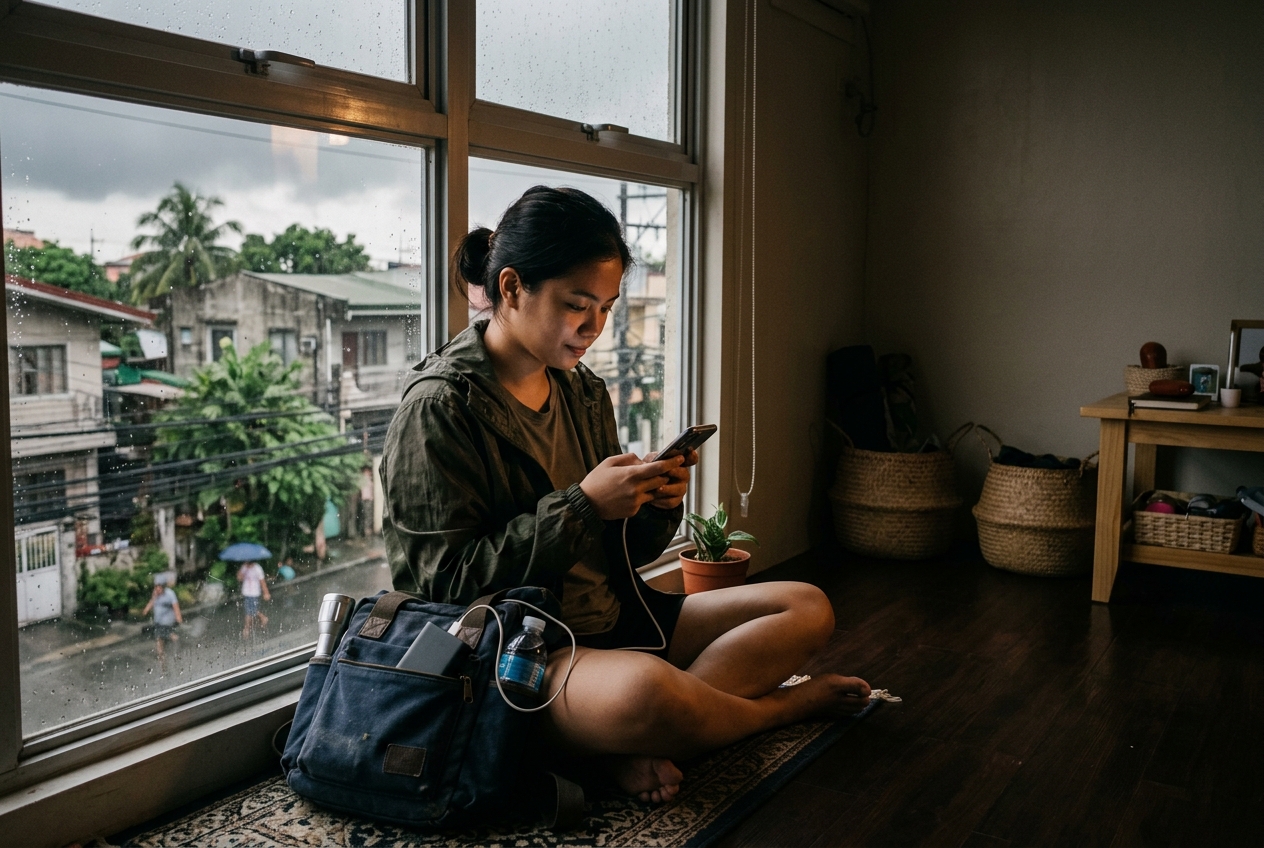
High-rise renters in Quezon City and other metro areas face a second problem: when the power goes, the lift usually goes with it. If you live on the 12th floor, you’re not running down for a charge at the sari-sari store. Whatever charge you’re carrying when the outage starts is what you have.
For commuters, a power bank also covers the everyday brownout equivalent: the unexpected delay, the jeepney breakdown, the long wait where a dead phone means no GCash, no maps, no way to tell your family you’re fine. A go-bag power bank earns its keep well before any actual disaster.
Key specs: what you get, and how to read the label
mAh (milliamp-hours) is the battery’s stated capacity, the rough size of its fuel tank. A phone battery is typically 3,000 to 5,000mAh, so a 10,000mAh bank should, in theory, charge one about twice.
In practice, you never get the full number. Converting the power bank’s cell voltage to your phone’s voltage wastes some energy as heat, so a genuine 10,000mAh bank usually delivers closer to 6,000 to 7,000mAh of real charge. That loss is normal and happens even with trusted brands.
Watts (W) and PD/QC describe how fast the bank can push power out, not how much it holds. PD (Power Delivery) and QC (Quick Charge) are two common fast-charging standards found on many banks sold here.
A bank rated 18W or higher with PD or QC support will charge a modern phone noticeably faster than an old 5W charger, though the exact time varies a lot by phone model and bank. As a rough example, some phone and charger combinations can add 50 percent or more charge in around 30 minutes on PD, versus a fraction of that on a basic charger.
Before an evacuation, that speed difference matters more than most people realize. A short charging window right before you leave can mean going out with a meaningfully fuller phone instead of a nearly empty one.
Pass-through charging lets the bank charge your phone while it’s itself being charged from a wall outlet. This is a genuine brownout feature: when power flickers back on unpredictably during a storm, pass-through means you can top up the bank and your phone at the same time instead of choosing one or the other.
Not every bank handles pass-through cleanly. Some generate extra heat doing it, and a few low-quality units handle it so poorly that it shortens the battery’s life. If a listing doesn’t mention pass-through at all, assume it isn’t well supported.
Capacity tiers: what they trade off
Around 10,000mAh. Light, usually 180 to 220 grams, often pocketable. Good for one to one and a half phone charges. It’s an easy everyday-carry choice for a commuter and light enough not to feel like dead weight next to the water and flashlight already in your go-bag.
Around 20,000mAh. Roughly double the weight, 350 to 450 grams, often the size of a thick deck of cards. Good for two to three phone charges, which comfortably covers a household through a day-long outage.
30,000mAh and above. Heavy for a pocket item, often 550 grams or more. It takes a long time to recharge the bank itself from a wall outlet, sometimes most of a day on a basic charger.
It can charge multiple phones repeatedly, which suits a larger household or a longer outage, but you pay for that capacity in bulk and in recharge time.
There’s no single right tier. A solo renter who just needs their own phone alive is overpacking with 30,000mAh. A family of five sharing one bank through a multi-day brownout will run out of charge fast on 10,000mAh.
Spotting a fake or inflated listing
This is the part that actually protects your money. Lazada and Shopee listings advertising 50,000mAh or 80,000mAh power banks at ₱300 to ₱500 are a well-known counterfeit pattern. A real lithium cell of that capacity would be bigger, heavier and considerably more expensive than that price allows.
A few checks before buying:
- Weight is honest, marketing isn’t. A genuine 20,000mAh bank weighs roughly 350 to 450 grams. If a listing claims 30,000mAh or more but photos show something phone-sized and light, the number is inflated.
- Price that’s too good is the tell. If a 20,000mAh PD fast-charging bank is priced far below other listings of the same claimed spec, assume the capacity is false, not that you found a bargain.
- Look for an actual brand with a support page, not just a shop name. Established brands publish real specs you can cross-check.
- Read the one-star reviews, not the five-star ones. Fake capacity claims usually get exposed there, often with people describing a bank that died after one short charge.
- FDA registration doesn’t apply here. Power banks aren’t medicines or health devices, so there’s no FDA listing to check. The protection is in reading specs and reviews carefully, not a certification badge.
LED lights and small fan add-ons
Many banks in the ₱800 to ₱1,500 range include a small built-in LED flashlight, and a few marketed for camping or outages advertise the ability to run a small USB fan. Treat these as minor conveniences, not core features.
A built-in LED is handy as a backup light source but shouldn’t replace a dedicated headlamp or flashlight in your go-bag. It also draws down the same battery you need for your phone.
A small USB fan works, but it will drain a power bank quickly, especially a 10,000mAh one. These add-ons are nice to have, not the reason to choose a model.
Who each tier is for
A 10,000mAh fast-charging bank suits a solo commuter or student who wants one phone kept alive through a long day or a short outage, without extra bulk.
A 20,000mAh bank suits most families packing a shared go-bag, covering two or three people’s phones through a day-long brownout.
A 30,000mAh-plus bank suits a larger household, a caregiver managing multiple devices, or anyone expecting outages that stretch past a day, provided they’re willing to carry the extra weight.
Who each tier is not for
Skip the 10,000mAh tier if you’re charging for more than one person or expect the outage to run more than a day; you’ll run dry fast.
Skip 20,000mAh if you genuinely need ultralight carry and only ever charge your own phone; you’re carrying weight you won’t use.
Skip 30,000mAh-plus if you want something that fits easily in a pocket, or if your charger at home is slow, since recharging the bank itself becomes a chore.
The verdict
There’s no single best power bank, only the right tier for your household and how you’ll carry it. What matters more than any one model is buying from a listing with honest specs, PD or QC fast charging if you can get it, and pass-through support if your household’s brownout habits call for it.
20,000mAh with PD fast charging remains the tier I’d point most households toward first, for the reasons laid out above: it balances real capacity against weight and recharge time better than the tiers on either side of it.
Where to buy
Price ranges below are indicative. Confirm current Lazada and Shopee pricing before you buy, since listings shift often and the cheapest ones are the most likely to misstate capacity.
- 10,000mAh with PD/QC: roughly ₱400 to ₱900
- 20,000mAh with PD/QC: roughly ₱900 to ₱1,700
- 30,000mAh and above: roughly ₱1,700 to ₱2,500
Pack it with the rest of your plan
A power bank is one item in a bigger kit. For the rest of what belongs in a storm-ready bag, see what to pack in your bag for flash floods and typhoons.
If you’re building a shared bag for two, how Filipino couples should pack a go bag covers how to split weight and duplicate essentials without doubling up on everything.
The one thing to remember
Buy capacity you can verify by weight and price, not by the biggest number on the listing, and keep it charged before the next PAGASA advisory, not after.
Galing Gear shares general preparedness and first aid information based on sources such as the DOH, WHO and the Philippine Red Cross. It is not a diagnosis or prescription, and it does not replace a doctor, nurse, pharmacist or trained responder. We never give medicine doses. Follow the latest advice of the DOH, your local health office and your medicine’s label. In an emergency, call 911. Philippine Red Cross: 143. Mental health crisis (NCMH): 1553 (landline). When unsure, get checked.