Home fire safety plan: smoke alarm, exits, extinguisher
Home fire safety for Pinoy families: smoke alarm, two-exit plan, right extinguisher, and a real drill with kids and kasambahay included.
The situation
Most home fires in the Philippines start between midnight and early morning — while the household is asleep, the LPG stove is off, and nobody smells the smoke until it’s already thick. That single fact should shape almost everything you do about fire safety at home. It is not really about extinguishers. It is about waking up in time to get out.
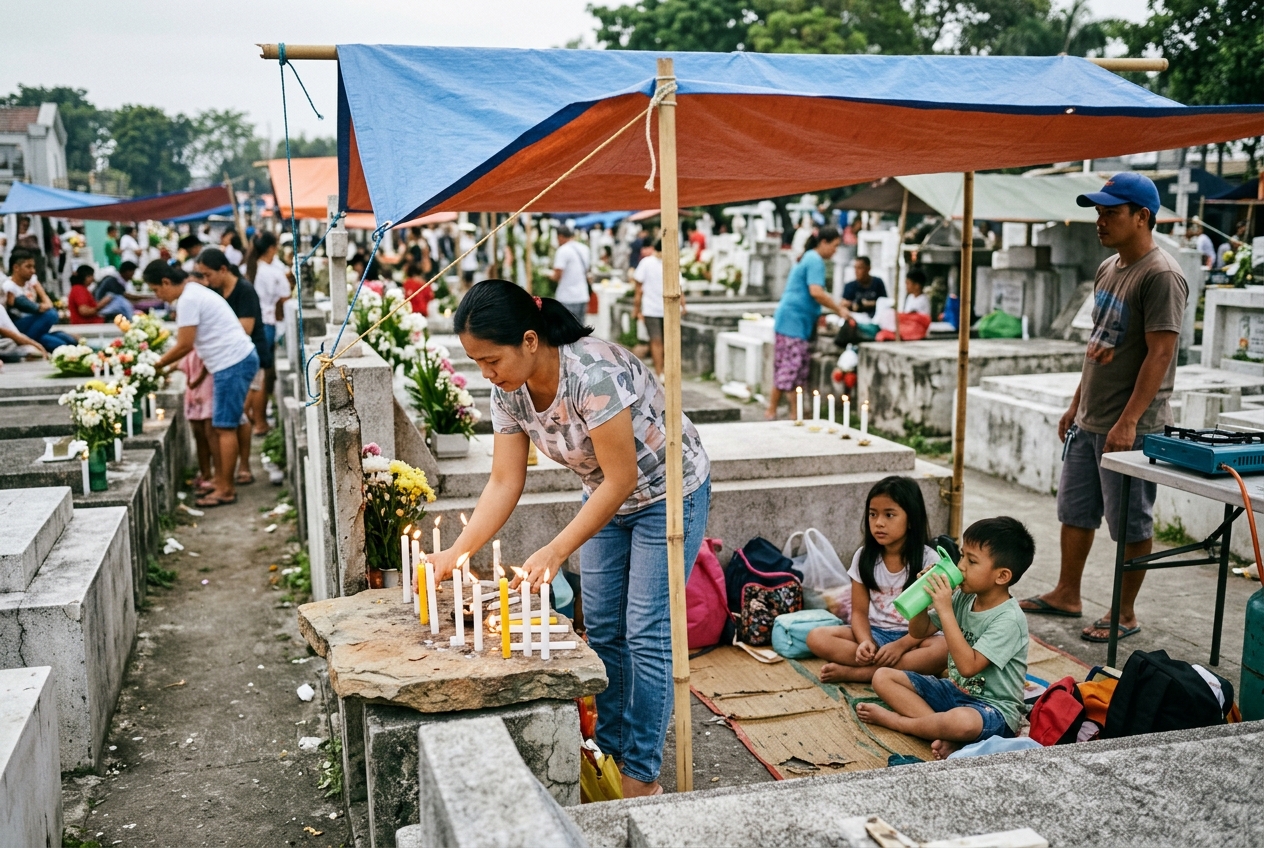
Fire incidents climb every summer, when heat and drought turn grass fires and electrical faults into fast-moving problems, and again every Christmas, when strings of lights get looped onto overloaded outlets and candles sit too close to curtains and parols. Bureau of Fire Protection records both spikes every year without fail. Neither one is a surprise. Both are preventable with fifteen minutes of honest looking around your own house.
Apartments and high-rise condo units carry extra risk that a standalone house doesn’t: shared corridors, one stairwell that everyone on the floor depends on, and an elevator that becomes a death trap the moment there’s smoke in the shaft. If you live above the fifth floor, this guide matters more than most.
What actually matters
Strip away the products and the checklists, and four things do almost all the work:
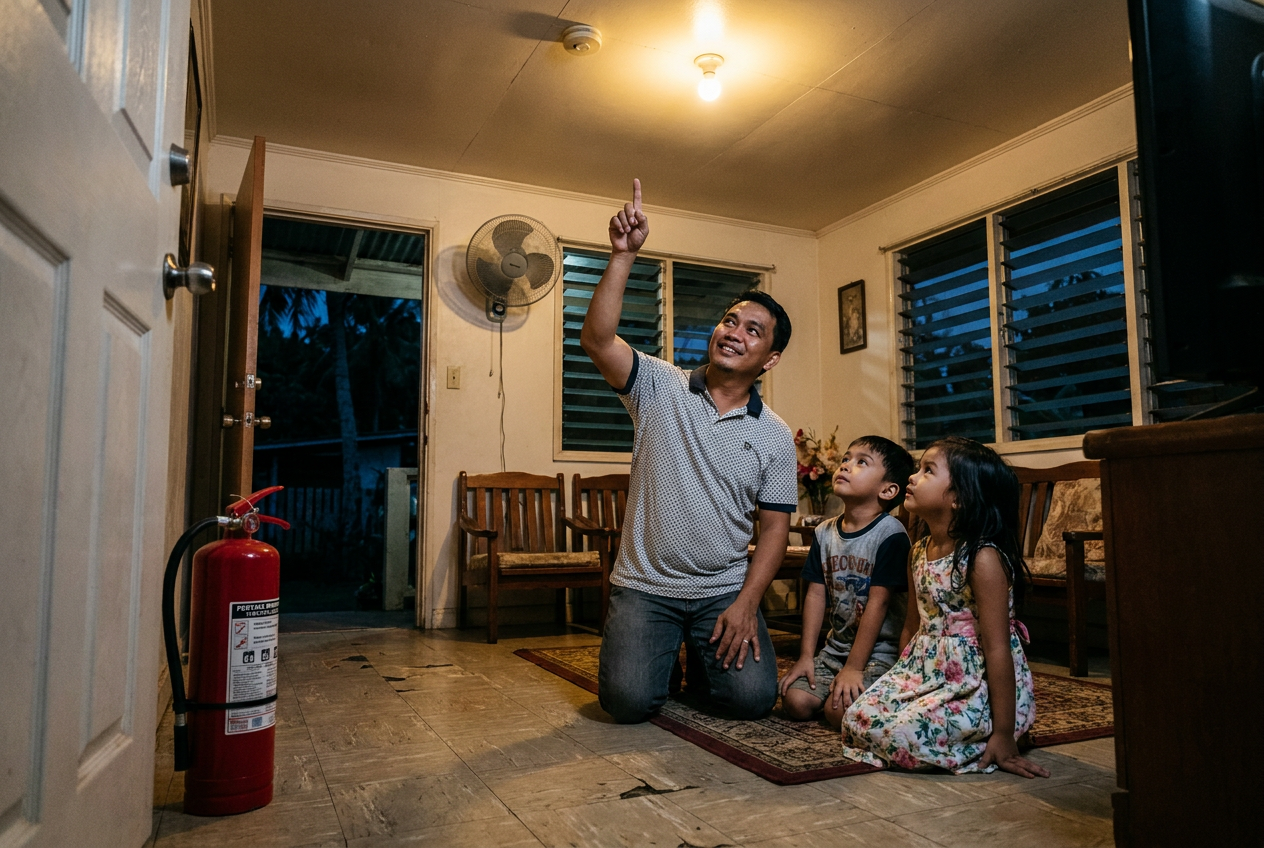
A smoke alarm that is actually installed and actually has a working battery. This is the single highest-return purchase in this entire guide. A ₱500 to ₱1,500 photoelectric smoke alarm buys you the only thing that matters when a fire starts at 3 a.m. — time. Everything else on this list only works if you wake up first.
Two ways out of every room, and everyone in the house knows both. One exit is a plan that fails the moment it’s blocked by smoke or flame. Two exits is a plan that survives a bad night.
An extinguisher rated for the fire you’re actually likely to have — cooking oil and electrical, not campfire. Placed somewhere you can reach it without walking through the kitchen doorway the fire is coming out of.
A drill that has actually been run, out loud, with the kids and the kasambahay included, not just talked about once. In search-and-rescue, the operations that went smoothly were never the ones with the fanciest gear — they were the ones where everyone had already rehearsed what to do before it mattered. A fire drill is the same discipline, just smaller and closer to home.
What to do (and what not to)
Draw the two-exit floor plan first, before buying anything. Sketch your home on paper — every bedroom, the kitchen, the front door, any window that opens wide enough for a person to climb through. From each bedroom, mark two paths out: the normal one (through the hallway to the front door) and a backup (a window, a back door, a neighbor’s shared balcony). If a room genuinely has only one way out, that’s the room you solve for first — sometimes the fix is as simple as clearing what’s stacked in front of a window.
Install smoke alarms where they earn their keep. One outside every sleeping area, one on each floor if you have stairs, and one near — but not directly above — the stove, since kitchen steam sets off alarms mounted too close. Test the button monthly. Replace the battery when you replace your Christmas lights, so you remember to do both.
Place the extinguisher in the kitchen, near the door, not tucked behind the stove. You want to grab it while backing out of the room, not reaching past a grease fire to get to it. Learn TPASS, the method Philippine fire training uses: Twist the safety pin to break the seal, Pull the pin, Aim at the base of the fire, Squeeze the handle, Sweep side to side. Practice the motion with an empty extinguisher once so your hands know it — the first time should never be the real fire.
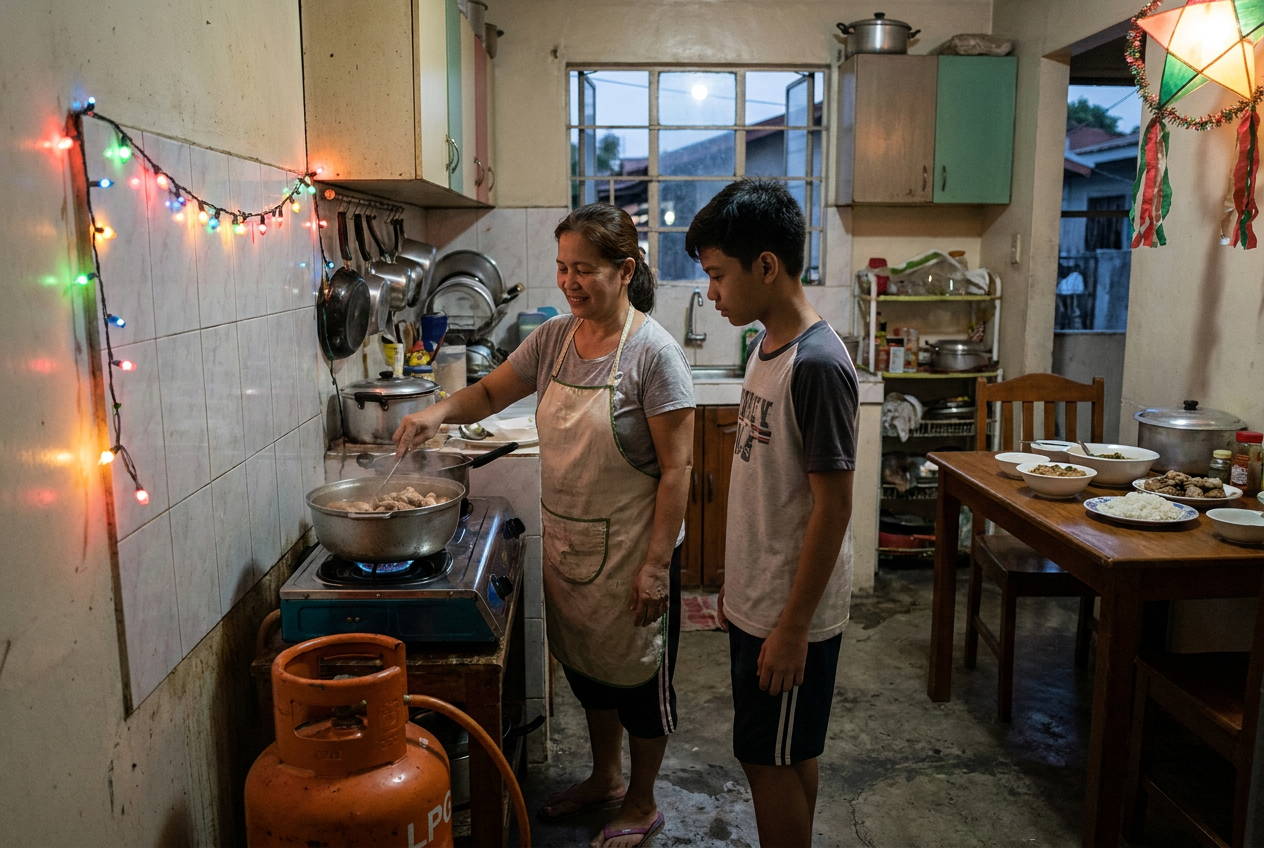
Check your LPG hose and regulator every few months, not just when it starts smelling off. Soapy water brushed along the hose and connections will bubble at a leak — do this test, don’t rely on smell alone. Replace any hose that’s cracked, stiff, or past the date stamped on it, and never buy a regulator or hose from a stall you don’t recognize; counterfeit fittings are a real and common cause of kitchen fires here.
If you’re in an apartment or a high-rise, learn the building’s stairwell, not just your unit. Walk it once during the day so it isn’t unfamiliar in the dark. Never use the elevator during a fire — if the shaft fills with smoke, it becomes the most dangerous place in the building. If smoke is coming under your door and the stairwell isn’t reachable, stay in the unit, seal the door gaps with wet towels or cloth, and signal from a window rather than opening the door into a smoke-filled corridor.
Run the drill for real, twice a year. Once during summer, once before Christmas. Include children old enough to walk on their own, and include the kasambahay — they’re often alone in the house during the day and need the same plan everyone else has, not a simplified version.
A simple drill script that works for most households:
- Someone calls out “Sunog!” loudly — practice actually saying it, not just imagining it.
- Everyone drops what they’re doing and moves to their nearest safe exit, low if there’s smoke.
- Everyone meets at one agreed spot outside — the gate, the corner store, the covered court — every single time, no exceptions.
- Someone is assigned, in advance, to grab the youngest child or check on an elderly household member. Assign this before the drill, not during a real fire.
- Once everyone is out, someone calls the Bureau of Fire Protection or the barangay fire brigade. Nobody goes back inside for anything.
Run it slow the first time, walking through each step. Run it at a normal pace the second time. That’s enough — you’re not training for a competition, you’re building a reflex.
The gear that helps
You don’t need much, and none of it needs to be expensive:
- Photoelectric smoke alarms, one per sleeping area — the highest-value item on this whole list, full stop.
- A dry chemical or ABC-rated fire extinguisher, sized for a home kitchen, not an industrial one — most household units run ₱800 to ₱2,500.
- A fire blanket for the kitchen, useful for smothering a small pan fire without the mess and pressure of an extinguisher.
- A window or door escape ladder if you’re on a high floor with a window exit — these run roughly ₱3,000 to ₱5,000 and are worth it if that window is genuinely part of your two-exit plan.
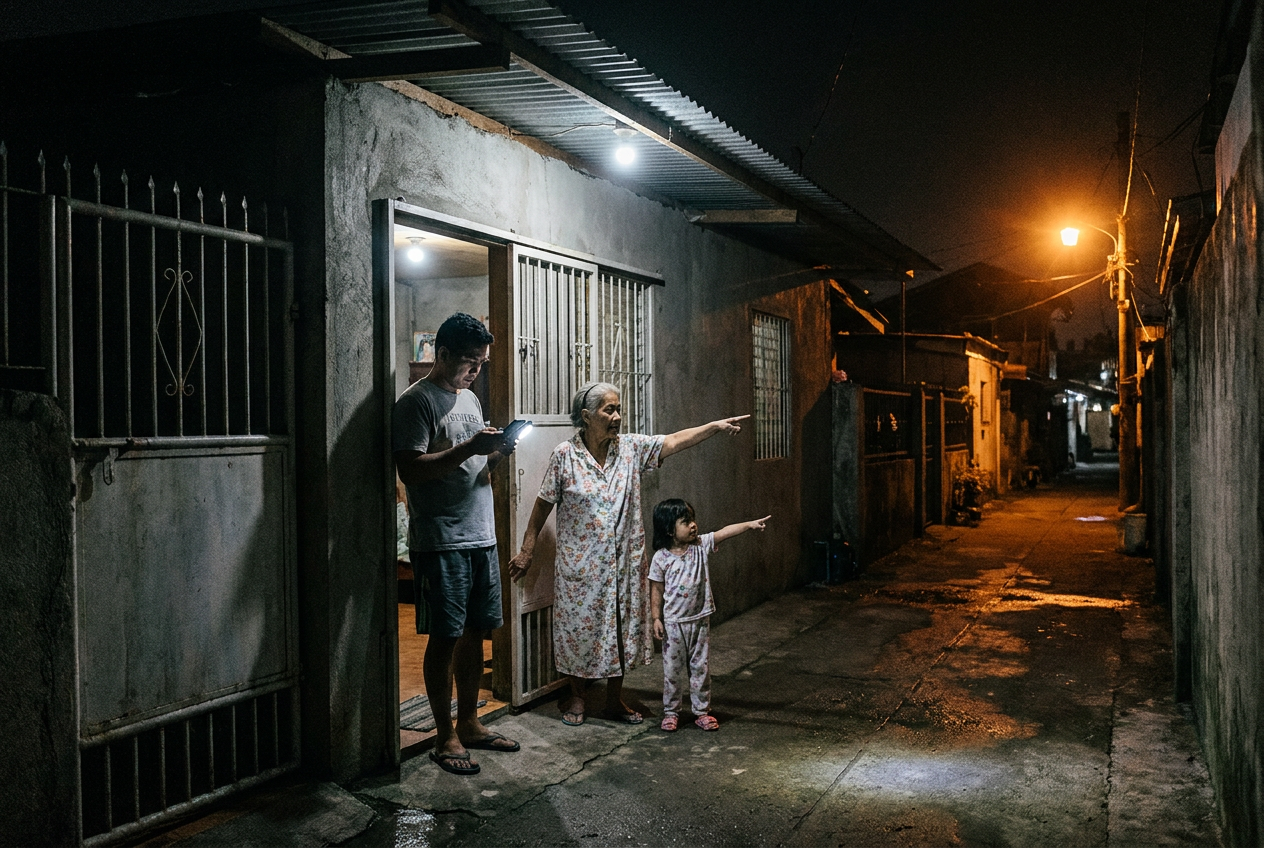
- A basic flashlight or headlamp kept by the bed, since most fires that matter happen when the lights are already off. This overlaps with your everyday carry kit — see our EDC guide if you haven’t put one together yet.
For the fuller emergency kit this connects to, our fire safety scenario page has the rest of the picture.
Common mistakes
The extinguisher bought and never checked again — pressure gauges drift low over the years, and an extinguisher that won’t discharge is worse than none, because it costs you the seconds you’d have spent running instead.
The smoke alarm installed, then muted after one false alarm from cooking and never turned back on. A silenced alarm is a decoration.
Treating the kasambahay as someone to protect rather than someone to include in the plan. They are often the one home alone with the children — they need to know the plan as well as anyone, ideally better.
Assuming the fire exit is clear because it was clear the last time you looked. Boxes, drying racks, and stored furniture creep into hallways and in front of windows over months without anyone noticing.
Relying on the elevator in a high-rise because it’s the exit everyone actually knows. Walk the stairwell before you need it.
The one thing to remember
A smoke alarm that works is worth more than everything else in this guide combined, because it buys back the one thing a nighttime fire steals first — time to notice. Everything else, from the extinguisher to the drill to the two exits sketched on paper, is what you do with that time once you have it. None of it needs to be expensive, and none of it needs to be complicated. It just needs to already be in place before the night it matters.