Typhoon safety for dogs and cats in the Philippines
Typhoon pet safety guide for Filipino homes: build a pet emergency kit, find pet-friendly evacuation spots, and the one rule that saves dogs and cats from
The situation
From June to November, the Philippines gets most of its typhoons, and most families plan for themselves — food, water, a go bag by the door — without giving much thought to the dog asleep under the table or the cat that bolts the second thunder starts. That is understandable. It is also where things go wrong.
When a storm surges or a river breaks its banks, water can rise inside a house faster than most people expect — not over hours, but sometimes over tens of minutes. Pets do not understand what is happening. They panic, they hide, they resist being moved. And in barangays that flood every year, the pattern repeats: families leave in a hurry, and the pet gets left behind tied in the yard or shut in a cage “just for a little while,” because there is no time and no clear plan.
That decision, made in a rush, is the single most common way pets die in Philippine floods. It is preventable, and it is the heart of this guide.
What actually matters
Strip away the noise and three things decide whether your pet comes through a typhoon safely:
- Your pet can move. Never tied, never caged, when water is rising. A leash or a carrier your pet can be moved in is different from a chain or a cage left behind.
- Your pet can be identified. A collar tag with your number, and ideally a microchip, so that if you are separated, whoever finds your dog or cat can get it back to you.
- You have decided where you are going before the storm arrives — and that place accepts animals. Deciding this after PAGASA has already raised a signal is too late to be calm about it.
Everything else — the food, the meds, the carrier — supports those three things. None of it matters if the pet is left behind.
What to do (and what not to)
Never tie or cage a pet and leave it during a flood. Say it plainly, because plain is how it needs to be said: a tied dog or a caged cat cannot swim, cannot climb, cannot follow you to higher ground. Every year, without fail, this is how family pets drown — not from neglect, but from a rushed decision that felt safer than it was. If you cannot bring your pet with you, at minimum leave it loose, on high ground, with a way out. But the honest answer is: bring your pet with you, or do not leave it in a position where it cannot save itself.
In search-and-rescue work, one lesson repeated itself in every disaster zone with stranded animals: the ones that survived were the ones that could still move on their own. Confinement kills in a flood. Mobility is what gives an animal a chance.
Do this before the season starts, not during the storm:
- Fit a collar with a legible ID tag — name, your number, a second contact if you have one. Tags cost around ₱150–₱400 depending on material; get one that will not fade.
- Have your pet microchipped if you have not already. It is a one-time cost, typically ₱500–₱1,500 at a vet clinic, and it survives a lost collar, a soaked tag, or months apart from you. It will not replace a collar tag for a quick reunion, but it is the permanent backup when everything else fails.
- Photograph your pet clearly — full body, face, any distinct markings — and keep the photo somewhere that is not just on a phone that might get wet or lost.
- Ask, calmly and in advance, whether your intended evacuation center accepts pets. Many public evacuation centers historically have not, for public health reasons, though this has improved as DSWD and local government units expand pet-friendly and pet-accommodating sites. Do not assume — ask your barangay directly, before the season, not during Signal No. 3.
- Have a backup plan: a relative on higher ground, a boarding kennel outside the flood zone, or a pet-friendly evacuation center your barangay has confirmed. Two options beat one.
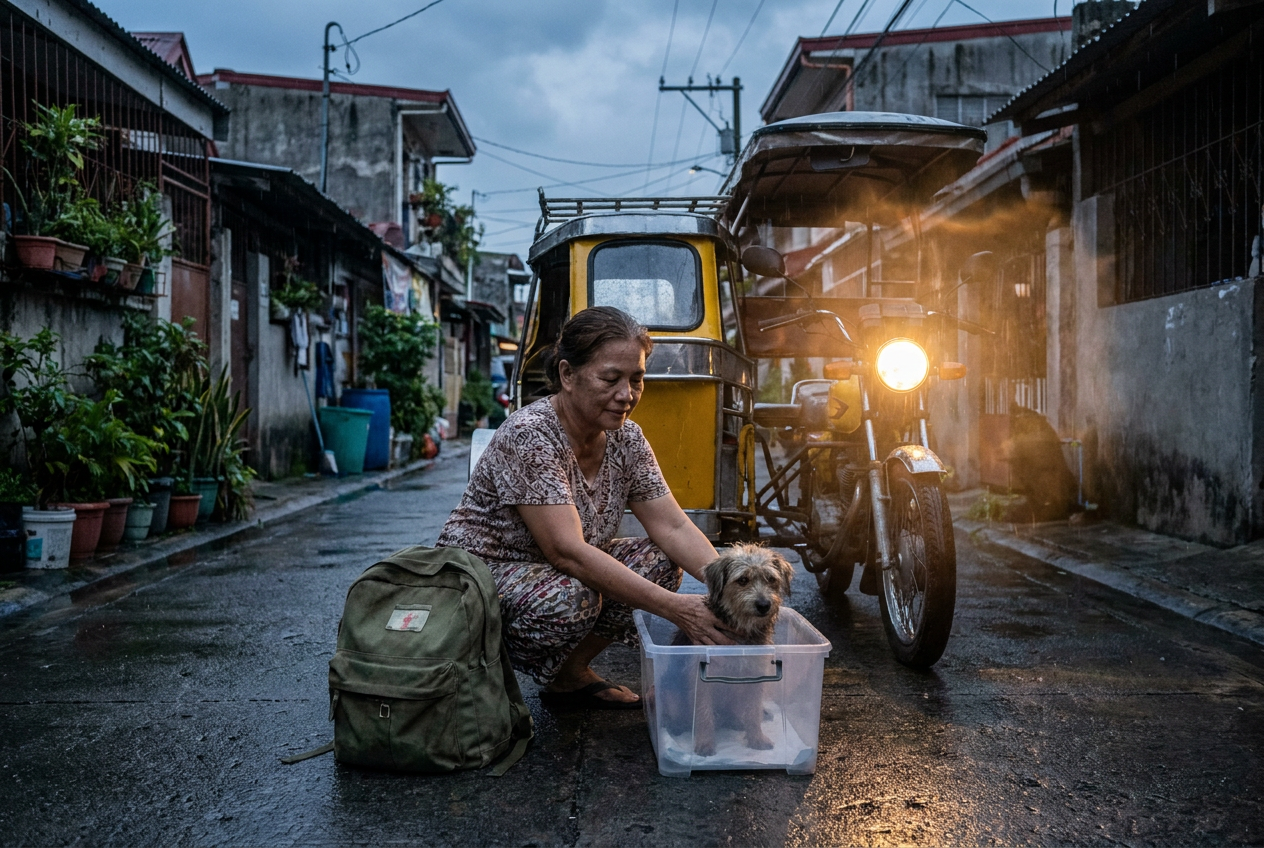
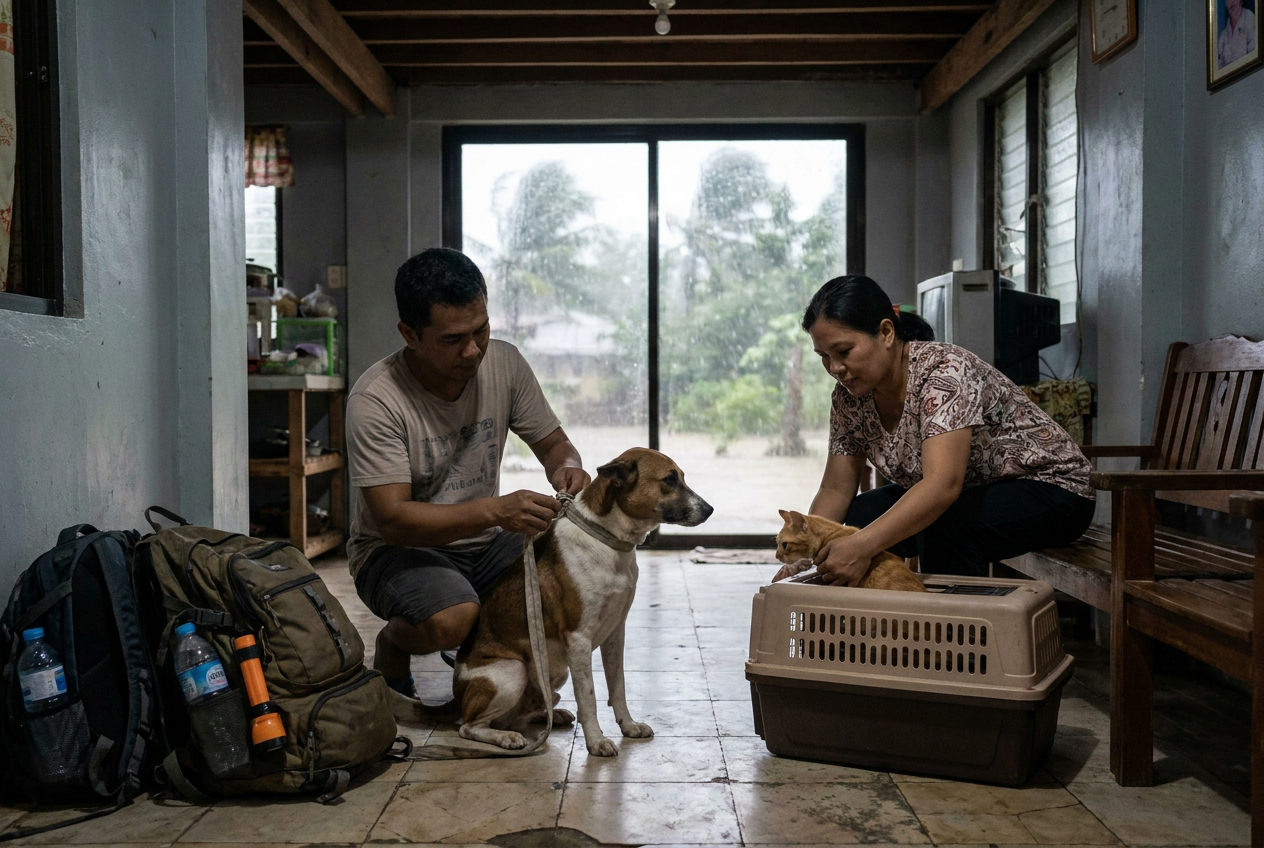
During the storm itself: bring your pet indoors well before water starts rising, keep it on a leash or in a secure but openable carrier, and if you evacuate, evacuate together. If a carrier will not fit in the tricycle or the family car with everyone else, that is a planning problem to solve this month, not a decision to make at the doorway with water already coming in.
The gear that helps
You do not need much, and none of it needs to be fancy. A pet emergency kit sits comfortably in the ₱500 to ₱3,000 range for most households, depending on the size and number of animals.
- A carrier or secure leash and harness your pet is already used to. The middle of a storm is the wrong time for a first introduction to a crate.
- Three to seven days of food and water, in a container your pet cannot chew through, rotated so it does not go stale before the season ends.
- A basic pet first aid kit and a two-week supply of any regular medication, kept with — not separate from — your own go bag.
- Printed vaccination records and a recent photo, in a sealed bag. Some pet-friendly shelters and boarding options will ask for proof of rabies vaccination before accepting an animal.
- A collar with an ID tag, plus microchipping, as covered above. Cheap, permanent, and the difference between a lost pet and a returned one.
- A comfort item — a blanket or toy that smells like home. It sounds sentimental, but a calmer animal is an easier animal to move quickly.
If you are building this alongside your household’s own flood ready or typhoon season preparations, keep the pet kit next to the family one. Grabbing both in one trip matters when you are moving fast.
Common mistakes
- Tying up or caging a pet “temporarily” during a flood. This is the mistake that kills. There is no version of it that is safe.
- Assuming an evacuation center will take pets. Some do, many still do not. Confirm with your barangay before the season, not during it.
- Skipping ID because the pet “never gets out.” Storms change that. Fences fall, gates get left open in the rush, and a frightened animal runs.
- Packing pet food but forgetting water. Floodwater is not safe for pets to drink any more than it is for people — contaminated runoff carries the same risks either way.
- Letting pets outside right after the storm passes. Downed power lines, displaced snakes and other wildlife pushed out of flooded areas, and floodwater still carrying sewage and debris are all real dangers in the day or two after a typhoon. Keep pets leashed and supervised until you have checked the yard yourself, in daylight.
The one thing to remember
A pet emergency kit is a small thing to put together and an easy thing to forget until the water is already rising. Build it this month, while PAGASA is still just tracking a low-pressure area out in the Pacific. Fit the tag, book the microchip appointment, ask your barangay the pet-friendly question. Then remember the one rule that matters more than any item on the list: when the water comes, your pet needs to be able to move. Never tied, never caged, always with a way to higher ground — ideally, right beside you.