Sheltering in place when flood water traps you at home
Trapped by rising floodwater? A room-by-room guide for Filipino homes: when to cut power, protect food and documents, and stay safe until water recedes.
What you’ll be able to do — and why it matters
Sometimes the water comes up faster than the barangay can call for evacuation, or the road out is already a river, or you have an elderly parent or a newborn and moving them is riskier than staying put. This guide is for that moment: you are not leaving, at least not yet, and you need to make the house as safe as it can be with the people and things already inside it.
Sheltering in place during a flood is not about being brave. It is about doing a short list of things in the right order, before the water reaches switches and shelves, so that when it recedes you still have a working home, clean water, and no one hurt. I have gone into a lot of homes after the water dropped, and the ones that came through cleanest were never the ones with the most gear — they were the ones where someone had gone room to room early and made calm decisions before the power went out and the ground floor went under.
This pairs with our flood ready guidance on documents and go bags, our power outage planning, and our clean water basics — this piece is the missing middle: what to actually do while you’re stuck inside.
What you need
Nothing here is exotic, and most of it you likely have already:
- A flashlight or headlamp per person, not a shared one — hands-free light matters when you are carrying things upstairs in the dark
- A power bank, charged before the storm, for phones and a battery radio
- A battery or crank AM/FM radio for PAGASA bulletins when data and signal drop
- Water containers you can fill before the mains get contaminated
- A whistle per household — for signaling, not for decoration
- Plastic bins or heavy trash bags to waterproof valuables and documents
- A rope or cord long enough to lower or hoist small items between floors
If you haven’t put together a proper go bag yet, our go bag guide covers that separately — sheltering in place still means keeping one packed and dry, in case the water forces a rooftop evacuation later.
The method: room by room, in order
Work fast but don’t run. Floors get slick before they look wet.
1. Kitchen — do this first, while the tap water is still clean
- Fill every clean container, pot, and the bathtub with tap water before the utility line can be contaminated by floodwater intrusion. This is your drinking and washing reserve.
- Move rice, canned goods, and anything in cardboard to the highest shelf or counter. Cardboard wicks water from below even before the shelf floods.
- Unplug the refrigerator, microwave, and rice cooker at the wall, not just switch off. Move small appliances up onto the counter or a high shelf.
- Turn off the gas tank valve if you cook with LPG, not just the stove knob.
2. Main circuit breaker — before the water reaches any outlet
- Turn off the main breaker as soon as water is approaching floor level indoors, or the moment a floor-level outlet is at risk — do not wait until water is actually touching a socket. Water is a conductor before it visibly reaches the plug.
- If the breaker panel itself is already wet, or you would need to stand in water to reach it, do not touch it. Leave it and call it in when help arrives. A shock risk is not worth saving a panel.
- Once it’s off, leave it off until a qualified electrician or your utility confirms the wiring is dry and safe — not just until the visible water is gone.
3. Bedrooms — protect people first, then papers
- Move mattresses and bedding for elderly family members or small children to the highest usable floor now, before you’re doing it in a hurry later.
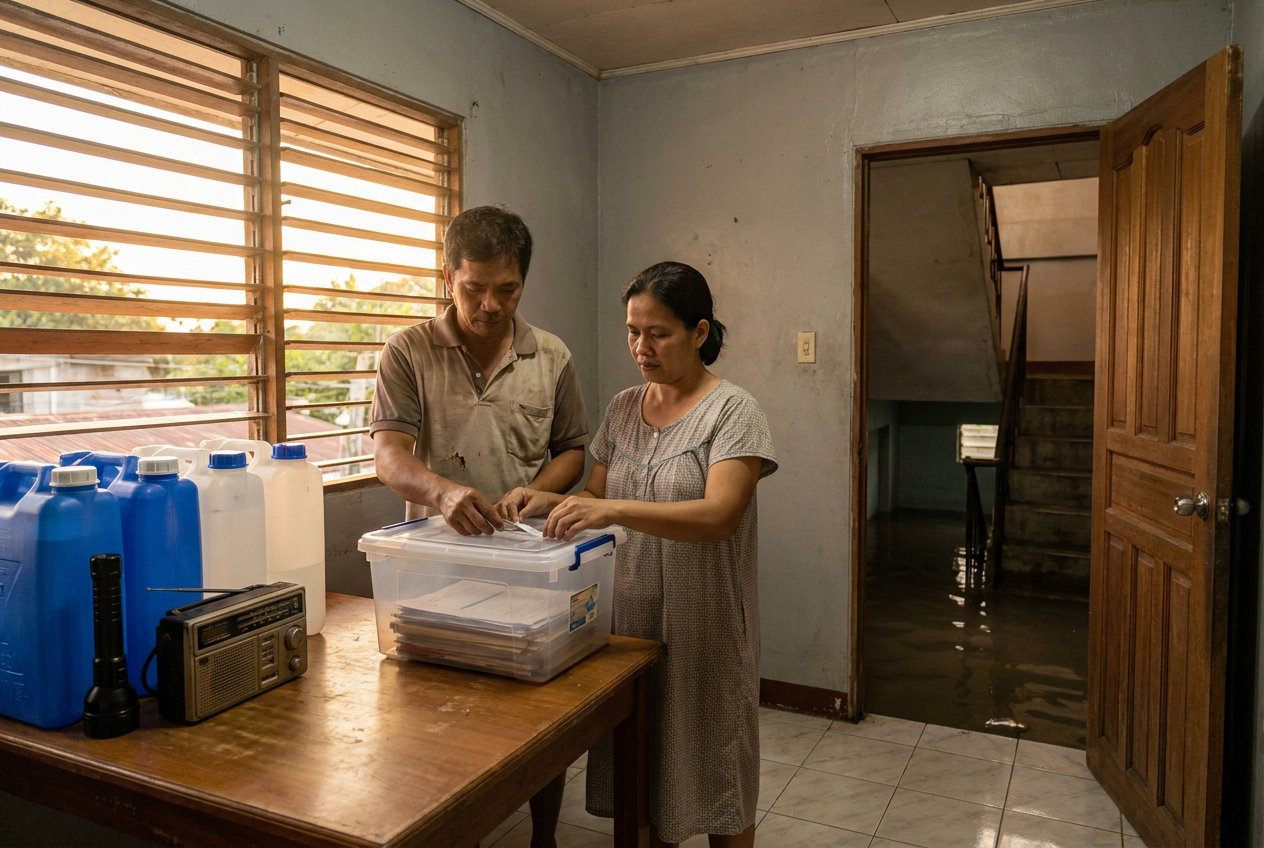
- Move your document bag (IDs, land titles, insurance, medicine list) into a sealed plastic bin, placed on a high shelf or carried upstairs. If you haven’t organized this yet, that’s covered in our flood ready documents guidance.
- Elevate anything irreplaceable — photos, jewelry, cash — the same way. Sentimental value doesn’t float.
4. Living areas — valuables and structure
- Prop furniture legs on blocks or bricks if you have time and the water rise looks slow and moderate. Skip this if the rise is fast; don’t waste minutes on furniture when you should be moving people.
- Unplug the television, router, and any device on a low table. Move them higher or wrap them in plastic and set them on top of a cabinet.
- Roll up rugs and move them up if you can; wet fabric left on the floor grows mold fast once the water recedes.
5. Upper floor or roof access — your safe zone
- Designate one room or the roof access point as the family’s base once the ground floor is compromised. Keep the go bag, radio, phone, whistle, and water there, not scattered.
- Keep a working flashlight there at all times, checked daily, not just during the storm.
Water rationing while you wait
Once your stored water is what you have, treat it like it matters:
- Estimate about 3 liters per person per day for drinking alone; more if you have a nursing mother, someone sick, or serious heat.
- Ration by using stored water for drinking and cooking first; save any collected rainwater or questionable sources for washing and flushing, not drinking, unless you have boiled or properly treated it.
- Boiling for 2 minutes, then letting it cool with the lid on and pouring it into a clean covered container (DOH), is the simplest reliable treatment if you have a working stove and safe gas. If you don’t, a rated water filter or purification tablets used exactly as the label says are worth having; we cover that ground in clean water.
- Do not ration food and water so tightly that anyone — especially children or the elderly — becomes dehydrated. Running low is a signal to call for resupply through your barangay, not to stretch further silently.
Signaling for help from an upper floor
- A whistle carries much farther than a shouting voice and doesn’t tire out. Three short blasts, repeated, is the universal distress signal.
- In daylight, a brightly colored cloth or shirt tied to a window grille or held from the roof is visible to rescue boats and aircraft long before a voice is.
- At night, a flashlight is worth more than a phone screen. Point it toward the direction rescuers are likely coming from — the main road, not away from it.
- Write your family size and any urgent medical needs on cardboard or cloth in large letters if you expect rescuers to pass by boat. This is standard practice in flood response, and it saves rescuers from guessing.
- In an emergency, call 911 first. If the call won’t go through, text a relative your exact address and situation and ask them to relay it to 911 and your barangay.
What NOT to do
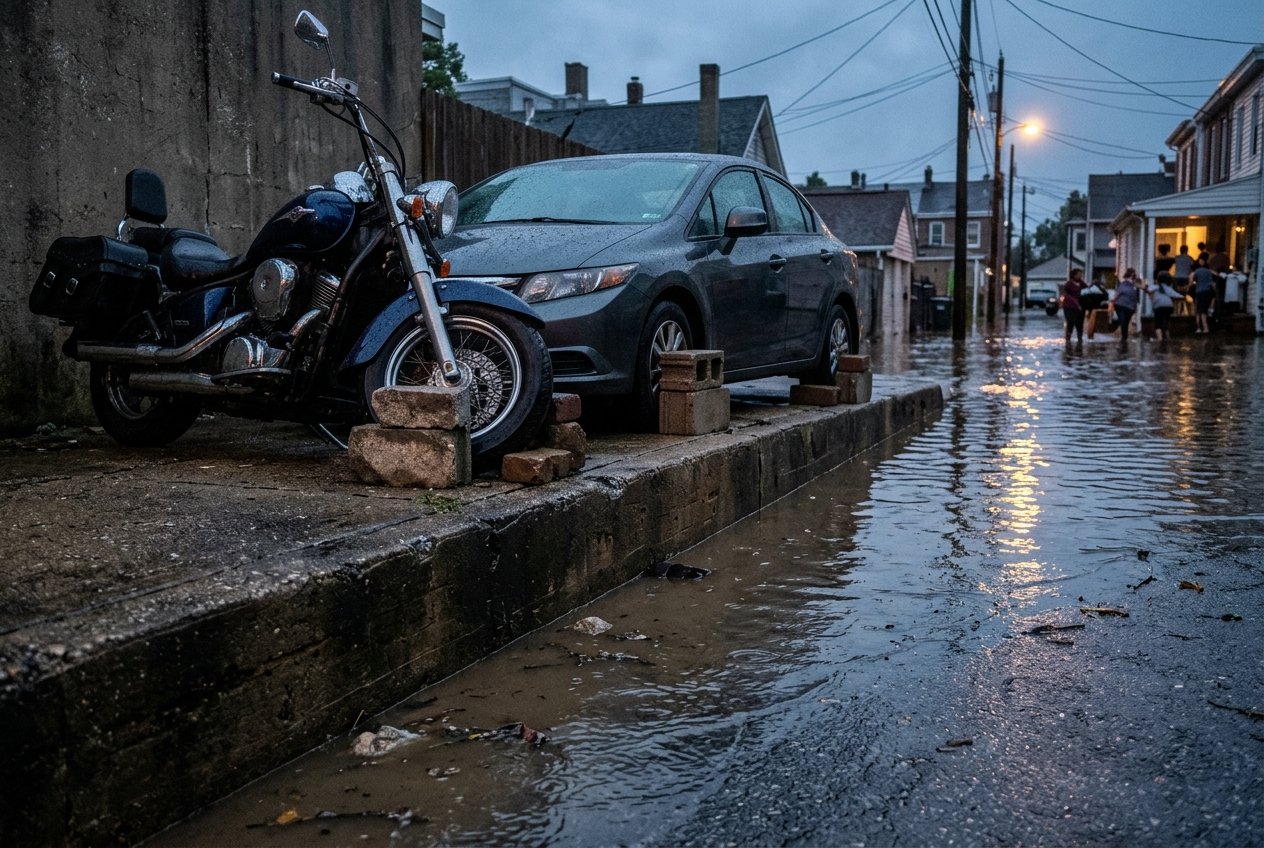
- Do not wade through floodwater, even if it looks shallow and calm. Floodwater regularly carries downed or submerged live wires, and electrocution from water that looks harmless is a real and recurring cause of death during floods. It also carries sewage and animal waste, and wading through it is one of the most common ways people contract leptospirosis, a bacterial infection that can turn serious within days. If you did wade, wash with soap and clean water and see a doctor within 24–48 hours, even without symptoms; don’t self-medicate.
- Do not use electrical appliances on wet floors or with wet hands, even after you think the breaker is off. If there’s any doubt the panel is fully off and dry, treat every outlet as live.
- Do not go back down for belongings once you’ve moved to the upper floor and the ground floor is flooded. I have seen the “just one more trip” decision go wrong more times than it ever went fine — nothing on the ground floor is worth going back through rising water for.
- Do not rely on a single phone as your only way to call for help. Batteries die, towers go down, and networks get congested exactly when everyone needs them.
- Do not assume the water has peaked just because it’s stopped rising for an hour. Flooding from upstream rainfall or a dam release can arrive with no local warning. Keep checking bulletins.
Staying informed without internet
- A battery or hand-crank AM/FM radio is the most reliable way to get PAGASA advisories once data drops — most local AM stations rebroadcast official bulletins during a flood event.
- Text messages often get through on cellular networks even when data and calls are congested or down; if a call to 911 won’t go through, try SMS to a relative outside the flooded area.
- Check in with your barangay’s own communication channel if they have one — many now use radio, tanod runners, or loudhailer announcements when digital channels fail.
- If you have a NOAH- or PAGASA-linked flood sensor or gauge nearby, a neighbor with a working connection can sometimes relay updates by shouting distance or megaphone — plain, old, and it works.
Variations & conditions
High-rise or condo units: Your main risk is usually the basement parking and ground-floor utilities, not your own unit. Still cut power to unused appliances, keep your unit’s own emergency kit ready, and know that elevators will likely be out — plan for stairs with anyone who has mobility issues, before the water rises, not during.
Single-story homes: Your “upper floor” may only be a loft, a sturdy table, or the roof. If you genuinely have no safe upper space and the water is rising fast, sheltering in place stops being the right call — this is when early evacuation, before the water cuts off your street, matters more than anything on this list.
Nighttime flooding: Everything above gets harder in the dark. Prioritize headlamps over flashlights so your hands stay free, and do the circuit breaker and water-filling steps as soon as you get any storm warning, well before dark, so you’re not doing them blind.
Common mistakes
- Waiting to turn off the breaker until water is already touching an outlet — by then it’s too dangerous to reach.
- Filling water containers only after the taps have already gone brown or stopped running.
- Treating “the rain has stopped” as “the flood has peaked” — river and drainage flooding often lags the rain by hours.
- Packing the go bag but leaving it on the ground floor, where it floods along with everything else.
- Going quiet on signaling because you assume someone already knows you’re there. Rescuers work off reports, not assumptions.
How to practice safely
Walk your own home now, dry, and time yourself: how long does it take to fill every container, cut the main breaker, and move the document bin upstairs? Do it once as a family drill, out loud, assigning who does what — kids can carry light items and hold the flashlight while adults handle the breaker and heavy lifting.
No bag, no radio, and no checklist replaces leaving early when the barangay calls for evacuation. This guide is for the gap between “the water is rising” and “we can’t get out” — not a reason to wait past the point where leaving was still possible.
Galing Gear shares general preparedness and first aid information based on sources such as the DOH, WHO and the Philippine Red Cross. It is not a diagnosis or prescription, and it does not replace a doctor, nurse, pharmacist or trained responder. We never give medicine doses. Follow the latest advice of the DOH, your local health office and your medicine’s label. In an emergency, call 911. Philippine Red Cross: 143. Mental health crisis (NCMH): 1553 (landline). When unsure, get checked.