PHIVOLCS volcano alert levels explained: what to do at each stage
A plain-language walkthrough of what each PHIVOLCS volcano alert level actually means and what families near Taal, Mayon, Kanlaon, Bulusan or Pinatubo should do at each stage, from routine awareness to mandatory evacuation.
What a PHIVOLCS alert level actually tells you
PHIVOLCS alert level meaning comes down to one thing: how worried the scientists are, expressed as a number. PHIVOLCS assigns most of our active volcanoes an alert level, usually on a 0 to 5 scale, based on how far the ground, gas and seismic readings have moved from normal.
It is not a weather forecast. It is a read on what the volcano is doing right now, updated as new data comes in. If you live near Taal, Mayon, Kanlaon, Bulusan or Pinatubo, that number is the single most useful thing to check before deciding anything, from packing a go-bag to leaving the house.
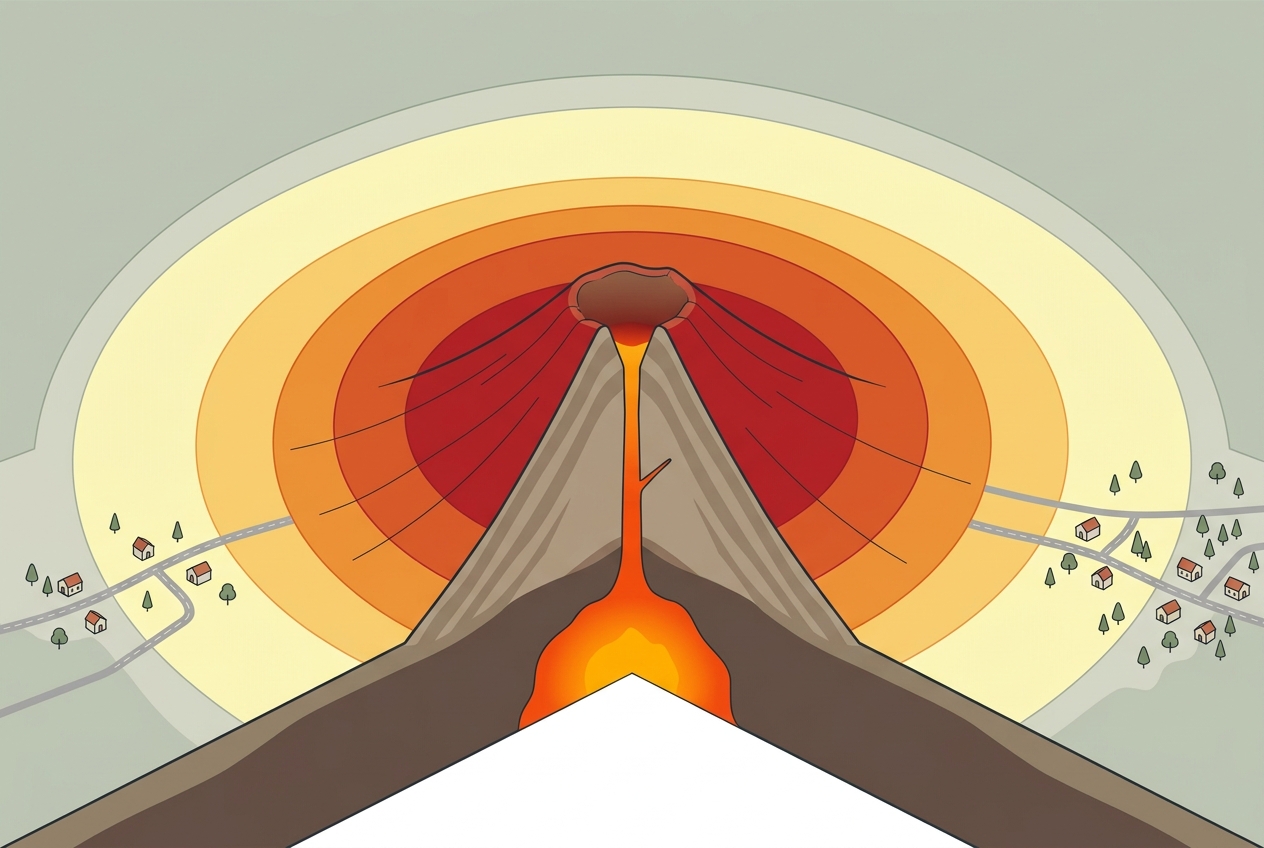
Each volcano is assessed on its own, with its own hazard map and its own history. Taal’s permanent danger zone covers the entire Taal Volcano Island, since any eruption there threatens the whole island. Mayon’s hazard zones are drawn as distance-based rings radiating out from the crater, reflecting its past pattern of lava flows and pyroclastic density currents. Kanlaon and Bulusan each have their own PHIVOLCS-mapped danger zones shaped by their own eruption history, and Pinatubo’s hazards are shaped partly by decades of lahar-prone river channels left over from 1991.
This means two volcanoes can sit at different alert levels at the same time, and even at the same level, “danger zone” can mean a different shape and distance for each one. Always check the bulletin for the specific volcano near you, not a general headline about “a volcano” in the news.
The alert levels, stage by stage
PHIVOLCS calibrates the exact criteria and hazard distances separately for each volcano, so the detail of a Level 3 at Mayon is not identical to a Level 3 at Kanlaon. What follows is the general pattern PHIVOLCS uses across most of its monitored volcanoes. Treat it as a guide to the shape of each stage, and always read the specific volcano’s own bulletin for the current wording and timeframe.
Alert Level 0: Normal. Background, quiet activity only. No unusual earthquakes, no significant gas or ground changes. This is where most of our volcanoes sit most of the time. It calls for nothing more than ordinary awareness: know that you live near an active volcano, and know where to check for updates.
Alert Level 1: Low-level unrest. Some signs of change, such as minor earthquakes or small gas increases, but nothing pointing to an eruption soon. This stage calls for heightened awareness. It’s a good time to confirm your family’s evacuation route, check your go-bag, and make sure everyone knows the plan, without any need to leave home.
Alert Level 2: Escalating unrest. A clearer pattern of change, such as a cluster of volcanic earthquakes, ground swelling, or rising gas emissions, suggesting magma or fluid is moving and could lead to an eruption. This is the stage for readiness to evacuate. Keep your go-bag by the door, keep your phone charged, and follow local government announcements closely.
Alert Level 3: Magma close to the surface. PHIVOLCS typically describes this level as signalling that magma has moved close to the surface and that a hazardous eruption is possible. Exact timeframes are not fixed across all volcanoes, so check the current bulletin’s own wording for the volcano near you, rather than assuming a set number of days or weeks. Local authorities often begin preparing the most exposed barangays for evacuation at this stage, though the exact trigger point is set by each LGU and can vary. Listen for your barangay’s own instructions.
Alert Level 4: Hazardous eruption possible on a short timeframe. PHIVOLCS generally uses this level to flag that a hazardous eruption could happen soon, with the precise timeframe stated in the volcano’s current bulletin rather than a fixed number of days. Mandatory evacuation of the permanent danger zone and other at-risk areas is commonly ordered at or before this stage, but the exact trigger is set by the LGU in coordination with PHIVOLCS and NDRRMC, and it can differ by volcano and by barangay. If your area is included in an evacuation order, you leave when told, not after double-checking online.
Alert Level 5: Hazardous eruption in progress. An eruption that is dangerous to nearby communities is already happening. Evacuation of affected zones is mandatory and urgent. At this stage you are reacting to an ongoing event, not preparing for a possible one.
Not every volcano uses the full 0 to 5 range, and the exact hazard distances and timeframes attached to each level differ by volcano and can be revised. Treat the number as your cue to go read that specific volcano’s own current bulletin, not as a fixed recipe that applies everywhere.
What to do (and what not to) at each stage
At Alert Level 0 or 1:
- Know your area’s PHIVOLCS-mapped danger zones. HazardHunterPH lets you check a specific address against volcanic hazard maps.
- Keep a basic go-bag packed. See our volcanic ashfall guide for what belongs in it.
- Don’t panic-buy masks or supplies off a rumor. Confirm the alert level first.
At Alert Level 2:
- Review your family’s evacuation route and meeting point with everyone in the household, including kids, lolos, lolas, and anyone who needs help moving quickly.
- Pack or re-check your go-bag, including a list of maintenance medicines for anyone who takes them.
- Keep pet carriers and leashes accessible. Evacuation centers vary on how they handle pets, so check with your barangay in advance.
- Don’t rely on neighbors’ guesses or old screenshots for the current level. Check the PHIVOLCS bulletin directly.
At Alert Level 3 and up:
- Follow your local government unit’s instructions on evacuation, even if you’re just outside the official danger zone. Hazard zones are drawn from past eruptions, and a new one doesn’t always behave the same way.
- Bring your go-bag, your medicines, and your family, in that order of urgency.
- If you have no transport or need help evacuating, contact your barangay or city/municipal Disaster Risk Reduction and Management Office (DRRMO) directly; they coordinate local evacuation assistance.
- Don’t wait to see what happens next. Readiness at this stage means leaving when told, not after checking what others are doing.
At Alert Level 4 or 5:
- Evacuate immediately if your area is covered by the order. No bag replaces leaving early.
- For injuries, medical needs or welfare concerns during evacuation, the Philippine Red Cross can be reached at 143. For life-threatening emergencies, call 911 first.
- Don’t attempt to return home to collect belongings once an evacuation is underway.
- Don’t approach the volcano for photos or video. People have died doing exactly this.
Where to check, and where not to
Check PHIVOLCS directly for the current alert level of any volcano you live near. Their bulletins are the primary source, issued and updated by the scientists actually monitoring the volcano.
Social media moves faster than the facts do. A level change announced on Facebook before PHIVOLCS has posted it is either early, wrong, or an old update being recirculated. Wait for the bulletin, or your barangay or LGU’s official channel relaying it.
News reports can lag or compress the bulletin. One Inquirer report dated October 3, 2026 described Kanlaon Volcano at Alert Level 2, citing PHIVOLCS’s warning of a possible further eruption after a cluster of volcanic-tectonic earthquakes.
By the time you’re reading this, that status could easily have changed in either direction. Treat it as an illustration of what Level 2 can look like in a news report, not as today’s status. Always confirm the current level for Kanlaon, or any volcano, at PHIVOLCS itself, since a bulletin is always more current and more precise than a news summary of it.
The gear that helps
This article is about reading the alert level, not about packing or cleanup, both of which we cover elsewhere:
- For what belongs in a household go-bag and how to prepare before ashfall arrives, see our volcanic ashfall guide.
- For roof, room and yard safety once ash has actually fallen, see our ashfall cleanup guide.
Common mistakes
- Treating one alert level as if it means the same hazard distance and timeframe everywhere. Taal, Mayon, Kanlaon, Bulusan and Pinatubo each have differently shaped danger zones and their own bulletin wording. Check the specific volcano’s own current bulletin.
- Waiting for Alert Level 4 to start preparing. By the time mandatory evacuation is called, you want your go-bag already packed, not still being assembled.
- Trusting a screenshot or news summary over the source. If a level change is real, PHIVOLCS will have posted it. If you can’t find it on their bulletin, assume it hasn’t happened yet or confirm with your LGU.
- Going back for belongings during an evacuation. Once you’re out of the danger zone, stay out until authorities say it’s safe to return.
The one thing to remember
The alert level number tells you how urgent the situation is, but the exact meaning and timeframe for each level come from that specific volcano’s own current PHIVOLCS bulletin. When it rises, check the bulletin, follow your local evacuation order, and leave when told.
Galing Gear shares general preparedness and first aid information based on sources such as the DOH, WHO and the Philippine Red Cross. It is not a diagnosis or prescription, and it does not replace a doctor, nurse, pharmacist or trained responder. We never give medicine doses. Follow the latest advice of the DOH, your local health office and your medicine’s label. In an emergency, call 911. Philippine Red Cross: 143. Mental health crisis (NCMH): 1553 (landline). When unsure, get checked.