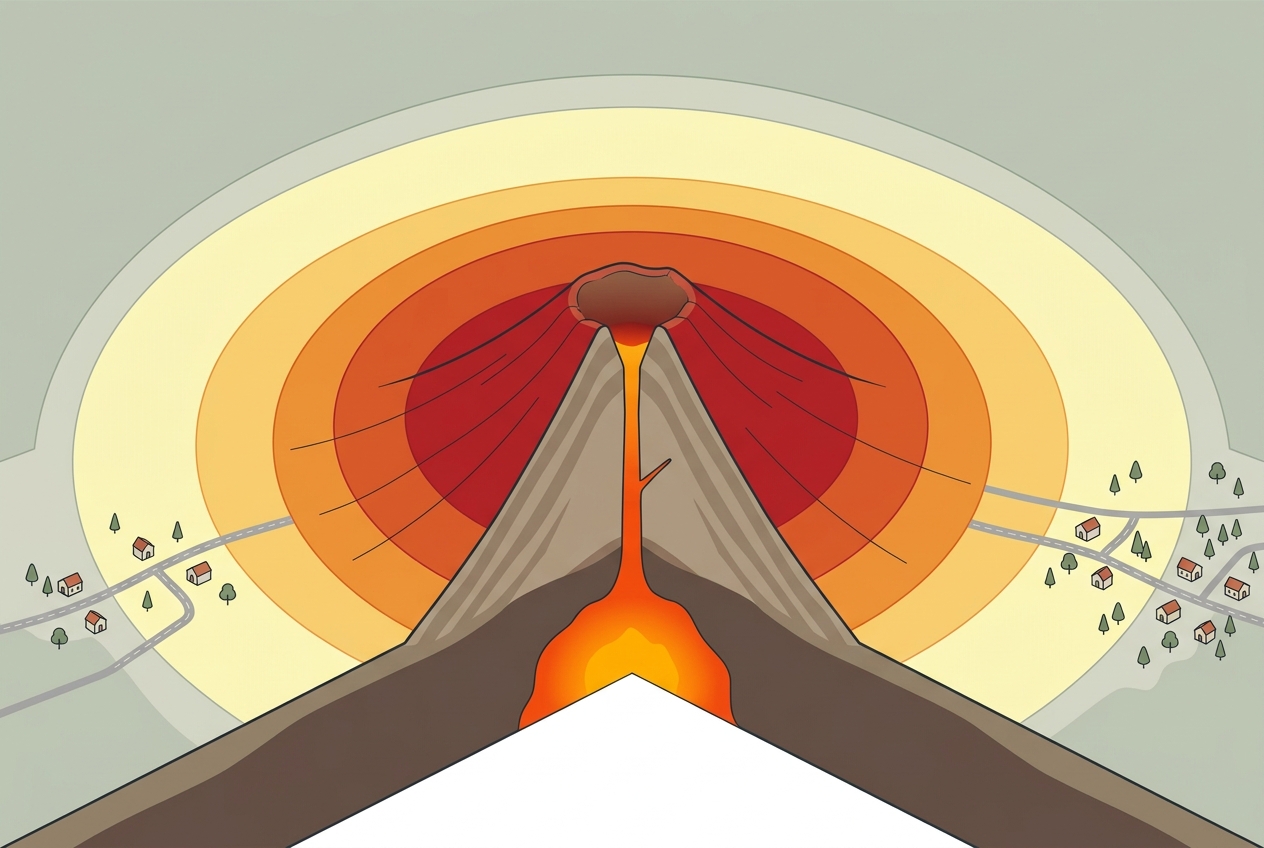
Ashfall cleanup guide: roof, room, and yard safety tips
Safe ashfall cleanup guide for Filipino homes: clear roofs, rooms, and yards after Taal, Mayon, or Bulusan eruptions without injury or clogged drains.
What you’ll be able to do — and why it matters
Once PHIVOLCS and your local government say it is safe to go back outside, the cleanup starts — and this is where a surprising number of people get hurt. Not during the ashfall itself, but after, when the danger feels like it has passed.
This guide picks up exactly where our volcanic ashfall guide leaves off. That one covers what to do before and during ashfall from Taal, Mayon, or Bulusan. This one is only about the days after — clearing your roof without falling off it, cleaning your rooms without grinding ash into everything you own, protecting your water and food, and getting rid of the ash without wrecking your drains.
Volcanic ash is not the same as soot or dust. It is made of tiny fragments of pulverized rock and glass. It is abrasive enough to scratch skin, eyes, and lungs. It is also heavier than it looks once it gets wet, and wet ash sitting on an old or already-stressed roof is a real structural risk — which is exactly why the roof step below tells you to check before you climb, not after. And if you sweep it dry, it goes right back up into the air you and your family are breathing. Every step below is built around those facts.
What you need
You do not need specialty gear for this. You need a short list, done right:
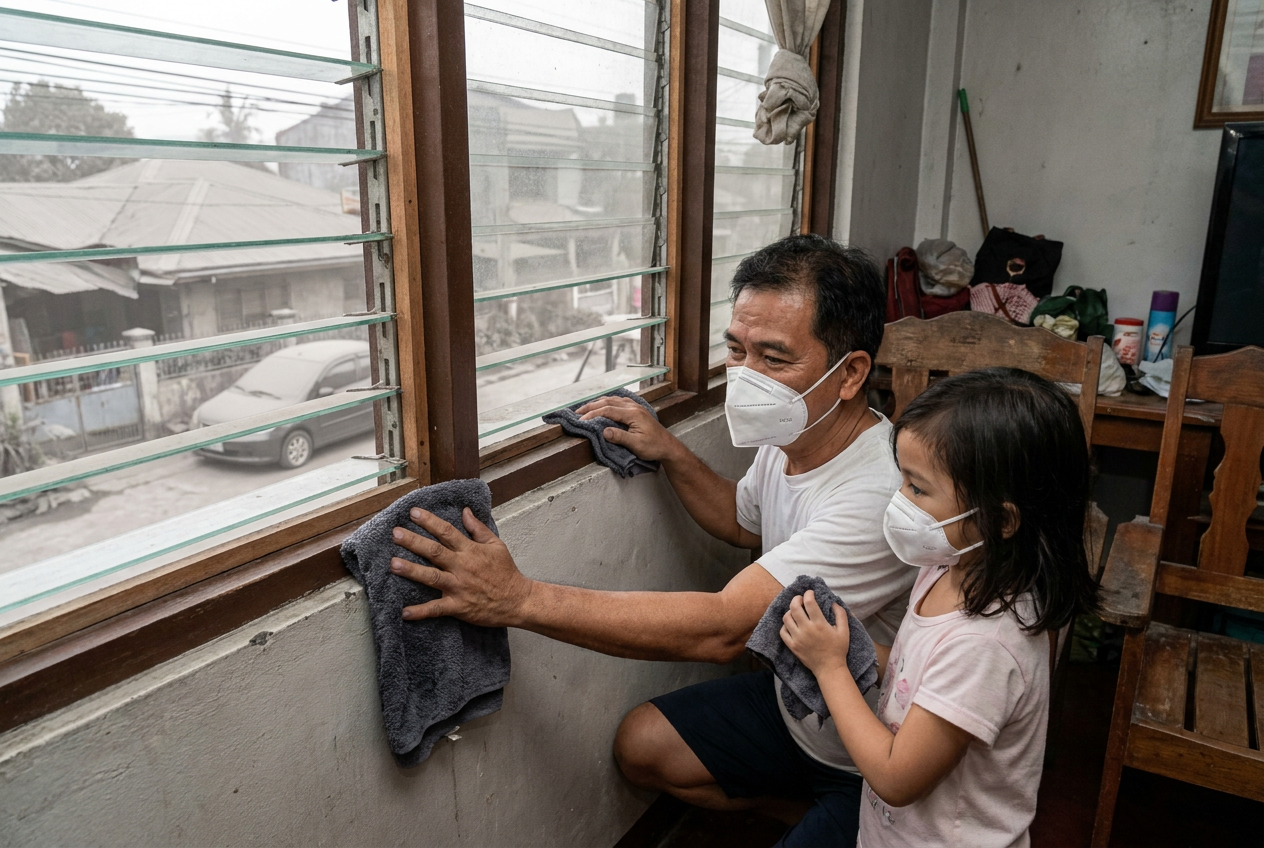
- N95 masks for every household member helping with cleanup, not just cloth masks. Ash particles are fine enough to get past ordinary cloth. If you already have a stock from our go bag checklist, this is what it is for.
- Goggles or tight-fitting eye protection. Ash under a contact lens or in an open eye is genuinely painful and can scratch the cornea.
- Long sleeves, gloves, and closed shoes — ash is abrasive on skin, and roof ash hides sharp roofing edges and nails.
- A soft push broom or squeegee, not a stiff bristle broom. Stiff bristles fling ash into the air. A soft broom or a rubber squeegee moves it without launching it.
- A garden hose or sprinkler with a fine mist setting, if your water supply allows it. Light misting keeps ash from becoming airborne while you work.
- Heavy-duty garbage bags or sacks (sako) — the same woven sacks most hardware stores and palengkes sell for construction debris — and a shovel or dustpan for scooping.
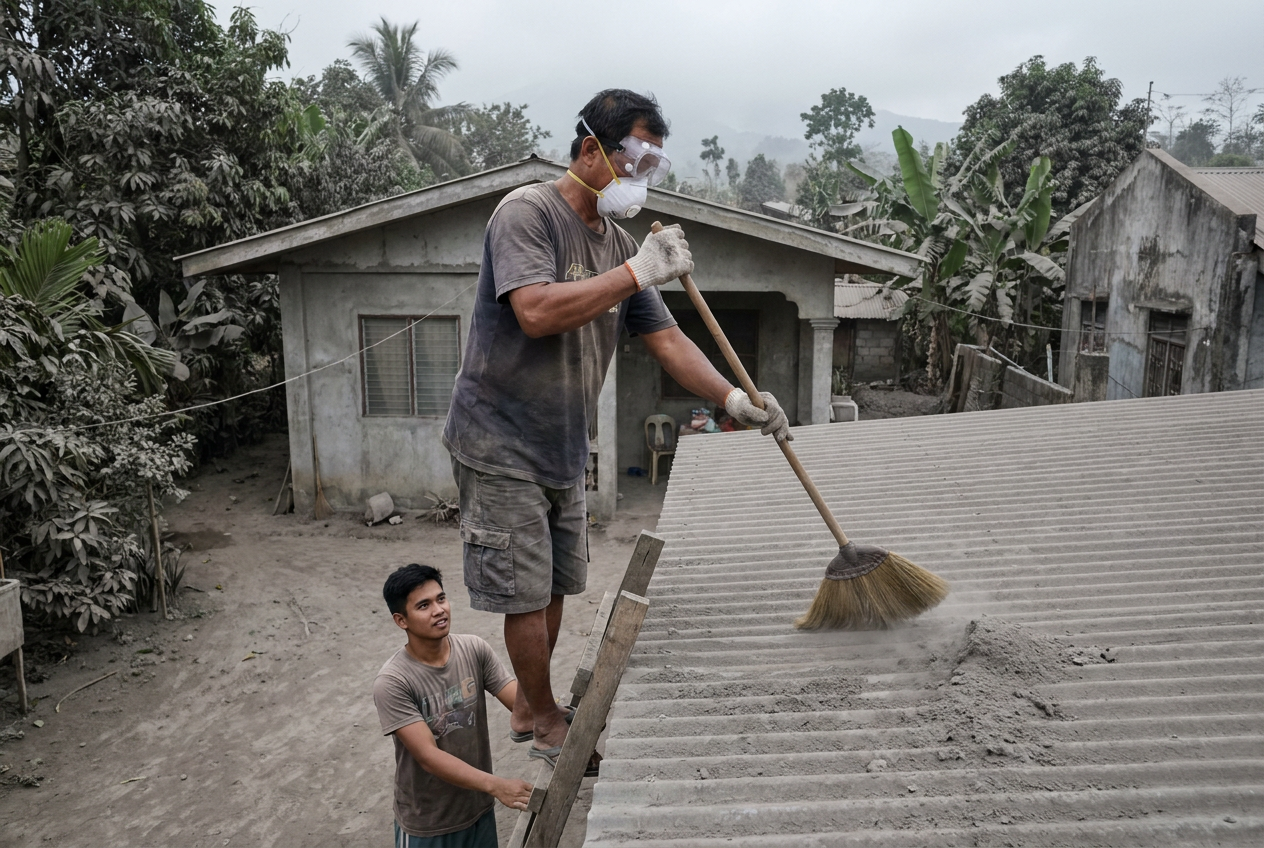
- A ladder rated for the job, with someone holding it, plus a harness or rope tie-off if your roof pitch is steep. If you do not have this, do not go on the roof — pay someone who does, or wait for barangay-organized cleanup crews.
- Plastic sheeting or tarps to protect water tanks, aircon units, and vehicles before you start, if you have not already covered them.
None of this needs to be bought in a panic. Most households already have the mask and goggles from typhoon prep, and the rest is normal hardware-store stock.
After every cleanup session, shower and rinse off — hair included — before you touch your face, eat, or rest. Ash sticks to skin and hair, and rubbing your eyes or face with ash-contaminated hands undoes everything the goggles and mask were doing for you.
The method
1. Confirm it is safe before you touch anything
Check PHIVOLCS advisories and your barangay or LGU announcements first. Ashfall can resume with new activity, and roads or air quality may still be unsafe even when the sky looks clear. No cleanup schedule is worth ignoring an official advisory.
2. Clear the roof first — and only if it is genuinely safe to do so
This is the step that hurts people, so take it slowly.
Wet ash is heavy, and it makes roofing surfaces — metal, tile, whatever you have — slippery in a way that is not obvious until you are already up there. Falls and roof collapses during ashfall cleanup are a documented cause of injury after eruptions like Taal’s in 2020 and Mayon’s more recent activity, and most of them trace back to someone rushing this step or skipping the load check.
- If the roof load looks severe — thick ash (more than a couple of centimeters, especially if it is wet or compacted), visible sagging, new creaking sounds, or cracked ceiling boards below — do not go up. Get it assessed by someone qualified, or wait for organized help. Wet volcanic ash is dense, and even a modest, even-looking layer can add real, unplanned weight to a roof structure that was designed with none of that in mind. That is not a risk worth guessing at from the ground.
- If it is safe to proceed, work from a stable ladder, never directly on wet ash, and never alone.
- Clear ash with a soft broom, working in sections from the ridge down, so you are not walking on cleared-then-reashed sections repeatedly. Skip the leaf blower — you need both hands free for balance on a wet, ash-covered roof, and a blower does not let you do that safely.
- Avoid hosing the roof down hard — that just adds more water weight before the ash is off. Get the bulk off dry-but-gentle first, then rinse.
- Never sweep ash so it falls onto areas where people are standing below. Clear the area first.
If in doubt, this is the one job worth paying a local roofer or waiting for a barangay-organized crew to do. Working at height on a slippery, overloaded surface is not a job to rush — doing it once, carefully, with someone watching your footing, beats doing it twice.
3. Protect water and food before you clean anything else
- Check that your water tanks, drums, and any open containers were covered during the ashfall.
- Wipe ash off tank lids and covers before removing them, so nothing falls in when you open them.
- If ash got into stored drinking water, do not assume it settles out safely on its own. Follow this sequence:
- Let the water stand undisturbed so the heavier ash particles settle to the bottom — this can take a few hours.
- Carefully decant or siphon the clearer water from the top into a clean container, leaving the sediment behind.
- Filter the decanted water through a clean cloth or coffee filter to catch remaining fine particles.
- Bring it to a rolling boil for 2 minutes, then let it cool with the lid on and pour it into a clean covered container before drinking, per Department of Health guidance for treating water of uncertain safety.
- If you cannot boil it, use water purification tablets exactly as the label says, or drink sealed bottled water — but boiling is the more reliable option if you have the fuel or power for it.
- If in doubt, do not drink it — switch to sealed bottled water or your emergency water stock until you can confirm it is safe.
- For food: throw out anything that was left uncovered and directly exposed to ash. Sealed, factory-packaged food (canned goods, sealed bottles, wrapped items) is generally safe once you wipe down the outside of the packaging with a damp cloth before opening. Wash fresh produce thoroughly under running water, discarding any leafy items where ash has worked into folds you cannot fully rinse out.
- If your main water source is a shared line or a communal tap, check with your barangay on whether it has been tested or flushed after the ashfall event before relying on it.
4. Clean interior rooms — wet methods only
Never dry-sweep or vacuum ash with a regular household vacuum. Dry sweeping re-suspends the fine particles right back into the air you are trying to clear them from, and ordinary vacuum cleaners are not built to filter particles this fine — you will just blow ash through the machine and back into the room.
- Mist floors and surfaces lightly with water before wiping. A damp cloth or mop picks up ash instead of scattering it.
- Work top to bottom in each room — shelves, then furniture, then floors — so you are not re-dirtying surfaces you already cleaned.
- Change rinse water often. Ash-laden water gets abrasive and gritty fast, and you will just be smearing it around once it is saturated.
- If you must vacuum, use a vacuum rated for fine particulate (a shop vac with a proper filter), not a standard household unit.
- Keep windows and doors closed while outside cleanup is still underway, to stop ash drifting back in.
5. Clear the yard and outdoor spaces
- Wet the ash lightly before sweeping or shoveling — the same rule as the roof and the rooms. Dry ash in an open yard is the fastest way to get it airborne again, and wind will carry it right back onto surfaces you already cleaned.
- Bag ash for disposal rather than hosing it into open drains or storm drains. Ash sets almost like light cement when it gets wet and compacted, and it will clog drainage systems that your barangay depends on when the rains come back.
- Keep ash out of gardens and vegetable plots where you can — it changes soil chemistry and is not something you want mixed into food-growing soil without knowing the ashfall’s composition.
6. Dispose of collected ash properly
Bag it in sako or heavy-duty garbage bags — do not dump it down drains, canals, or esteros. Ask your barangay or LGU about designated ash disposal points or special collection schedules; many municipalities near Taal (Batangas), Mayon (Albay), and Bulusan (Sorsogon) set these up after significant ashfall events, separate from the normal weekly garbage truck run, specifically because so many households were clogging drainage trying to get rid of ash the fastest way they could think of. If your barangay has not announced a schedule yet, hold onto bagged ash rather than guessing at a drop-off point — a slower, correct disposal now saves a flooding problem later.
Variations & conditions
Wet ashfall vs. dry ashfall. Ash that fell during rain is heavier, denser, and more likely to have already compacted on your roof — treat every wet-ashfall roof as a load risk until you have checked it. Dry ash is lighter but far more prone to becoming airborne again, so keep your misting habit going even days after the event, especially on windy days.
Homes on steep or fragile roofing. Old GI sheet roofs, especially ones already showing rust, are the ones most likely to fail under ash load. If you are not confident in your roof’s condition, treat this as a professional job, not a DIY one.
Multi-day or repeated ashfall. If the volcano is still active and ashfall resumes, do not treat cleanup as a one-time event. Reassess roof load and repeat the wet-clearing method after each new fall, rather than letting layers build up.
Households with young children, elderly members, or respiratory conditions. Keep them out of the cleanup entirely if possible, and out of the house during the dustiest phases of interior cleaning. Fine ash particles can irritate airways and worsen asthma and other respiratory conditions at concentrations that a healthy adult might not notice — the same reason N95 masks matter for anyone doing the actual cleanup work, not just people with existing conditions.
Common mistakes
- Dry-sweeping instead of wet-cleaning. This is the single most common mistake, and it just moves the problem into the air and your lungs instead of removing it.
- Going on the roof without checking for structural stress first. Sagging, new creaking, or cracked ceiling boards below are all telling you something. Believe it.
- Rinsing the roof hard before removing bulk ash. This adds water weight before you have lightened the load, which is backward.
- Washing ash into drains and esteros. It feels faster in the moment and creates a flooding problem for the whole barangay later.
- Using a regular household vacuum on ash. It does not filter fine particulate and you will just spread it through the exhaust.
- Skipping the mask because the ashfall itself has stopped. Re-suspended ash during cleanup is still ash. The mask is for the cleanup, not just the storm.
- Assuming stored water is fine because the ash settled. Settling alone does not make water safe to drink — decant, filter, and boil or treat it properly first.
How to practise safely
You cannot rehearse an actual eruption, but you can build the habits that make cleanup safer before you ever need them:
- Walk your own roof access and ladder setup now, in normal weather, so you know exactly how you would safely get up there and who would hold the ladder.
- Store your N95 masks, goggles, and gloves with your go-bag or household emergency kit, not scattered around the house, so you are not searching for them during a stressful week.
- Talk to your barangay now about where the designated ash disposal points would be, rather than discovering there isn’t a plan after the fact.
- If you live within regular ashfall range of Taal, Mayon, or Bulusan, check your roof’s general condition every dry season, the same way you would check it before typhoon season. A roof that is already marginal is the one most likely to fail under an ash load it was never designed for.
None of this replaces watching PHIVOLCS advisories and following your LGU’s guidance on when it is safe to be outside at all. The cleanup only starts once that answer is yes.
Galing Gear shares general preparedness and first aid information based on sources such as the DOH, WHO and the Philippine Red Cross. It is not a diagnosis or prescription, and it does not replace a doctor, nurse, pharmacist or trained responder. We never give medicine doses. Follow the latest advice of the DOH, your local health office and your medicine’s label. In an emergency, call 911. Philippine Red Cross: 143. Mental health crisis (NCMH): 1553 (landline). When unsure, get checked.