Running a generator safely during a brownout without carbon monoxide risk
A plain-spoken guide to running a gasoline or inverter generator safely during Philippine typhoon brownouts, covering placement, fuel handling, and a no-CO alternative for simple power needs.
What you’ll be able to do, and why it matters
After this guide, you’ll know how to run a small gasoline or inverter generator through a multi-day typhoon brownout without poisoning your own household. Generator carbon monoxide safety in the Philippines is a real, documented problem, not a remote one.
Carbon monoxide is a gas with no smell, no color and no taste. You cannot tell it’s building up in a room until it’s already affecting you.
Early signs include headache, dizziness and confusion. Left unchecked, it leads to unconsciousness. If someone is confused, having a seizure, or unconscious, call 911 immediately and get them into fresh air.
There are documented cases in the Philippines of carbon monoxide poisoning linked to generators run too close to occupied spaces during storm outages, including cases serious enough to need hospital care. The Department of Health has issued public advisories warning against running generators indoors or in enclosed spaces during typhoon season. This isn’t a rare freak accident. It’s predictable, and it’s preventable.
If your household mainly needs to run lights, fans and charge phones, there’s a way to skip this risk altogether. I’ll cover that too.
What you need
- A gasoline or inverter generator, placed and sized for your household’s needs. If you haven’t bought one yet, our 72-hour blackout plan covers how to think about sizing for your home.
- A battery-operated or plug-in carbon monoxide (CO) alarm. These cost a few hundred pesos on Lazada or Shopee and are one of the cheapest safety purchases you’ll make this typhoon season.
- Heavy-duty, outdoor-rated extension cords, rated for the load you intend to run.
- A dedicated fuel container, away from the house, and a fire extinguisher nearby.
- If you’re weighing a generator against a no-fuel option, our portable solar kits vs rooftop solar article covers battery power stations in more detail. This guide sticks to generator operating safety.
Generator placement and carbon monoxide safety
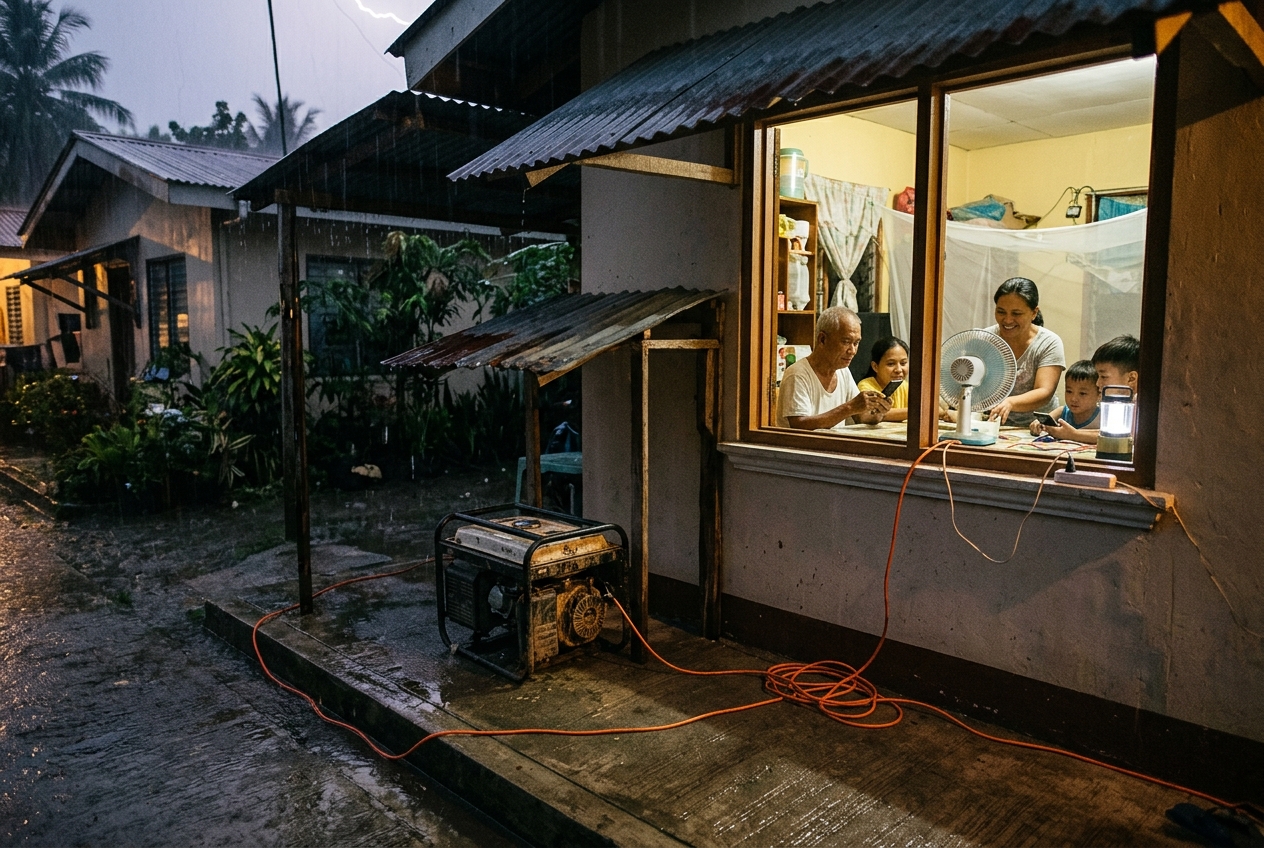
1. Place the generator outdoors, at least 6 meters (about 20 feet) from your house, and as far from your neighbor’s house as your space allows. This distance comes from United States CDC generator safety guidance, used here in the absence of a published Philippine equivalent. Treat it as a minimum, not a target. Farther is better, especially if the wind is blowing exhaust toward your home.
2. Keep it away from every window, door, and vent, including your neighbor’s. Carbon monoxide doesn’t respect property lines. In a crowded subdivision or a row of provincial houses close together, think about where the exhaust will drift, not just where the generator physically sits.
3. Never run it in a garage, carport, basement, or any space with a roof and walls, even with the door open. A partly enclosed space still lets CO build to dangerous levels quickly, because the air exchange is too slow to clear the exhaust. This is the single most common mistake behind poisoning cases.
4. Never cover it with a tarp pressed against the house to keep off the rain. A tarp draped from generator to wall traps exhaust the same way an enclosure does. If you need rain cover, use a purpose-built generator canopy that stands clear on its own legs, open on all sides, well away from the house.
5. Let it cool before refueling, and never refuel while it’s running. Spilled fuel on a hot engine is a fire risk on top of the CO risk. Switch it off, wait, then refuel outdoors, away from any flame or spark source.
6. Store fuel away from living areas, in an approved container, away from heat. Don’t keep spare gasoline inside the house or near where people sleep.
7. Run cords safely, and don’t overload them. Use outdoor-rated, heavy-duty extension cords sized for your load. Don’t daisy-chain multiple cords, and don’t run a cord under a rug, door, or through standing water. Overloaded cords heat up and can start fires, which matters as much during a brownout as CO does.
8. Install a battery-operated or plug-in CO alarm inside the house. It won’t stop CO from forming outside, but it will warn you if it’s migrating indoors, especially useful overnight when everyone’s asleep and least able to notice early symptoms.
9. For any permanent generator hookup to your home’s wiring, hire a licensed electrician. A home circuit wired directly into the grid without a proper transfer switch can send power backward into utility lines. That’s a real hazard to line workers repairing the grid nearby, besides the risk to your own household. This isn’t a DIY wiring job, whatever a hobbyist group might suggest.
Variations & conditions
Apartment or townhouse living, high floors: You likely don’t have anywhere safe to run a fuel generator at all. A shared corridor or balcony isn’t outdoors in the way this guide means. A battery power station is often the realistic choice here.
Provincial homes with more yard space: Easier to meet the 6-meter distance rule, but check wind direction and where exhaust will drift toward neighboring houses, especially in closely built barangays.
Multi-day outages after a major storm: Fatigue sets in. People get careless about placement and refueling discipline on day three or four of a brownout. The mistakes below tend to happen when everyone’s tired, not on day one.
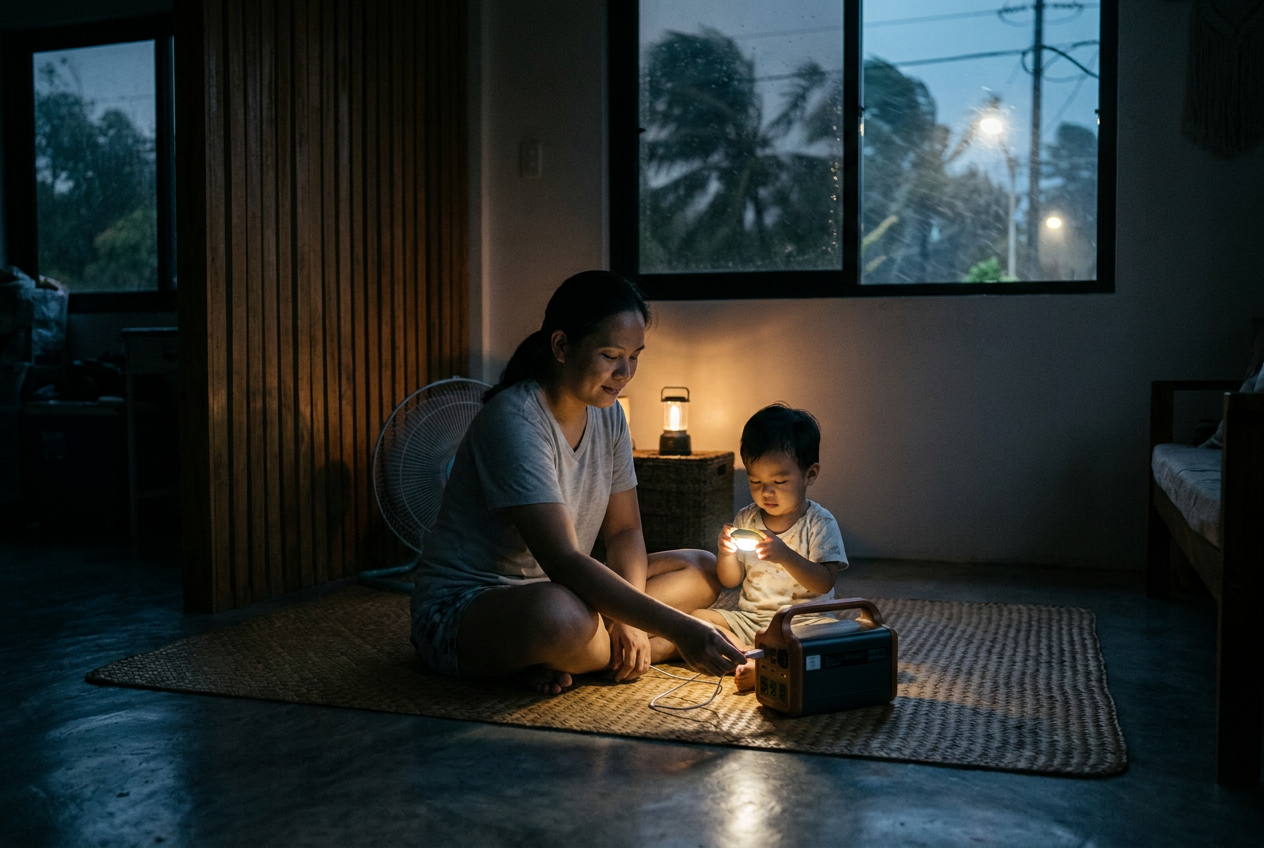
Households needing only lights, fans and phone charging: A battery power station charged in advance, or topped up by a portable solar panel, avoids carbon monoxide risk entirely because there’s no combustion.
It’s quieter, needs no fuel storage, and is simpler for anyone in the household to operate safely, including older family members. It won’t run a refrigerator or aircon for days the way a generator can, so match the choice to what you actually need to power.
Common mistakes
- Running the generator in a garage “just for a few minutes.” CO builds up faster than most people expect. A few minutes is enough.
- Placing it near a window “for the extension cord’s sake.” Run a longer cord instead. Never shorten the distance to the house for convenience.
- Assuming you’ll smell it coming. You won’t. That’s the entire danger of carbon monoxide.
- Refueling a hot generator to avoid a gap in power. Let it cool. A fire on top of a brownout is worse than a brownout.
- Skipping the CO alarm because the generator is “far enough.” The alarm is your backup for wind shifts, blocked vents or a neighbor’s unit you don’t control.
How to practise safely
Set up your placement and cord routing before the first storm of the season, in daylight, when you’re not rushed. Walk the 6-meter distance from your house and physically mark where the generator will sit. Test your CO alarm’s battery or plug it in and confirm it powers on.
Run the generator for a short test under normal conditions, watching where the exhaust drifts, and confirm no window, door or vent is in its path. I check gear before conditions turn bad, not after. The same thinking applies here: decide this while the weather is calm, not when the wind and rain make it harder to think straight.
If anyone in the house ever shows confusion, has a seizure, or loses consciousness near a running generator, call 911 right away and move them into fresh air while you wait for help.
The one thing to remember
Keep the generator outdoors, at least 6 meters from the house, away from every window, door and vent, and never under a tarp pressed against a wall. Carbon monoxide gives you no warning of its own, so the distance and a CO alarm are what protect your household while you wait out the brownout.
Galing Gear shares general preparedness and first aid information based on sources such as the DOH, WHO and the Philippine Red Cross. It is not a diagnosis or prescription, and it does not replace a doctor, nurse, pharmacist or trained responder. We never give medicine doses. Follow the latest advice of the DOH, your local health office and your medicine’s label. In an emergency, call 911. Philippine Red Cross: 143. Mental health crisis (NCMH): 1553 (landline). When unsure, get checked.