Typhoon power outage: a 72-hour survival plan for PH homes
Typhoon power outage can last days. Size a power station, ration phone charge, and use lanterns safely with this 72-hour blackout plan for PH homes.
The situation
Most Filipino households plan for a brownout that lasts an evening. A strong typhoon does not respect that plan. When a system tracks through with sustained winds and downed lines, PAGASA may keep a signal up for a full day, and the actual outage that follows often runs longer than the storm itself — linesmen cannot climb poles until the wind drops, and in badly hit areas that can mean two, three, sometimes five days without grid power.
The number worth planning around is 72 hours. Not because outages always end by then, but because 72 hours is a realistic bridge: long enough to cover the worst of it, short enough that you can actually prepare for it without buying gear you will never use again. If you can keep phones charged, one light source per family member working, and a way to check updates for three full days, you are not scrambling — you are waiting it out.
This bites hardest in a few specific ways here. Condo and apartment towers lose the elevator along with the power, so a high floor means carrying water and gear up stairs in the dark. Low-lying barangays can flood at the same time the lines go down, which cuts off the hardware store run you were counting on. And phone signal itself gets patchy when cell towers run on backup batteries that drain over the same 72 hours — so the device you are rationing is also your only channel to news and family.
What actually matters
Three things decide whether your household is fine for three days or miserable by day two.
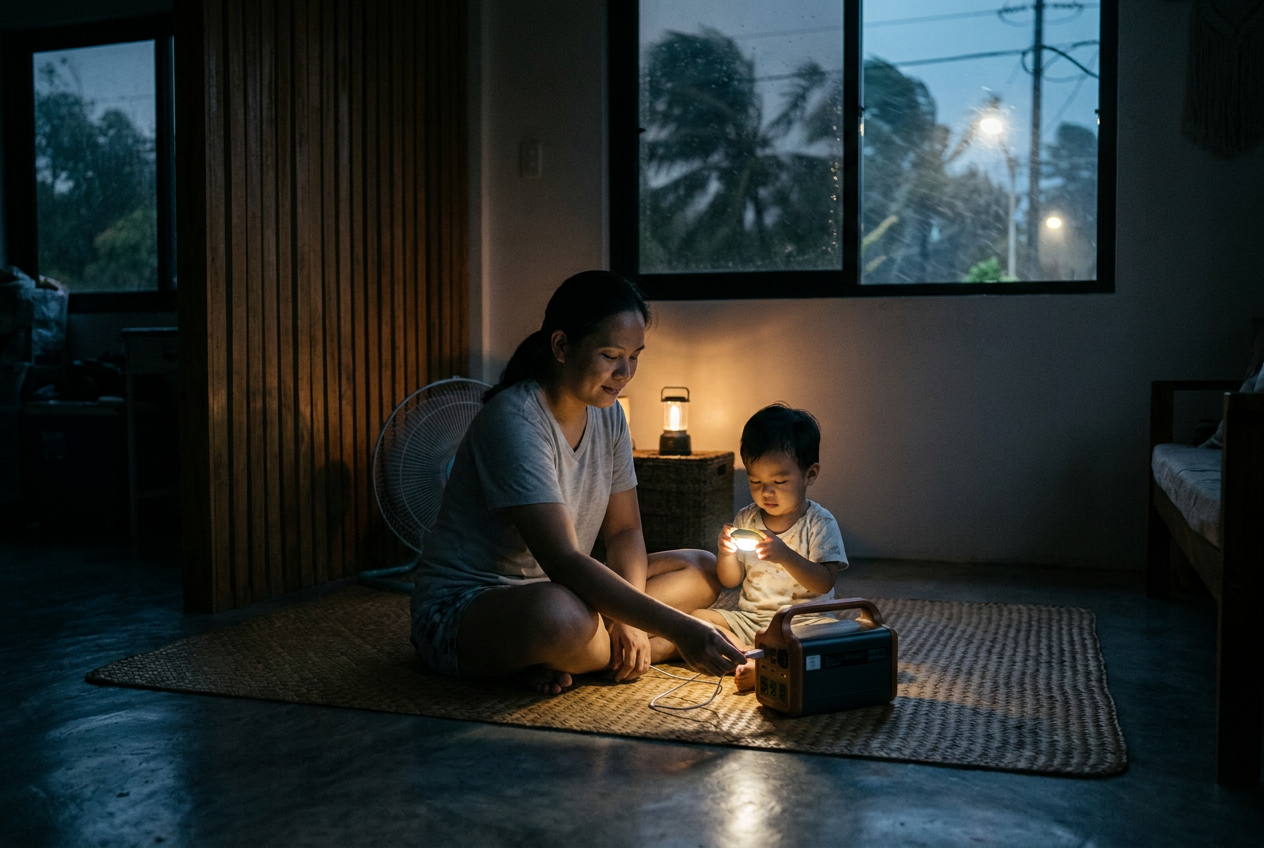
How much stored energy you actually have, in watt-hours. A power station’s capacity is usually printed as watt-hours (Wh) — think of it as a bucket size. A phone charge uses roughly 10-15 Wh. A small fan running all night can use 200-300 Wh. A 300 Wh power station (commonly ₱4,000-₱6,000) will comfortably refill phones and a headlamp for several days. Step up to 500-700 Wh (₱8,000-₱13,000) and you can add a fan, a router, or a CPAP machine into the mix. Anything claiming to run a refrigerator for days at this price point is not being honest with you — that takes a much bigger, much pricier unit.
Rationing charge, not just having charge. A power bank or power station drains fastest when you top up a phone that is already at 80%. The habit that actually stretches your stored energy: let phones run down to 20-30% before you plug them in, charge one device at a time where you can, and turn off background data and brightness rather than leaving the phone hunting for a weak signal all day, which burns battery fast for no benefit.
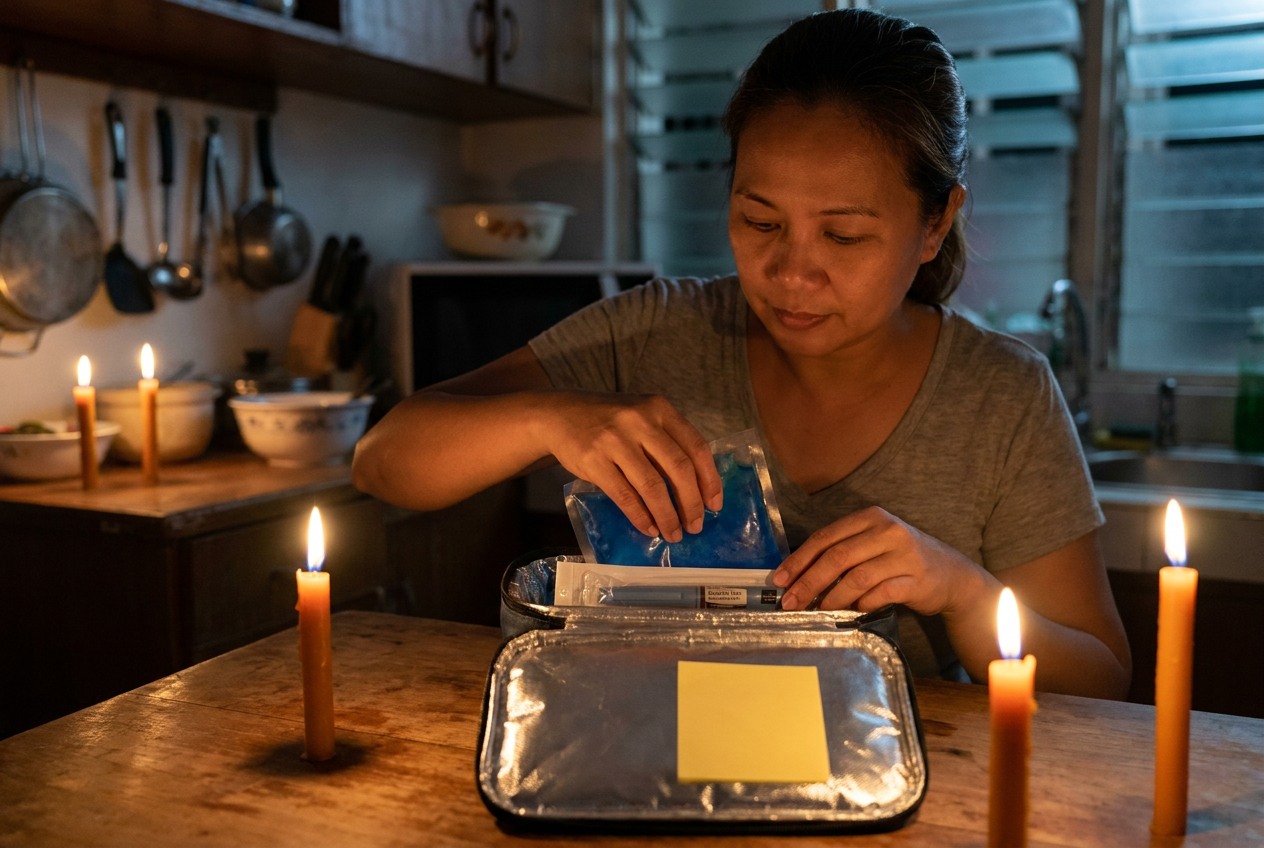
Redundant, low-risk lighting. Every year, house fires and carbon monoxide incidents spike during outages — candles left burning, or a generator run too close to a window. Neither is worth the risk when a decent headlamp or LED lantern costs less than a case of bottled water.
What to do (and what not to)
Charge everything — power banks, the power station itself, phones, headlamps — as soon as a watch or warning is posted, not after the wind starts. Once the grid goes down, that stored charge is all you have until it comes back.
Set a charging order before you need it: phones first (for PAGASA updates and contacting family), then a lantern or headlamp, then anything else. Do not let a fan or a speaker eat into phone charge on day one when you do not yet know if this is a one-day outage or a five-day one.
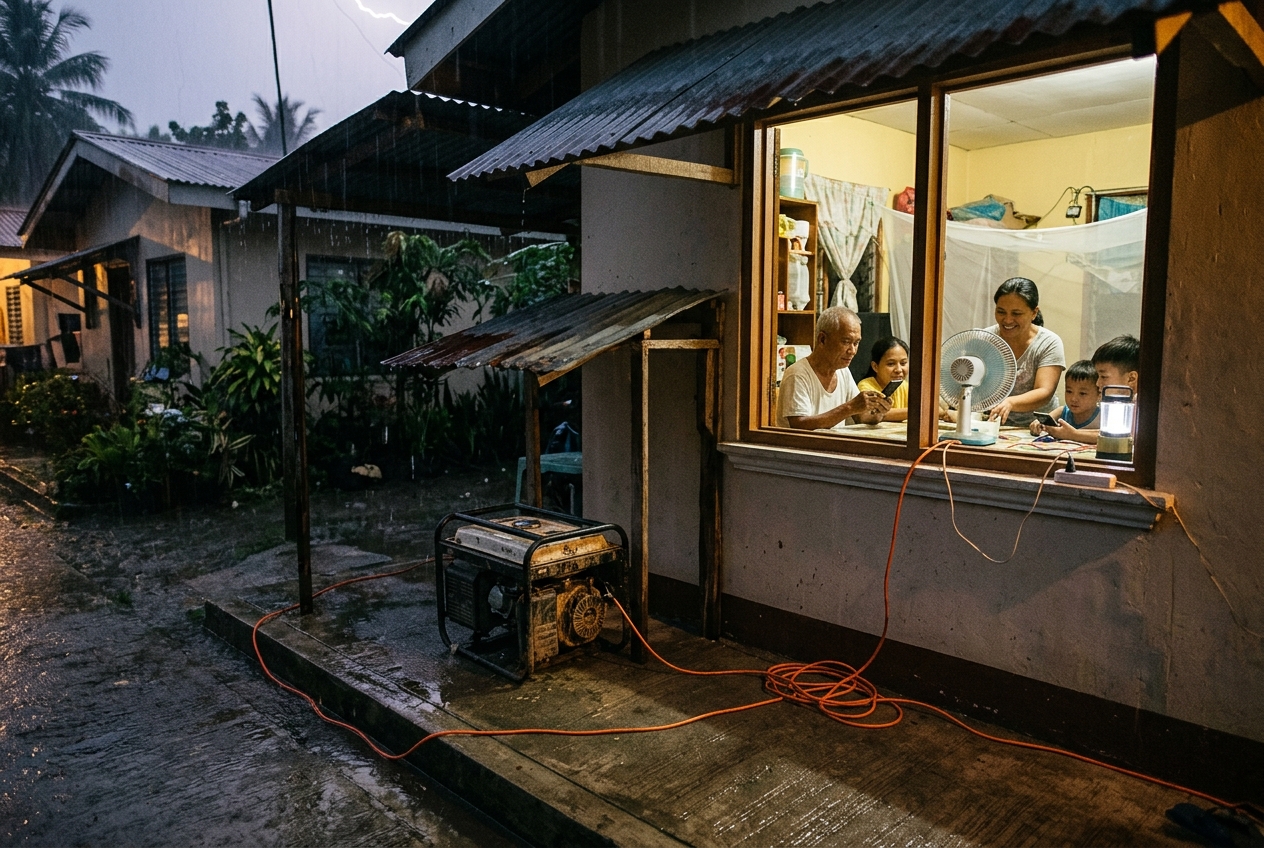
Do not run a generator indoors, in a garage, or near an open window — carbon monoxide has no smell and it kills quietly. If you use one, it belongs outdoors, away from doors and windows, always.
Do not rely on candles as your main light source in a household with kids, pets, or anyone who might knock one over in the dark. A ₱300-₱600 LED lantern removes that risk entirely and runs far longer on far less.
Do not wait until the signal is raised to buy a power station. Stock runs out fast on Lazada and Shopee once a typhoon is in the news, and what is left at the last minute is often overpriced or, worse, a counterfeit battery pack with no real safety protection inside. Buy in the calm months, test it once fully charged, and put it away.
The gear that helps
A power station in the 300-700 Wh range is the center of a household outage kit — big enough to matter, small enough to afford and to carry up the stairs when the lift is out. Pair it with a solar panel only if you expect outages past a week; for a standard 72-hour bridge, a fully charged unit plus one refill from a car charger usually covers it.
Headlamps beat handheld flashlights for actual use — you need both hands free to cook, care for a child, or move around a dark stairwell. In search-and-rescue work we never carried a single light source and called it done; the ones who stayed prepared always had a backup, because the one light you are relying on is exactly the one that will fail at the worst moment. The same logic applies at home: one main headlamp per person, plus one cheap backup light in the go bag.
A handful of power banks (10,000-20,000 mAh, ₱800-₱2,000 each) spread around the house means charge is available even if the main power station is in use or someone is out of the room. Keep a battery or crank-powered radio on hand too — when the phone network gets shaky, a radio tuned to local stations often keeps working when the internet does not.
For the wider kit that supports all of this — food, water, first aid — see our go bag guide, and for the broader outage picture beyond just power, our power outage guide covers water storage and food safety during extended blackouts.
Common mistakes
Buying a power station sized for a weekend camping trip and expecting it to run a household for three days. Check the watt-hour number, do the math on what you actually need to charge, and buy accordingly.
Treating the power station as a phone charger only, then discovering on day two that the router and fan have already drained it. Decide the charging order in advance, while everyone is calm and the lights are still on.
Buying gear during the panic-buy window right before a storm makes landfall, when prices spike and counterfeit batteries flood online marketplaces. The best time to buy is during a quiet month, not the week PAGASA raises a signal.
Assuming a full charge before the storm is enough on its own. Batteries self-discharge slowly even sitting unused, and a station bought two years ago and never tested may not hold what it once did. Charge and test twice a year, ideally at the start of typhoon season.
The one thing to remember
No power station replaces good decisions — leaving early from a flood-prone area still matters more than any amount of stored charge. But for the ordinary case, a multi-day outage in a home that is otherwise safe, the plan is simple: know your 72-hour number, ration what you have from hour one, keep your lights independent of open flame, and buy it all before the season starts, not during it.