Needs-first vs. gear-first prepping for typhoon season
Needs-first prepping vs. gear-first prepping: build a real typhoon kit for Filipino households, not just a shelf of nice-looking gear.
The situation
There are two reasons people end up with a shelf of emergency gear, and from the outside they look identical.
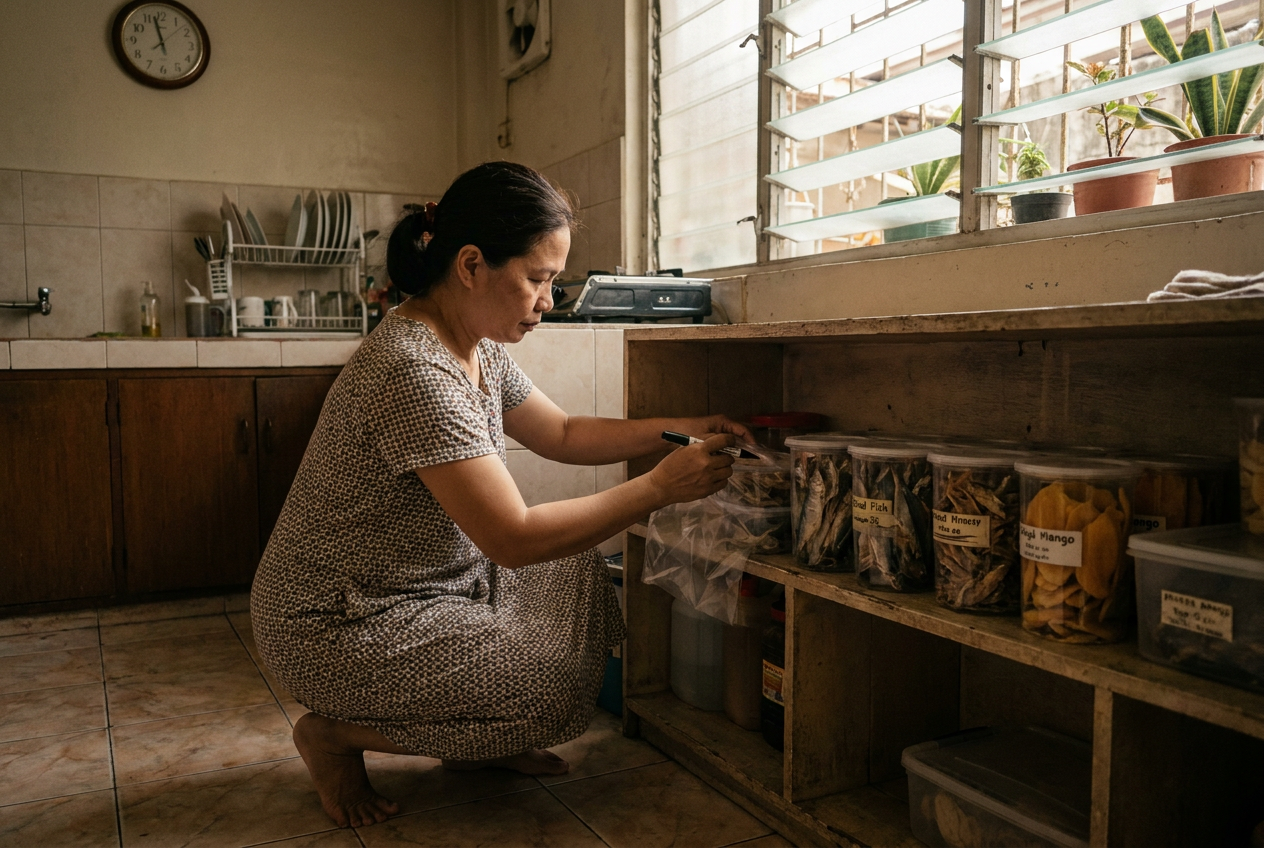
The first person started with a problem. Their barangay floods to knee height when the river backs up, the lift in their building goes down with the power, and there are two children and a lola in the household. So they bought water containers, a torch each, a radio, and a way to charge a phone. Boring list. It came from the situation.
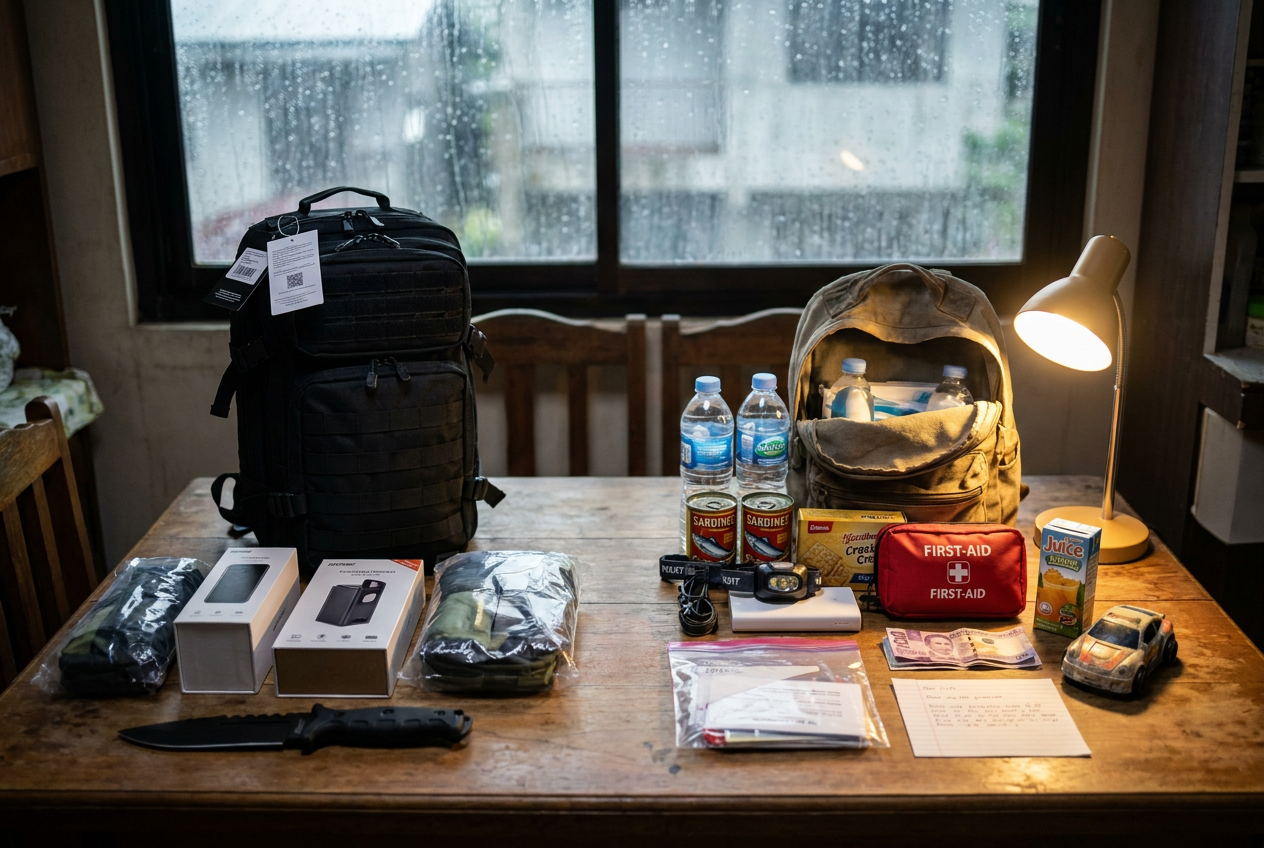
The second person started with the gear. They saw a beautifully machined torch, a bag with more straps than a parachute, a stove that packs into its own titanium cup. It is genuinely interesting equipment, made by people who care, and it photographs well. So they bought it, and then worked backwards to the reasons why they might need it.
I want to be careful here, because there is a version of this conversation that turns into sneering, and I am not interested in that. Liking gear is fine. I like gear. Enthusiasm has got more Filipino families prepared than any government advisory ever has, and a person who enjoys their kit will actually maintain it, test it, and know how it works. That matters.
The problem is narrower than “liking gear”. The problem is when buying starts to feel like preparing. They are not the same thing, and typhoon season finds the gap fast.
What actually matters
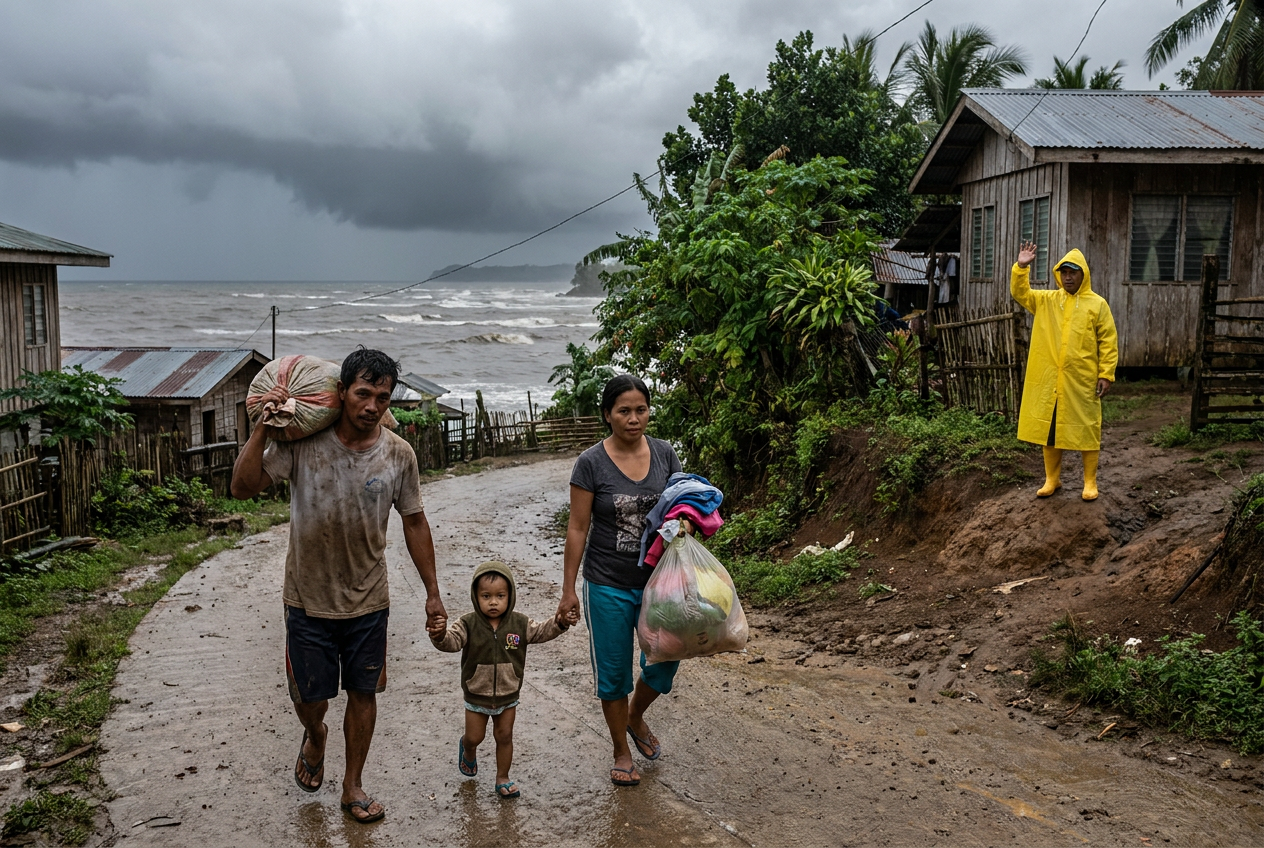
A real event is dull and inconvenient in ways that catalogues do not cover. The power goes at nine in the evening and comes back sometime the next afternoon. The water pressure drops and the tank on the roof runs out by lunch. Your phone is on 40 per cent and everyone in the house wants to charge. The road is passable but the tricycles are not running. Nobody needs to abseil anywhere. Nobody needs to start a fire with a ferro rod.
What the household needs is water, light, information, a charged phone, dry clothes, medicine, some food that does not need cooking, and a plan for where everyone meets if the mobile network is congested.
In search-and-rescue work in Australia, the kit that earned its place was almost always the unglamorous kit. Ten years of wilderness searches taught me that the item you bet on is the one with the fewest ways to fail. We never trusted anything that needed a proprietary battery or a fiddly two-handed ignition, because at three in the morning in bad weather, with cold hands, clever fails and simple works. That instinct transfers directly to a brownout in Quezon City. It is the same test, just with better coffee nearby.
So the measure of preparedness is not what is on the shelf. It is this: if PAGASA raises the signal tomorrow and the power goes out for thirty hours, how does your household actually do? Does everyone drink? Does everyone see? Does everyone know the plan? That is the score, and no purchase awards it to you automatically.
What to do (and what not to)
Start with three lists before you start with a cart.
One: your actual risks. Not general disaster risk, yours. Does your street flood, and how high? Are you on a high floor that loses the lift? Is your area prone to long outages or short ones? Is there a landslide-prone slope above you? Ten minutes of honest thinking about your own address will do more for you than ten hours of browsing.
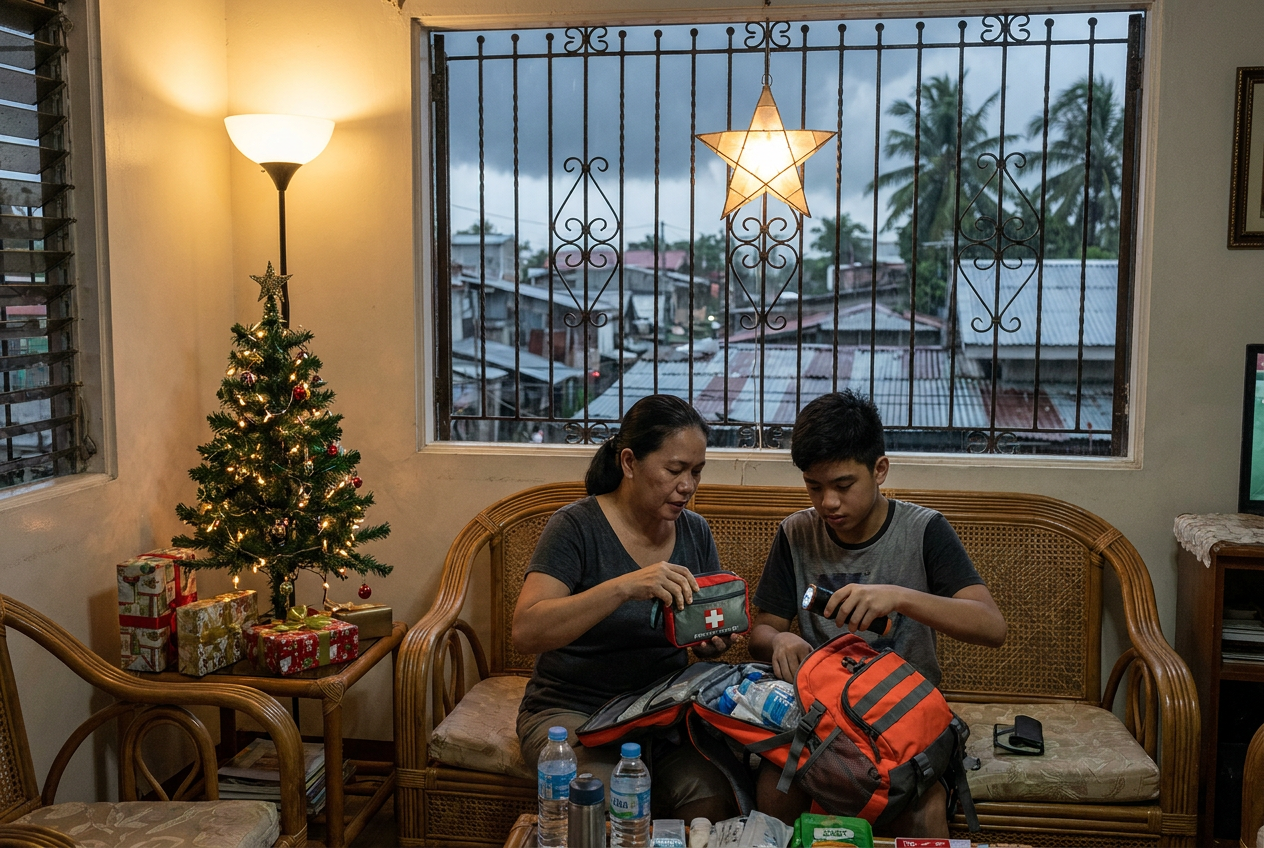
Two: your people. Count them properly. A toddler needs formula and nappies. An elderly parent needs maintenance medicine and probably cannot manage stairs in the dark. Someone with asthma needs their inhaler within arm’s reach, not packed at the bottom of a bag. A dog needs water too. Your kit is for these specific humans, not for a generic adult in a catalogue photo.
Three: your budget. Write the real number. If it is ₱3,000, that is your number and it is enough to do a lot. Preparedness bought slowly over six months is better than preparedness postponed until you can afford the good version.
Then buy in order of consequence. Water first, because it runs out fastest and hurts soonest. Light second, because everything is harder in the dark. Information third, a radio that works without the network. Power for phones fourth. Then food, medicine, documents, and dry storage.
What not to do: do not buy the interesting thing first and promise yourself you will get the boring thing next month. It is always the water containers that get postponed. I have done it myself, and it is a quiet habit worth catching.
Also, test what you buy before you need it. Run your household on the kit for one evening. Switch the mains off at seven, cook nothing, use only your torches, and see what annoys you. You will find the fault in an hour that you would otherwise find in a typhoon.
The gear that helps
None of this is a shopping list, and I am not scoring anything here. These are the categories that keep proving themselves.
Water storage and treatment. Rigid containers you can actually lift when full, plus a filter that does not need batteries. Twenty litres of stored water is worth more than any single clever gadget.
A torch per person, plus a lantern. Headtorches for hands-free work, a small lantern for the room so people are not pointing beams at each other’s faces. Common battery types, ideally the same type across your whole kit.
A radio that picks up AM and FM. When the mobile network is congested and data is crawling, local radio is how you find out which roads are cut. Hand-crank or solar as a backup, batteries as the primary.
A power bank sized to your household. Honest about what it is: enough to keep phones alive for a day or two, not enough to run a household. Anything larger is a different purchase with a different price.
Dry storage. Dry bags, or honestly just good zip-lock bags and a plastic crate with a lid. Documents, spare clothes, medicine. This is the cheapest upgrade in preparedness and the most frequently skipped.
A basic first aid kit you have actually opened. Plus a fortnight of any maintenance medicine your household takes.
On buying: Lazada and Shopee are where most of us shop, and counterfeits of popular torch and power bank brands are common. If a price looks impossible, it is. Check seller history, and be sceptical of capacity claims on very cheap power banks. We buy our own gear here, at normal prices, from the same listings you see.
Common mistakes
Buying the bag before the contents. The bag is the last decision, not the first. Pack the pile, then buy the bag that holds it.
Redundancy in the wrong place. Four torches and no water. Three knives and no radio. Redundancy is good, but spread it across categories before you stack it inside one.
Kit that only one person can use. If you are the only one who knows how the stove lights or where the go-bag lives, the plan fails the moment you are at work when it hits.
Confusing capability with readiness. Owning a water filter is not the same as knowing where it is at eleven at night.
Skipping the plan because the gear feels like progress. Where do you meet. Who calls whom. Which neighbour checks on the lola upstairs. When do you leave. None of that costs a peso, and all of it outranks everything on the shelf. No bag replaces leaving early.
Shaming the enthusiast, including yourself. If a nice torch is what got you started, good. Just make sure the next three purchases are the dull ones.
The one thing to remember
Gear is a tool. It is not the goal, and it is not the proof.
The question to carry into this typhoon season is not “what should I buy next?” It is “if the power went tonight and stayed off until tomorrow afternoon, what would my household struggle with first?” Answer that honestly, fix that one thing, and repeat.
Do that four or five times and you will have a kit that looks unremarkable and works completely. That is the version worth having.