Late-year typhoons: why Filipino families must stay prepared
Late-year typhoons like Tino and Uwan prove the season isn't over in November. Here's how Filipino households should stay storm-ready through the
The situation
A lot of us relax once the ‘ber’ months roll around. The lights go up, the Noche Buena planning starts, and typhoon season feels like something that happened in August, back when the rains were heaviest. It’s an understandable feeling. It’s also wrong, and 2025 was a hard reminder of that.
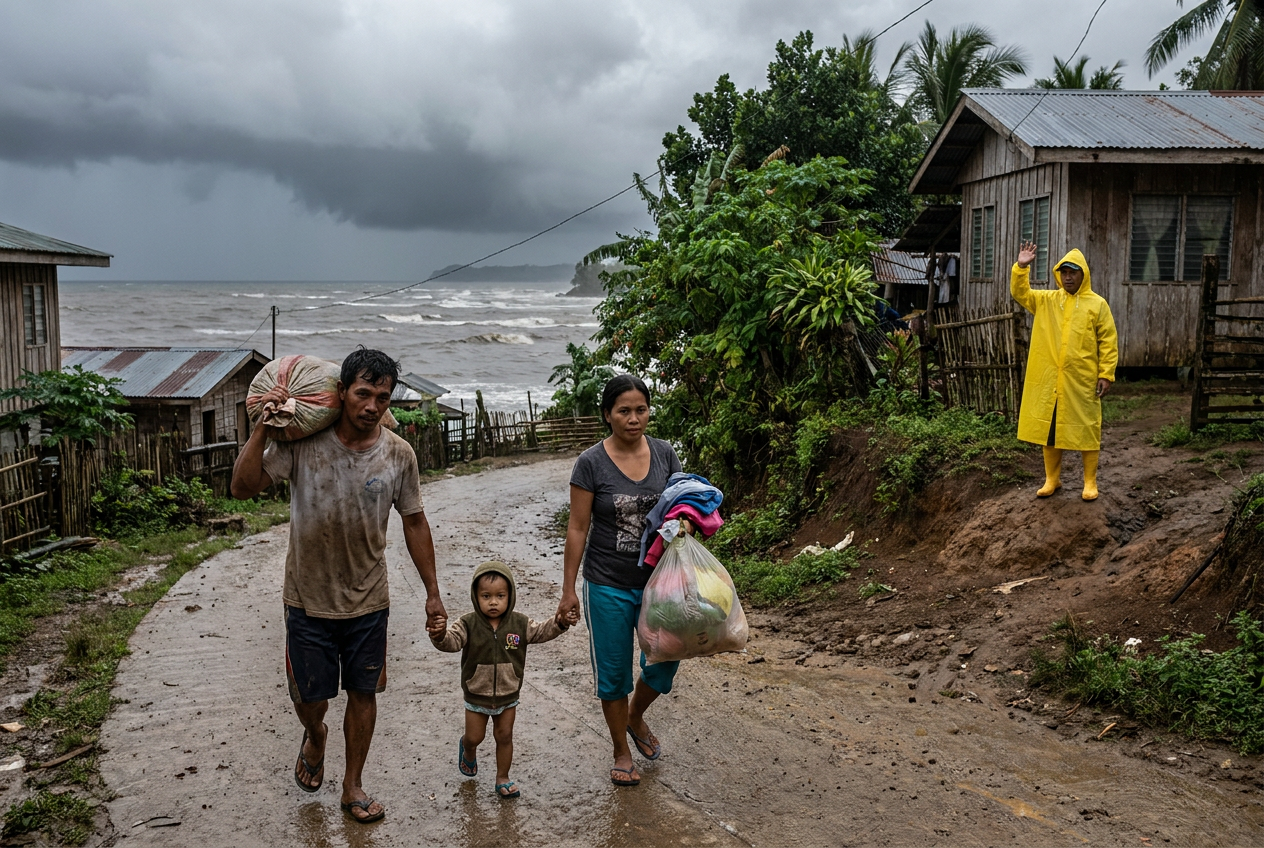
Typhoon Tino (Kalmaegi) hit in early November, and the flooding it brought to Cebu was severe enough to trap people on their own rooftops waiting for rescue. Reported deaths nationally went well over a hundred. Days later, Typhoon Uwan (Fung-wong) followed, and NDRRMC reported close to 1.5 million people displaced. Two major, damaging storms, back to back, in the month most families consider the season winding down.
This isn’t a fluke. Late-year storms often track across the Visayas and southern Luzon, areas that get less of the early rainy-season attention that Northern Luzon and Metro Manila do, but that sit squarely in the path of storms forming later in the year. PAGASA has also flagged a strong El Niño pattern likely to persist into early 2027. El Niño years tend to bring fewer tropical cyclones overall — but fewer doesn’t mean weaker. Some of the most damaging storms in Philippine records have come in El Niño years, because the ones that do form can intensify quickly over warm seas with little else competing for attention.
What actually matters
The core problem with late-year storms isn’t the wind or the rain — it’s complacency. By November, go bags have often been quietly raided for spare batteries, phone chargers have wandered off to other rooms, and the emergency cash envelope has become the ‘ninong money’ envelope. Meanwhile family attention shifts to travel: bus and ferry bookings home to the province, provincial addresses that may sit right in a storm’s path, houses that will be empty over the holidays with nobody watching the water level outside.
The things that matter most this time of year are the same as any other typhoon, just easier to forget: a working weather information habit, supplies that are actually where you think they are, and a plan for the specific mess that Christmas adds — outdoor lights and decorations that become debris in strong wind, a bag that’s supposed to stay packed but keeps getting opened for tape and fairy lights.
What to do (and what not to)
Check in with PAGASA’s updates through December, not just during the wet season proper — a five-minute habit costs nothing. If you’re travelling to the province for the holidays, check the forecast for your destination as carefully as for home; a storm track through the Visayas can turn a happy homecoming into a stranded one.
Before you put up outdoor Christmas lights and decorations, think about where they’ll end up in gale-force wind. Anything strung along a fence, roofline, or gutter that isn’t secured properly becomes a projectile, and taking it all down again once a signal is raised is a job nobody wants to do in the rain. Put things up with the storm in mind, not just the photo.
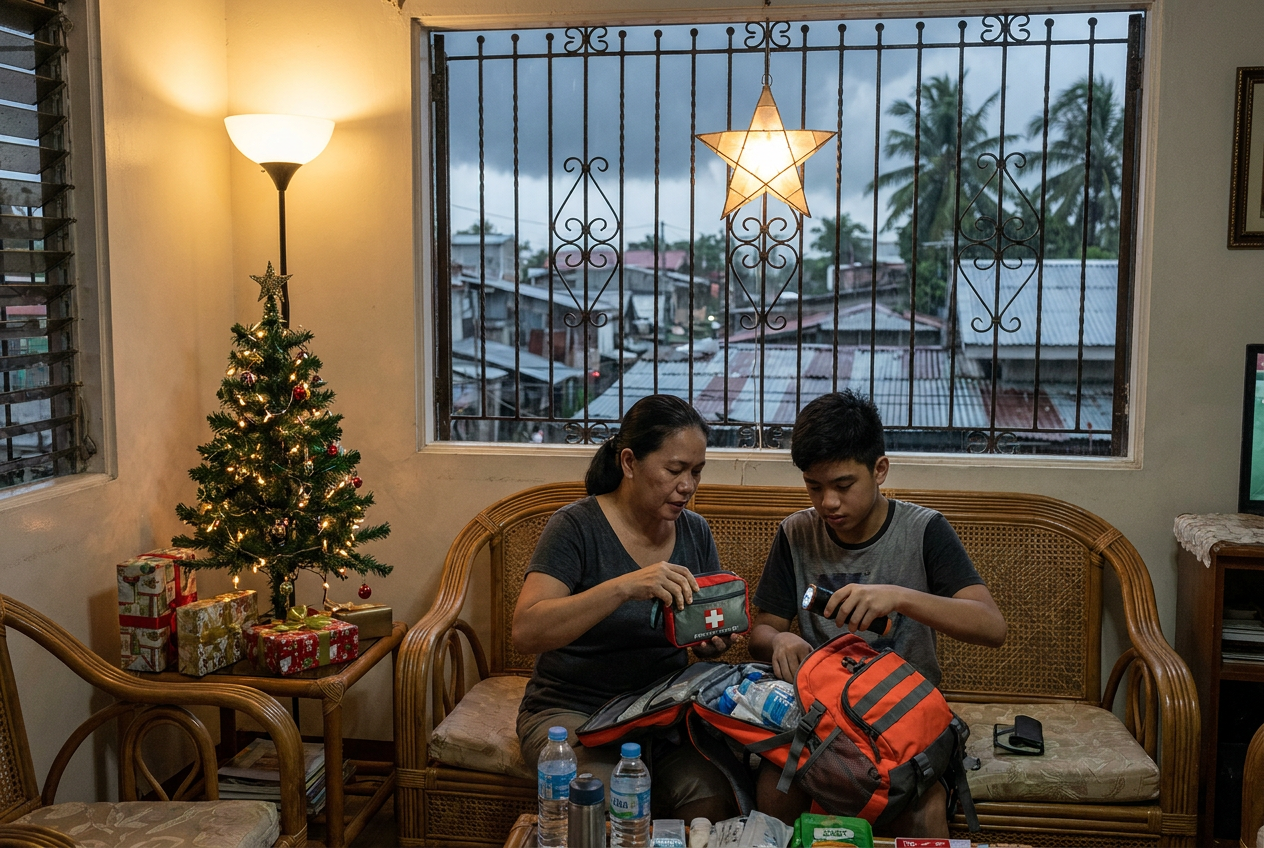
Do a proper five-minute check of your emergency supplies before the Christmas spending starts, not after. Look at what’s actually in the bag versus what you remember packing back in July. In search-and-rescue we learned never to trust a kit we hadn’t personally checked recently — the ones that let people down weren’t badly built, they were quietly picked apart one ‘just this once’ at a time. A go bag that’s missing its torch because it went to a blackout during a family gathering, or its rechargeable batteries because they ended up in a karaoke mic, is not a go bag. It’s a box.
If your household is doing Noche Buena at home, agree out loud that the go bag is off-limits for the celebration. It sounds small. It’s the difference between having a working torch on 25 December and improvising with a phone flashlight at 40 percent battery during a brownout.
The gear that helps
None of this needs to be complicated. A go bag that’s genuinely ready — checked, not just assumed — covers most of it: torch, power bank, first aid basics, some cash in small bills, copies of ID. If you’re setting one up from scratch or topping up a tired one before the holidays, our guide to building a go bag for two walks through what actually earns its place for two adults, rather than a generic checklist.
If your area floods — and after Tino, a lot of families in the Visayas now know their area floods when they didn’t think it did — our flood ready guide covers what to keep in reach when water starts rising rather than after.
Common mistakes
The biggest mistake is treating ‘ber months’ as a finish line rather than a description of the calendar. The second is letting holiday spending crowd out the small, unglamorous restocking — batteries, drinking water, a full tank of gas or load of fuel — because it feels less urgent than gifts and travel bookings. The third is leaving a provincial house empty over the holidays with nobody checking on it or the local flood risk, on the assumption that nothing happens in December.
The one thing to remember
Tino and Uwan didn’t happen because the season broke its usual pattern — they happened because the pattern includes November, every year, whether we’re paying attention or not. No amount of preparation stops a storm. What it does is mean your family isn’t finding out your torch has no batteries at the exact moment you need it. Keep the bag packed, keep an eye on the forecast, and let Christmas happen around your preparedness, not instead of it.