Storm surge vs. flood: PAGASA advisory guide for PH homes
Storm surge vs. flood: know the difference before typhoon season hits. Learn to read PAGASA advisories and why high ground beats a higher floor.
The situation
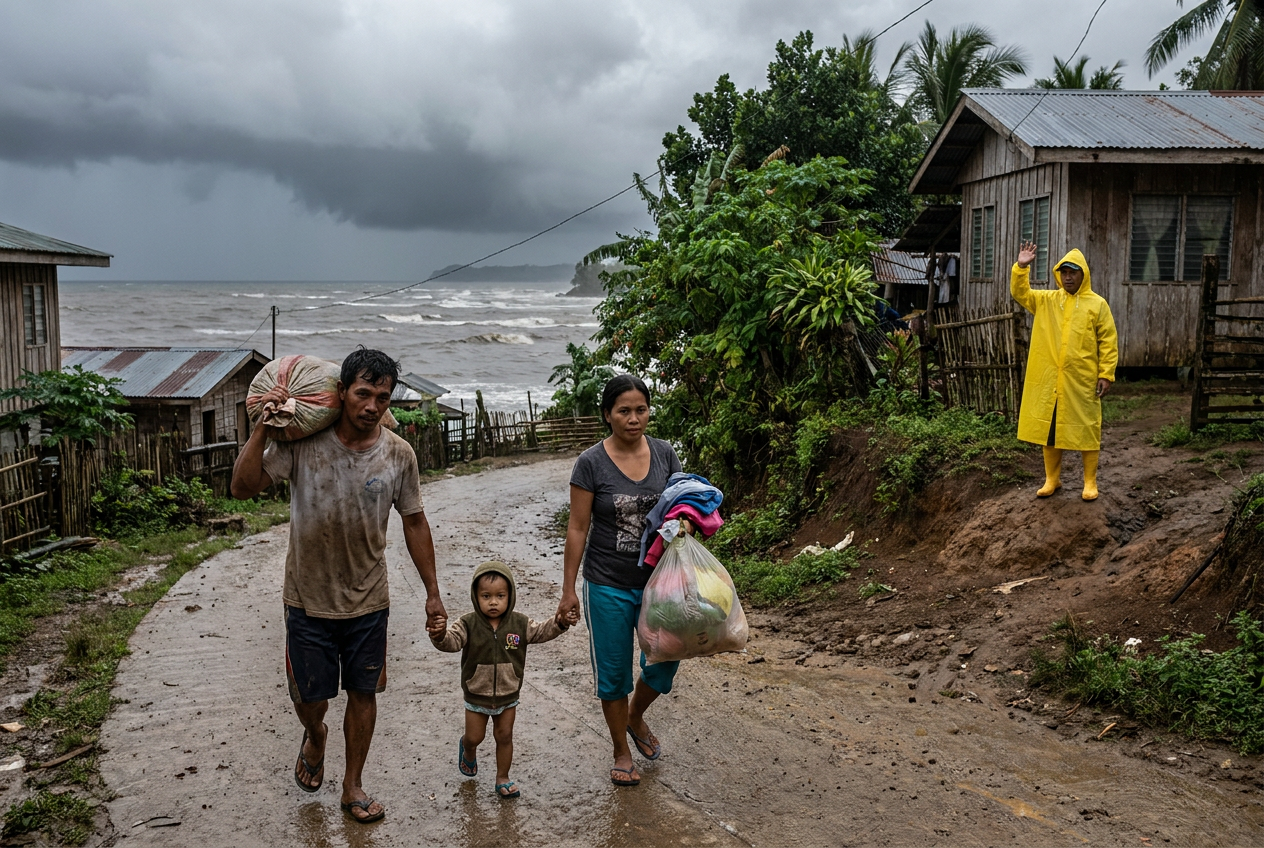
Every typhoon season, PAGASA bulletins mention two words that sound almost the same but are not: “flood” and “storm surge.” I have talked to families in coastal barangays who heard “storm surge warning” and did the sensible-sounding thing — moved everyone to the second floor, filled the water containers, waited it out. That is the right move for a flood. It can be the wrong move for a storm surge, and the difference is not academic. It is the difference between staying dry on a higher floor and having the sea come through your walls faster than anyone can carry a child out.
Storm surge is not rain flooding. It is seawater pushed inland by a typhoon’s wind and low air pressure, arriving from the coast rather than rising from a river or a clogged drain. It can flood a barangay that has had zero rainfall yet. It can rise faster than most people expect once the typhoon closes in, and in low-lying coastal areas of the Philippines it has done real damage before — Tacloban City in 2013, during Typhoon Yolanda (Haiyan), saw storm surge estimated at around 5 to 7 meters in places, enough to flatten homes well inland of the shoreline. That is an extreme case, not the everyday one, but it is why PAGASA and local governments treat surge-prone coastlines with real caution: Eastern Visayas, Bicol, Northern Samar, and low-lying towns around Manila Bay among them.
This guide is about telling the two apart, understanding what PAGASA’s storm surge advisories actually mean for your family, and knowing the one thing that changes: with storm surge, the answer is high ground, not a higher floor, and you usually have less time to get there than you think.
What actually matters
A few facts do most of the work here.
Storm surge is wind and pressure, not rain. A typhoon’s winds push a mound of seawater ahead of it, and the low air pressure at its center lets the sea surface rise further, almost like a suction effect. When that mound reaches shore, it comes in as a rapid, rising wall of seawater, sometimes combined with large waves on top. None of this depends on how much it has rained. A morning with a typhoon still out at sea can turn into a flooded coastal street before the wind itself feels dangerous.
It can rise with very little warning once the typhoon is close. Ordinary river or flash flooding usually gives some lead time — rain builds, rivers rise over hours, drains back up. Storm surge is different: the water can rise significantly in the space of an hour or less as the typhoon’s center approaches landfall, and the exact timing depends on the storm’s track, speed, and pressure, which can shift late. That shorter, less predictable window is the whole reason the response has to be different: you cannot wait for the water to convince you before you move.
It goes higher than people expect, and it reaches further inland than people expect. Surge heights vary a great deal by typhoon and by coastline shape — some events bring less than a meter above normal high tide, others far more. Yolanda’s surge in Tacloban, at roughly 5 to 7 meters in the worst-hit areas, is the extreme end of what the Philippines has seen, and it is the reason coastal hazard planning takes surge seriously even when a typhoon’s wind signal looks moderate. Even a modest surge, well short of that extreme, can push seawater over barangay roads that have never flooded from rain, into homes residents always considered safe because they never see river floods.
Height beats floors. For river flooding, moving up within your own house often works, because the water is shallow water sitting on top of solid ground, and it recedes as the rain stops and drains clear. Storm surge behaves differently — a strong surge can be powerful enough to damage or undermine light structures, and it does not care how many floors your house has if the ground beneath it is the hazard. The safe response to surge is horizontal, not vertical: away from the coast, to elevated ground, not just to your own ceiling.
What to do (and what not to)
Know before the season, not during the warning. Check whether your barangay sits in a storm surge hazard zone using HazardHunterPH or your local government’s hazard map, often built with input from PAGASA, Project NOAH, and the Office of Civil Defense. Ask your barangay directly if they have a storm surge advisory area and where the designated evacuation ground is. This is a five-minute conversation that is far more useful during a typhoon threat than any amount of packing.
Watch the storm surge advisory, not just the wind signal. PAGASA issues a Storm Surge Advisory as a separate bulletin from the wind signal, using numbered advisory levels tied to expected height ranges above normal tide — check the current bulletin on the PAGASA site for the exact numbers and heights in effect for a given typhoon, since the system is refined from time to time. The wind signal tells you about wind damage risk to structures; the surge advisory tells you about water. A modest wind signal can still come with a serious surge advisory if the typhoon’s track and pressure line up for it, because the two are assessed somewhat independently. If your barangay is in a mapped surge zone, treat the surge advisory as your primary trigger for leaving, not the wind signal. I go into how the wind signal numbers work in our PAGASA wind signals article — read that one for the wind side of it.
If you are in a mapped surge zone, evacuate to high ground before the surge, not during it. “High ground” means elevated land away from the coast, ideally the evacuation center your barangay has designated, not the top floor of your own coastal house. A concrete second floor will not reliably help if the surge is strong enough to flood or undermine the ground floor and cut off your escape route. Leave while the roads are still passable and daylight is still on your side — local governments in mapped surge zones typically call for pre-emptive evacuation ahead of expected landfall, so treat an evacuation order or a high storm surge advisory as final, not as a suggestion to wait and see.
If you genuinely cannot leave before the surge arrives, your options narrow fast, and none of them are good. Move to the highest, most interior room of the strongest building available, away from window-facing and seaward walls, and get above the ground floor if there is truly nowhere else to go. This is a last resort, not a plan — it is what the Philippine Red Cross and local disaster offices describe as the least-bad fallback when evacuation has failed, not a substitute for leaving on time.
Do not wait to see water before you move. This is the single hardest habit to break, and it is the one that costs the most time. With river flooding, watching the water rise and reacting is often survivable, because the rise is gradual, and that is the situation covered in our flood-ready shelter-in-place guide — worth reading for the flooding side of things. Storm surge does not give you that grace period reliably. If the advisory says to move, move on the advisory, not on the sight of water at your door.
Do not confuse a calm sky with a safe coast. Storm surge can arrive ahead of the worst wind and rain, while the sky still looks manageable. The threat is offshore pressure and wind fields, not what your street looks like right now.
The gear that helps
Storm surge preparation is less about specialized gear and more about a working go bag and a plan that gets you inland, not upward. A few categories genuinely help:
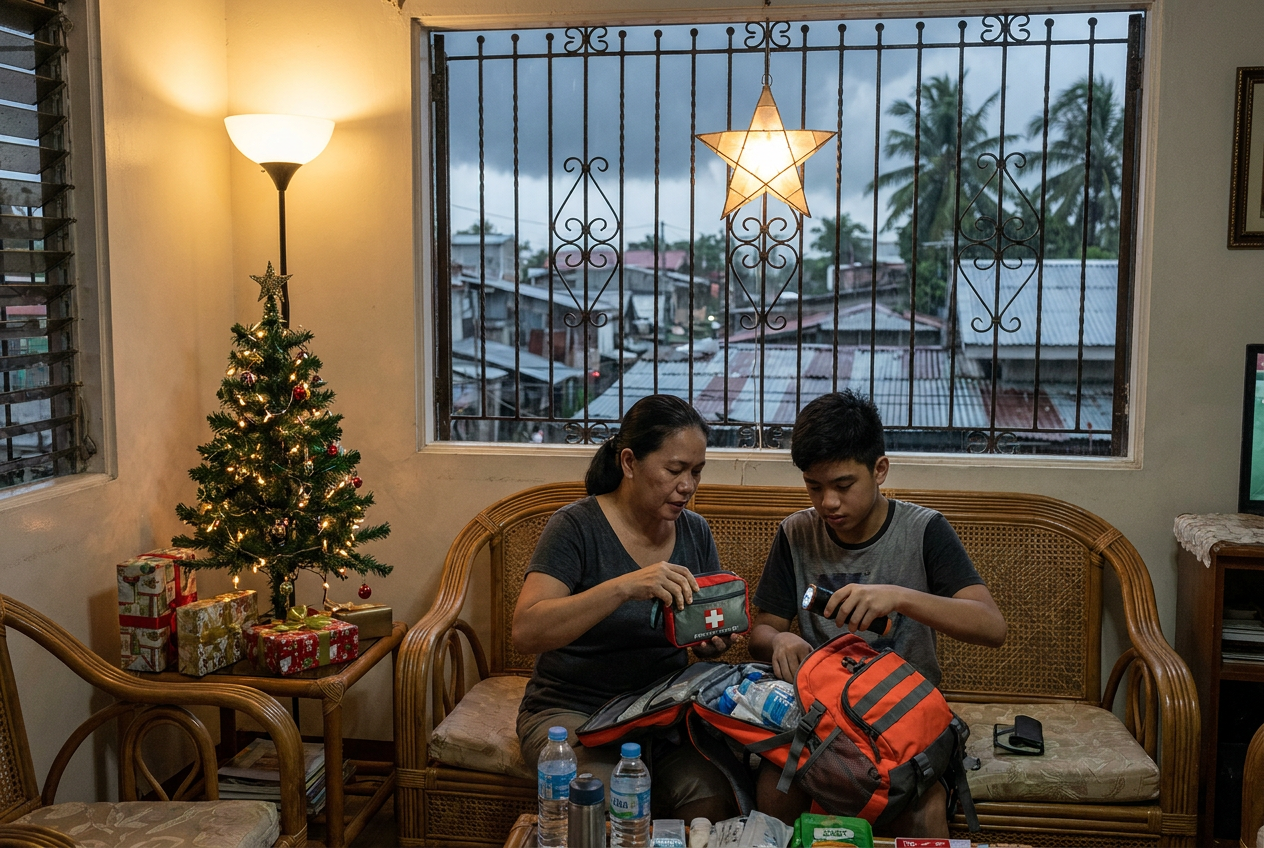
- A grab-and-go bag packed and ready before typhoon season starts, so leaving does not depend on finding things in the dark during a blackout. See our go bag guide for what belongs in it.
- A battery or hand-crank radio that can pick up local advisories if mobile networks or power go down, since surge often arrives with a wider typhoon-driven outage across the area. See power outage for options.
- Dry bags or sealed containers for phones, ID’s, and cash, since evacuation routes near the coast may mean wading or wet transport even before the worst of the surge.
- A headlamp, not a phone flashlight, if you are moving to an evacuation center at night with your hands full of kids or bags.
None of this is storm-surge-specific equipment, because storm surge is a “leave early” hazard, not a “shelter in place with the right gear” hazard. The best gear for it is a family that already knows the evacuation route and left before they needed any of it.
Common mistakes
Treating the wind signal as the only number that matters. A low wind signal with a high storm surge advisory is still a leave-now situation for coastal barangays.
Assuming a second floor is the same solution for surge as for flood. It is not. Height within the house helps against river flooding. It does not reliably help against a surge that can undermine or engulf the whole structure.
Waiting for visible water. By the time seawater is visibly rising in the street, the safest window to travel to high ground may already be closing.
Not knowing the barangay’s actual hazard status. Many coastal residents have never checked HazardHunterPH or asked their barangay whether their street is in a mapped surge zone. This is worth ten minutes before the season starts, not during a red-level typhoon threat.
Confusing “we didn’t flood last time” with “we won’t flood this time.” Storm surge height depends on a typhoon’s specific track, speed, and pressure. A barangay that stayed dry through one typhoon is not automatically safe through the next — Tacloban itself had weathered many storms before Yolanda’s surge caught so many people by surprise.
The one thing to remember
Storm surge and ordinary flooding look similar from a distance — both mean water where you do not want it — but they behave differently, and that difference should change what your family does. Flooding often allows you to move up and wait. Storm surge asks you to move out and away, and to do it earlier than feels necessary. Know your barangay’s hazard status now, watch the PAGASA storm surge advisory and not just the wind signal, and treat the advisory itself as your signal to leave. No bag, no radio, and no second floor replaces leaving early.