25kg rice storage guide: bins, sealing & placement tips
How to store a 25kg sack of rice in a food-grade container: right size, HDPE/PP codes, sealing tips, and safe storage spots for Filipino homes.
Part of our complete guide to long-term rice storage: if you’re still deciding between a bin, a vacuum seal, or plain airtight jars, start at Long-term rice storage: the complete guide for Filipino households. This article is for the household that has already decided — you have a 25kg sack, and you want to do the bulk-bin method properly.
Before we get into containers, a quick recap because it matters for every decision below. Rice spoils or gets infested for four reasons: moisture (mold, clumping), oxygen (lets weevils and their eggs develop, lets fats in the rice turn rancid over time), heat (speeds up all of the above), and pests (weevils already in the grain, or rodents getting in from outside). Every step in this guide is really just managing those four things.
What you need
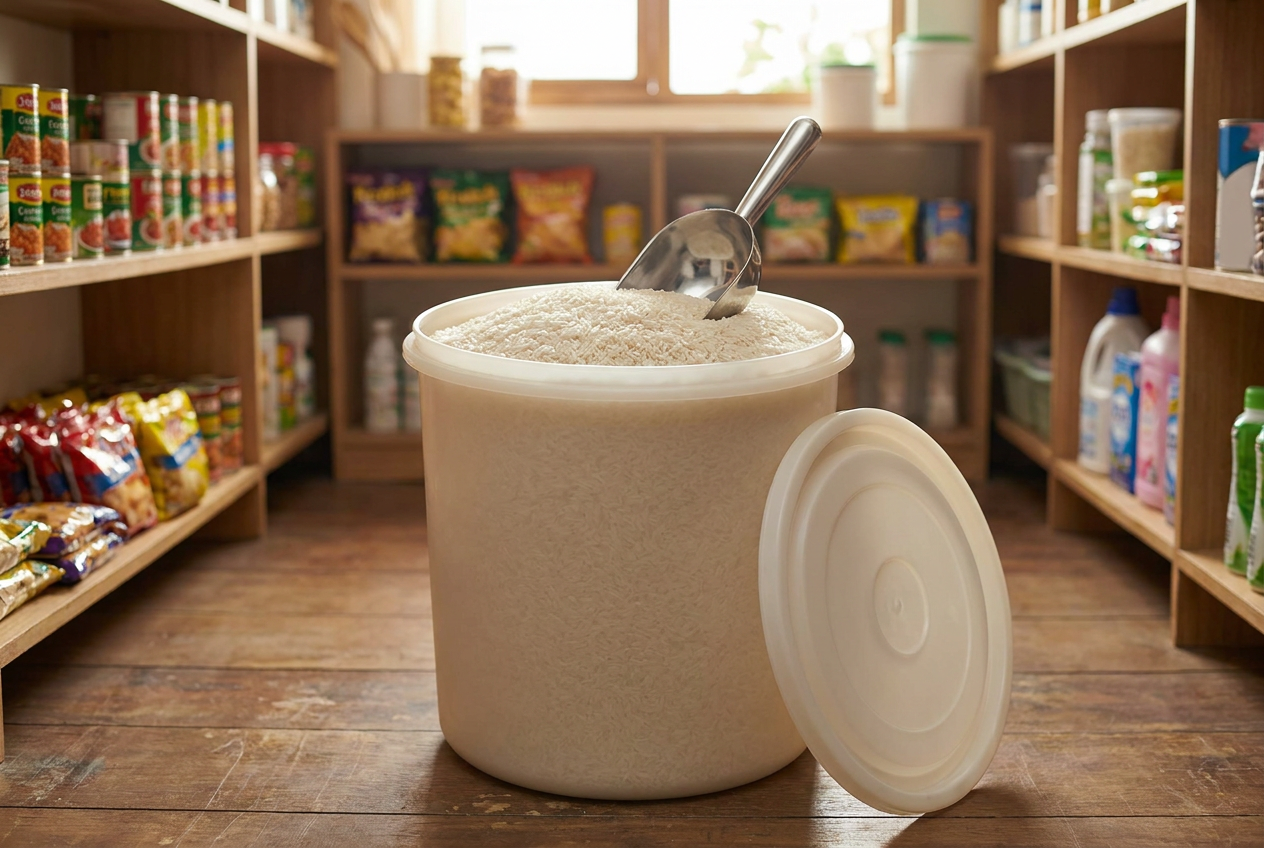
A food-grade container, sized right. A 25kg sack of well-milled rice is roughly 30 to 33 liters by volume, so you want a container rated 30 liters or more — 35 to 45 liters gives you comfortable headroom and makes filling easier. Common local options:
- Food-grade plastic pails with gasket lids (the type used for bagoong, lard, or paint but sold new and unused for food) — widely available in Divisoria, hardware stores, and palengke supply shops.
- Stackable plastic bins with snap-on lids, the kind sold in department stores or via Lazada and Shopee as “rice storage container” or “cereal bin.”
- Drums (55-gallon and smaller food-grade drums) — more than you need for one sack, but useful if you’re storing two or three sacks together.
Check the recycling code before you buy anything. Every food-safe plastic container has a small triangle stamped on the bottom with a number inside. You want:
- Code 2 (HDPE — high-density polyethylene): opaque, sturdy, the standard for food pails and many bins.
- Code 5 (PP — polypropylene): often slightly more flexible, also food-safe and commonly used for lidded containers.
Avoid unmarked “bargain” bins with no recycling code at all, and avoid repurposing paint buckets, chemical drums, or anything that ever held something non-food, even if it looks clean. Plastic absorbs odors and residues you can’t wash out. If a Lazada or Shopee listing doesn’t show the bottom of the container in photos, message the seller and ask, or skip it — this is one place where a ₱150 savings isn’t worth the risk of tainted rice.
Lid style matters more than people expect. A gasket-sealed screw-top or clamp-lid pail keeps oxygen and moisture out far better than a plain snap-on lid, which typically has small gaps at the rim. If you’re buying a snap-on bin, look for one advertised with a rubber gasket seal — some of the better cereal-bin designs on Shopee include this. If yours doesn’t have a gasket, you can improve the seal with a Mylar liner (more on that below).
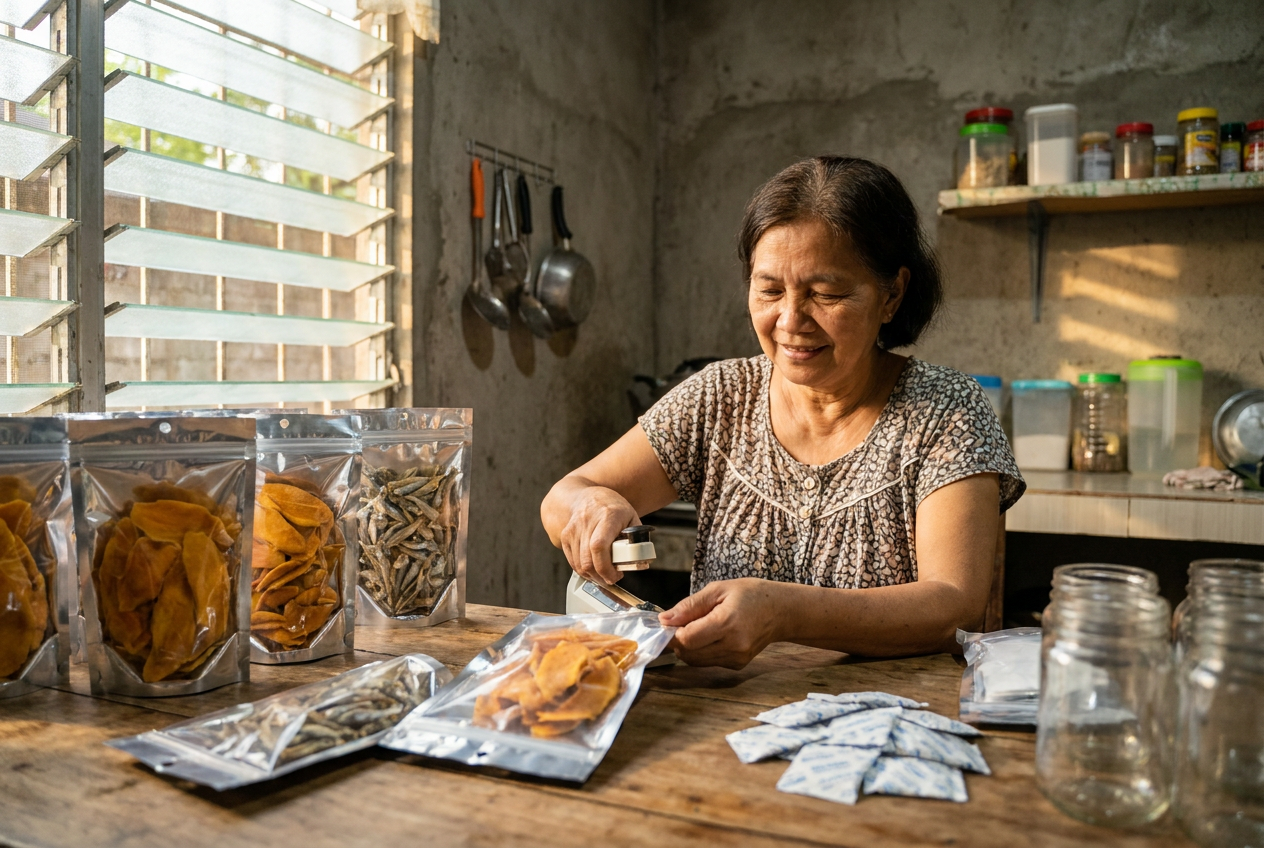
Optional but worth knowing about: Mylar bags and oxygen absorbers. A Mylar liner is a thick, foil-like plastic bag you put inside your bin before adding the rice. Combined with an oxygen absorber packet (a small sachet that chemically removes oxygen from a sealed space), it turns your container into a near-vacuum environment. This is the single biggest upgrade you can make for shelf life, but it adds cost and a bit of fuss — worth it if you’re storing rice for genuine multi-year emergency reserve rather than a rotating household supply you’ll use within the year.
The method
1. Prepare the container. Wash the pail or bin with warm water and mild dish soap, rinse thoroughly — soap residue affects taste — and then let it air dry completely, ideally overnight. Any trapped moisture inside a sealed container becomes the seed for mold later. Check the gasket or rim for cracks, warping, or gaps before you commit rice to it; a damaged seal defeats the purpose of a sealed container.
2. Prepare the rice. Inspect the sack before you transfer anything. Open it and look for webbing, small holes in grains, live weevils, or a musty smell — signs of existing infestation. If you find heavy infestation, mold, or a rancid smell, discard that portion; don’t try to salvage it by picking out visible pests, because eggs you can’t see will still hatch later.
If the rice looks clean, a precaution many households use is to freeze it briefly — about four to seven days in a home freezer — before sealing it away. This kills any insect eggs already present in the grain that you can’t see, so they don’t hatch weeks later inside your sealed bin. Let the rice come back to room temperature and make sure any condensation has evaporated before sealing, since sealing in damp rice defeats the entire point.
3. Line the container, if using Mylar. Place the Mylar bag inside the bin, fill it with rice, add the recommended number of oxygen absorbers for the volume (follow the packet’s instructions — too few won’t clear the oxygen, and it’s hard to overdo it), then press out excess air and seal the Mylar with a hot iron or a dedicated impulse sealer along a folded edge. Only then close the outer bin lid.
4. Fill and seal. Pour the rice in steadily, tapping the container gently on the floor every few kilos to settle it and reduce air pockets. Fill to just below the rim to leave room for the lid to seat properly. Close the lid fully — for gasket pails, this usually means pressing evenly around the rim or turning a locking ring; for screw tops, turn until you feel it stop, not just until it “looks closed.”
5. Label and date it. Write the fill date and rice type directly on the lid or a strip of masking tape. This sounds obvious but is the step almost everyone skips, and it’s the reason people end up unsure whether a bin has been sitting for eight months or three years.
Variations & conditions
Where you store it changes everything. Keep the container in the coolest, driest, darkest spot you have — under a bed, in a closet, in a store room — not in a garage that bakes in afternoon sun or a kitchen corner that gets steamy from cooking. Set it off the floor, on a low shelf, wooden pallet, or even a couple of bricks, and leave a few centimeters between the container and the wall. This isn’t fussiness: airflow underneath and around the container stops condensation from building up against a cold floor or wall, and it keeps the container out of the first inch of water if a small leak or minor flooding happens.
If you’re in a flood-prone home, raise this further than you think you need to. Storms don’t always give a lot of warning, and a bin on the floor in a ground-floor room is exactly what gets swept or soaked when a drain backs up. A shelf at knee height or higher, or storage on a mezzanine or second floor, is worth the extra effort.
In hot, humid Philippine conditions generally, the enemy is less about a single flood event and more about the slow, constant background moisture in the air. A well-sealed container matters more here than in a drier climate — check gaskets more often, and avoid storage spots near water heaters, laundry areas, or anywhere with a running window air-conditioner dripping condensate nearby.
Protecting against rodents is mostly about the container itself. A gasket-sealed HDPE or PP pail with a snug lid is generally rodent-resistant on its own; a mouse or rat can chew through thin plastic but usually won’t bother if the container is solid and the lid is properly seated. Keep the storage area itself free of food scraps and clutter that would attract rodents to begin with.
Getting rice out day to day
The biggest practical mistake with a 25kg bulk container is opening and closing it constantly for small scoops. Every time you break the seal, you let in a little humidity and a little oxygen, and over months that adds up.
Instead, decant a week or two’s worth of rice — say 2 to 3kg — into a smaller airtight container that you keep in the kitchen for daily cooking. When that runs low, go back to the bulk bin, refill the smaller container in one go, and reseal the bulk lid immediately and fully. This way the big container gets opened maybe twice a month instead of twice a day, and the bulk of your reserve stays undisturbed.
Rotation and checking
Even a well-sealed bin isn’t a “seal it and forget it forever” arrangement. Every three to six months, check the lid and gasket for damage, glance at the rice through a clear section if your container allows it, and give it a sniff when you open it for a top-up. If you keep two containers going, rotate them — use from the older one first, and refill it when you buy a fresh sack, so you’re never relying on rice that’s sat untouched for years without a check.
A desiccant helps in the wet season. If you’re not using a Mylar liner, tuck two or three 50g food-grade silica gel packets (the kind sold for rice and grain storage, not the free sachets from shoeboxes) near the top of the rice in a 40–50 litre bin. Write the date you added them on a strip of masking tape on the lid, and swap them every few months at your regular check: a saturated packet does nothing.
Expected shelf life depends heavily on how well the container is sealed. A plain, well-sealed food-grade bin without a Mylar liner, stored cool and dry, generally keeps white rice in good eating condition for around one to two years, per most food-storage guidance. A Mylar-and-oxygen-absorber setup inside the same bin, because it removes oxygen far more thoroughly, can extend that to somewhere in the range of five to ten years for white rice under good storage conditions. Brown and other whole-grain rice have shorter shelf lives in both cases because their natural oils go rancid faster, regardless of packaging.
Common mistakes
- Buying an unmarked or repurposed container. If you can’t confirm it’s food-grade plastic with a code 2 or 5 stamp, don’t use it for rice you intend to eat.
- Sealing in rice that isn’t fully dry, or a container that isn’t fully dry after washing. Trapped moisture is the single fastest route to mold.
- Skipping the pest inspection, especially skipping the freezer step, then discovering weevils months later throughout the whole batch.
- Opening the bulk container too often for small daily scoops instead of decanting.
- Forgetting to label and date it, leaving you guessing later about how long it’s actually been stored.
- Storing on the floor against an exterior wall, where condensation and flood risk are both higher.
Troubleshooting
Weevils appear after sealing. This usually means eggs were already in the rice before you sealed it, and the freezer step was skipped or too short. If it’s a light, localized infestation in a small area near the surface, some households sift and reuse the unaffected portion, but if weevils are throughout the batch, it’s safer to discard it — the eggs you can’t see will keep hatching.
Musty or sour smell on opening. This points to moisture that got in either from an incomplete seal or rice that wasn’t fully dry before storage. A faint grain smell is normal; a musty, sour, or otherwise “off” smell is not. Rice with a rancid or moldy smell should be discarded, not salvaged — don’t try to air it out and use it anyway.
Visible mold. Discard the entire batch. Mold can produce toxins that spread through affected grain in ways you can’t see or cook away, and no amount of picking out the visibly moldy grains makes the rest safe.
Clumping without smell or visible mold. Usually just humidity absorption, not spoilage yet — but treat it as an early warning to check your seal and storage spot, and use that batch sooner rather than later.
Pros and cons
Pros: low cost relative to volume stored, widely available locally and online, simple to execute with no special equipment beyond the container itself, easy to scale up by adding more bins, and a gasket-sealed pail holds up well against both pests and minor flooding if raised off the floor.
Cons: without a Mylar liner and oxygen absorber, shelf life is more modest than vacuum-sealing or full Mylar setups; a 25kg bin is heavy and awkward to move once full, so placement decisions matter before you fill it, not after; and a damaged or poorly-seated lid quietly undoes most of the benefit without you noticing until you open it.
Other ways to store rice
If a single large bin doesn’t suit your space or household size, two other approaches from this series might fit better:
Storing rice in airtight containers on a shelf — smaller containers, easier to manage day to day, good for households without room for a bulk bin.
Vacuum-sealing rice for long-term storage — for the longest shelf life with the least bulk, at the cost of more equipment and setup time.