Typhoon prep for family members on maintenance medication
Keep a lolo, lola, or parent's maintenance medication safe and on schedule during a typhoon or flood — what to prepare, store, and who to call if supply
The situation
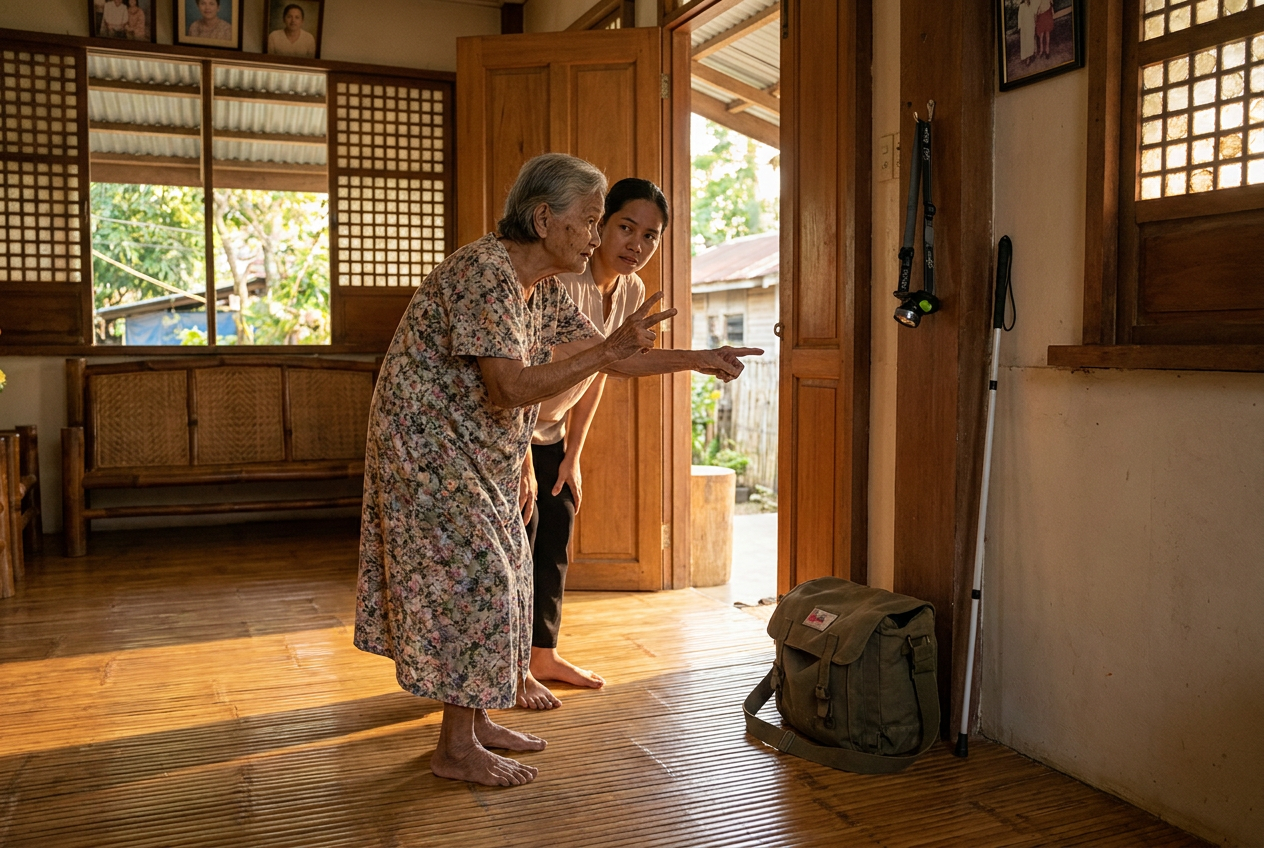
When a typhoon is bearing down, most households think about food, water, and getting the go-bag by the door. What is easy to miss is the quieter risk sitting in the medicine cabinet: a parent, lolo, or lola who takes daily maintenance medication for hypertension, diabetes, or a heart condition.
A typhoon does not have to be catastrophic to disrupt this. A flooded street can keep you from the pharmacy for two or three days. A brownout can shut down the barangay health centre’s queue system. A landslide advisory can close the one road to town. None of that is dramatic on the news, but for someone whose blood pressure or blood sugar depends on a dose taken at the same time every day, a few missed days is not a minor inconvenience — it is the actual emergency.
This guide is about keeping that medication routine going when the usual supply chain — doctor, pharmacy, barangay health center — is temporarily out of reach. It is not about what to pack generally (see our multi-generational go-bag guide for that) and it is not about treating injuries (see our first aid kit roundup for that). It is specifically about making sure a maintenance medication does not run out, get ruined, or get taken incorrectly during isolation.
A plain note before anything else: this article gives no dosing instructions and it is not medical advice. Anything about how much, how often, or what to substitute belongs to your doctor, your pharmacist, or the Department of Health. What follows is about preparation and continuity, not treatment.
What actually matters
Cut through everything and three things matter most.
A record of what is being taken. Not a memory of it — a written or photographed record. Names, dosages, and the prescribing doctor’s name, kept somewhere that survives water and somewhere a stranger (a relief worker, another family member, a barangay health worker) could read and act on if the usual caregiver is unavailable.
A buffer supply, arranged ahead of time. Typhoon season in the Philippines is predictable in its unpredictability — PAGASA tracks the systems, but nobody can promise which week a road will flood. The only real defense is having a few extra days of medicine on hand before the peak months, not scrambling for it when a signal number is already posted.
Keeping it dry, cool, and findable. A lot of household medication in the Philippines quietly gets stored on a ground-floor shelf, in a bathroom, or near a window — exactly where flooding and heat do the most damage. Where it is kept matters as much as how much of it there is.
Everything else in this guide supports those three points.
What to do (and what not to)
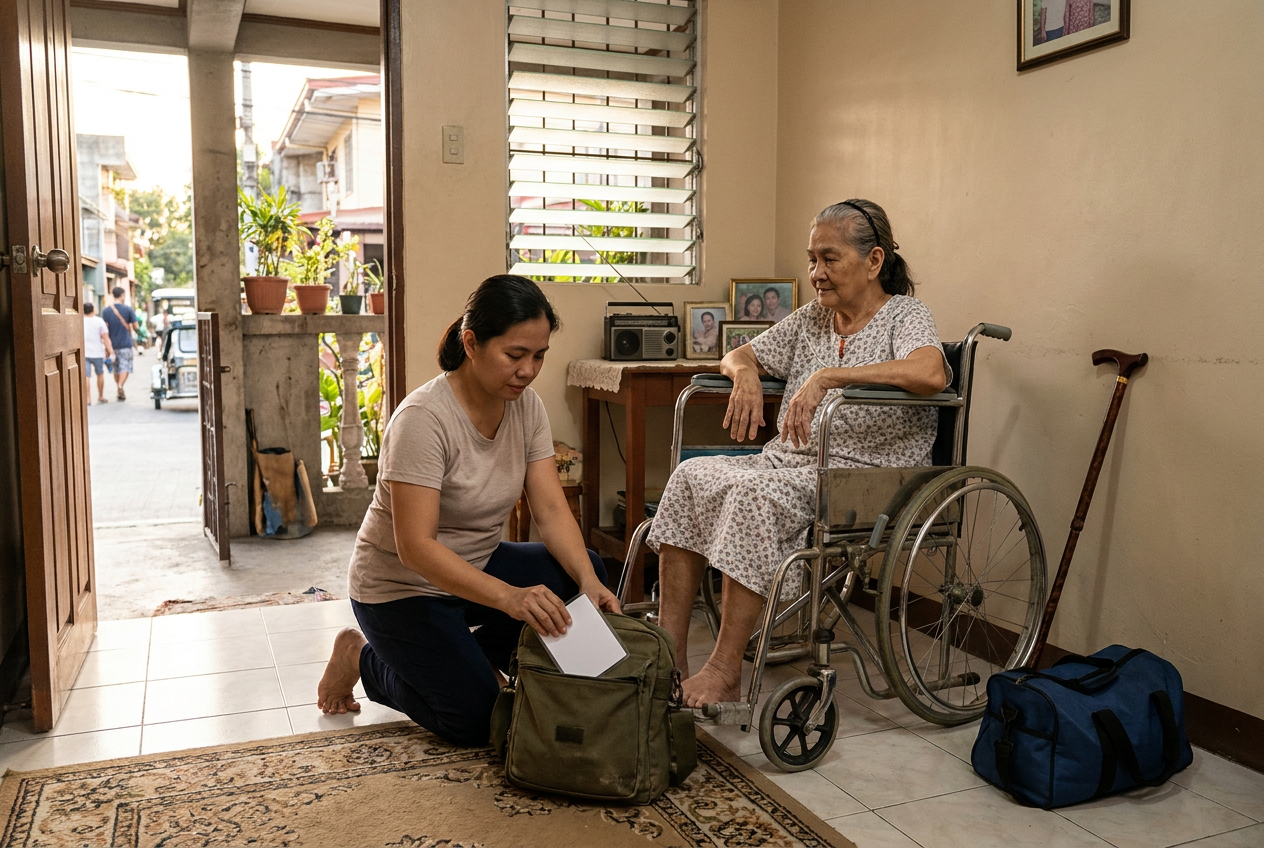
Keep a running medication list, and keep it in two places. Write out, for every maintenance medication in the household: the medicine name, the dosage, how often it’s taken, and the doctor who prescribed it. Put a copy in a waterproof pouch or a sealed sandwich bag, and take a clear photo of it on your phone as backup. If you are the one who usually manages a parent’s medication, do not assume you will always be the one available to explain it — a legible list means anyone can step in.
Talk to the doctor or pharmacist before the season peaks, not during it. Ask specifically about a small buffer — a few extra days’ worth held in reserve for exactly this kind of disruption. Some maintenance medications can be arranged this way through a regular pharmacy or through PhilHealth-covered facilities; others cannot, and that is a conversation for the prescriber, not a guess on our part. The point is to ask early, while the pharmacy is open and the roads are dry, not during the isolation itself.
Store the medication away from flood-prone ground floors and away from heat. If your home has a second floor, that is a better shelf for medication than anywhere near ground level. If you are on a ground floor or in a low-lying barangay, keep the pouch in a bag that can move with you quickly, not on a low shelf that floods first. Avoid storing it near a window, tin roof, or anywhere that gets direct heat — some medications degrade in heat faster than people expect.
If a dose is missed or supply runs out, contact — do not improvise. The instinct to “make up” a missed dose by doubling the next one, or to substitute a similar-looking tablet from a neighbor, is understandable under stress and it is exactly the wrong move without medical guidance. The right move is to reach the barangay health center, the nearest open pharmacy, or a telehealth line if one is reachable, and describe the situation plainly. If phone lines are down, this is one of the few situations where going to the barangay health center in person, once it is safe to move, is worth doing even during a lull in the weather.
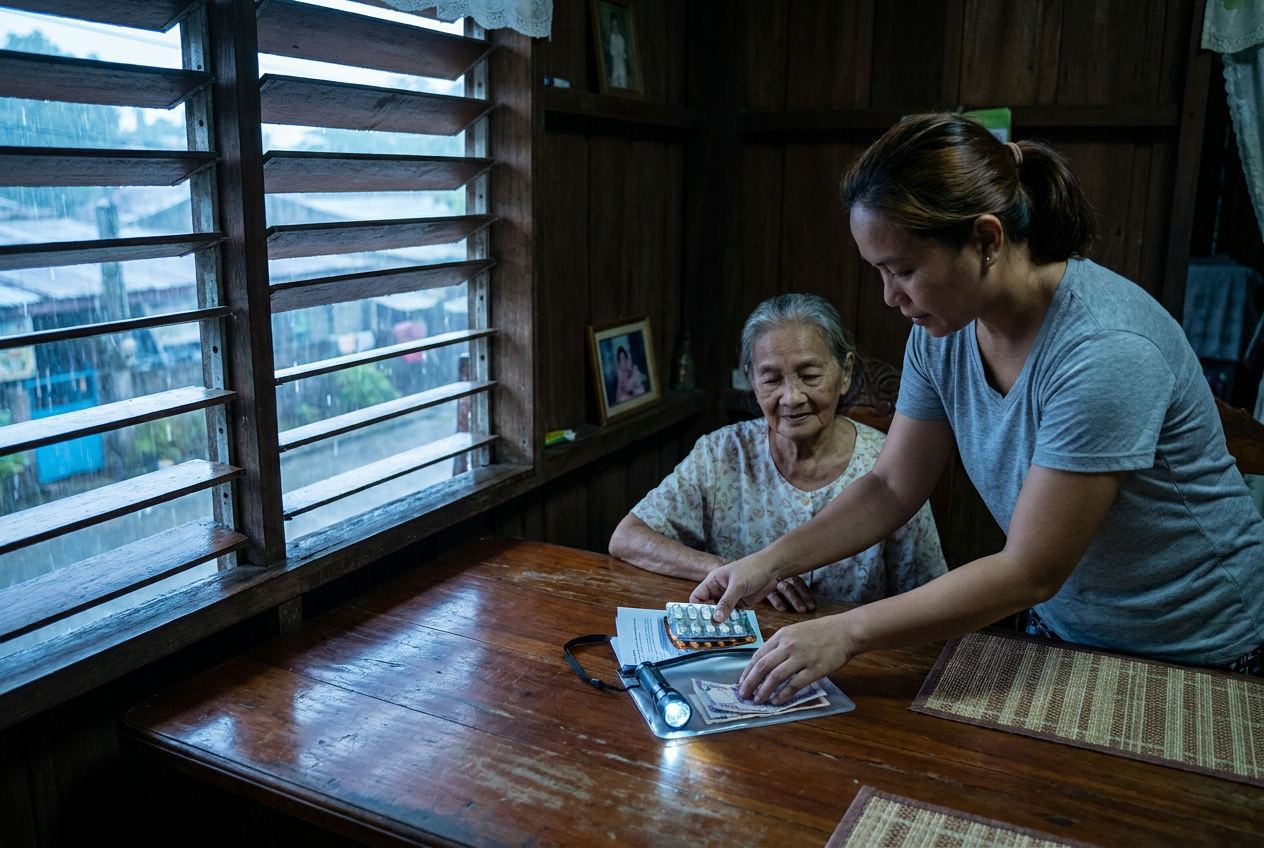
Keep cash and IDs with the medication pouch, not scattered elsewhere. During an outage, card readers and e-wallets often do not work, and a pharmacy that is open on generator power may only take cash. Keep a small amount of cash and a valid ID together with the medication list, so that if someone else has to go buy the medicine, they are not held up at the counter.
The gear that helps
None of this needs anything elaborate, and we would rather name a short honest list than pad it.
- A small waterproof document pouch — the same kind used for IDs and cash in a go-bag, big enough for the medication list, a spare blister pack if the doctor has approved a buffer, and a little cash.
- A dry box or sealed container for the medication itself, kept off the ground floor. It does not need to be fancy — anything that keeps out water and does not sit in direct heat.
- A basic first aid kit for anything beyond medication continuity — cuts, sprains, fever. We cover that separately in our first aid kit roundup.
- The household go-bag, which should hold this pouch alongside everything else the family needs to move on short notice. We walk through that whole packing list in Packing a go-bag for the whole family — this article is deliberately narrower than that one.
Common mistakes
Storing all the medication in one place, in one bag, on the ground floor. If that spot floods or gets left behind in a hurried evacuation, the whole supply goes with it.
Assuming the digital prescription record on a phone app is enough. It might be, if the phone survives, has battery, and has signal. A paper copy in a waterproof pouch does not depend on any of those three things.
Waiting until the signal number is posted to ask about a buffer supply. By then, the pharmacy queue is long, stock may be tight, and there is no time left for the doctor’s approval that a buffer usually needs.
Doubling a dose to “catch up” after a missed day. This is the single most common and most avoidable mistake we hear about, and it is not a judgment call a family should make alone. Contact the barangay health center, the pharmacist, or the DOH instead.
Forgetting cash on the assumption that GCash or a card will work. During an extended outage, plenty of small pharmacies fall back to cash-only, and that is not the moment to discover you have none on hand.
The one thing to remember
No pouch, no list, and no buffer supply replaces the doctor who knows the person taking the medicine. What this preparation buys is time — a few extra days of steady dosing while the road is flooded or the pharmacy is closed, instead of a gap that forces a rushed, uninformed decision. Write the list, ask the question early, keep it dry and out of the heat, and know who to call if it runs short. That is the whole job, and it is worth doing before the first PAGASA bulletin of the season, not after.