Philippine earthquake preparedness: the Big One, made simple
Earthquake ready PH: Drop-Cover-Hold On, room-by-room hazard checks, the first 30 minutes after shaking, and what to pack in a 72-hour kit.
The situation
If you live in Metro Manila, you have probably heard someone mention “The Big One” — a major movement of the West Valley Fault that PHIVOLCS has studied for years. I am not going to lead with sirens and worst-case numbers, because fear does not make anyone more prepared. It just makes people freeze. What I want you to sit with instead is a quieter, more useful fact: most earthquake injuries in a Philippine home are not from the building falling down. They are from things falling on people — a cabinet, a shelf of picture frames, a ceiling fan, a heavy TV coming off its stand. That is a problem you can actually do something about this weekend, with a screwdriver and an hour, before it is a problem you are dealing with in the dark with the power out.
The other Philippine-specific reality is that a major quake will not arrive with warning. PAGASA tracks storms with days of lead time. Earthquakes give you none. That changes how you prepare — less about watching a forecast, more about what is already bolted down and already packed before you ever feel the floor move.
Metro Manila runs a coordinated Metro Manila Shake Drill every quarter for exactly this reason — to make Drop-Cover-Hold On and evacuation routes muscle memory rather than something you work out for the first time mid-quake. If your barangay or your building has never run one, that is worth raising with your admin office or homeowners’ association.
What actually matters
Strip away the noise and three things carry almost all the weight:
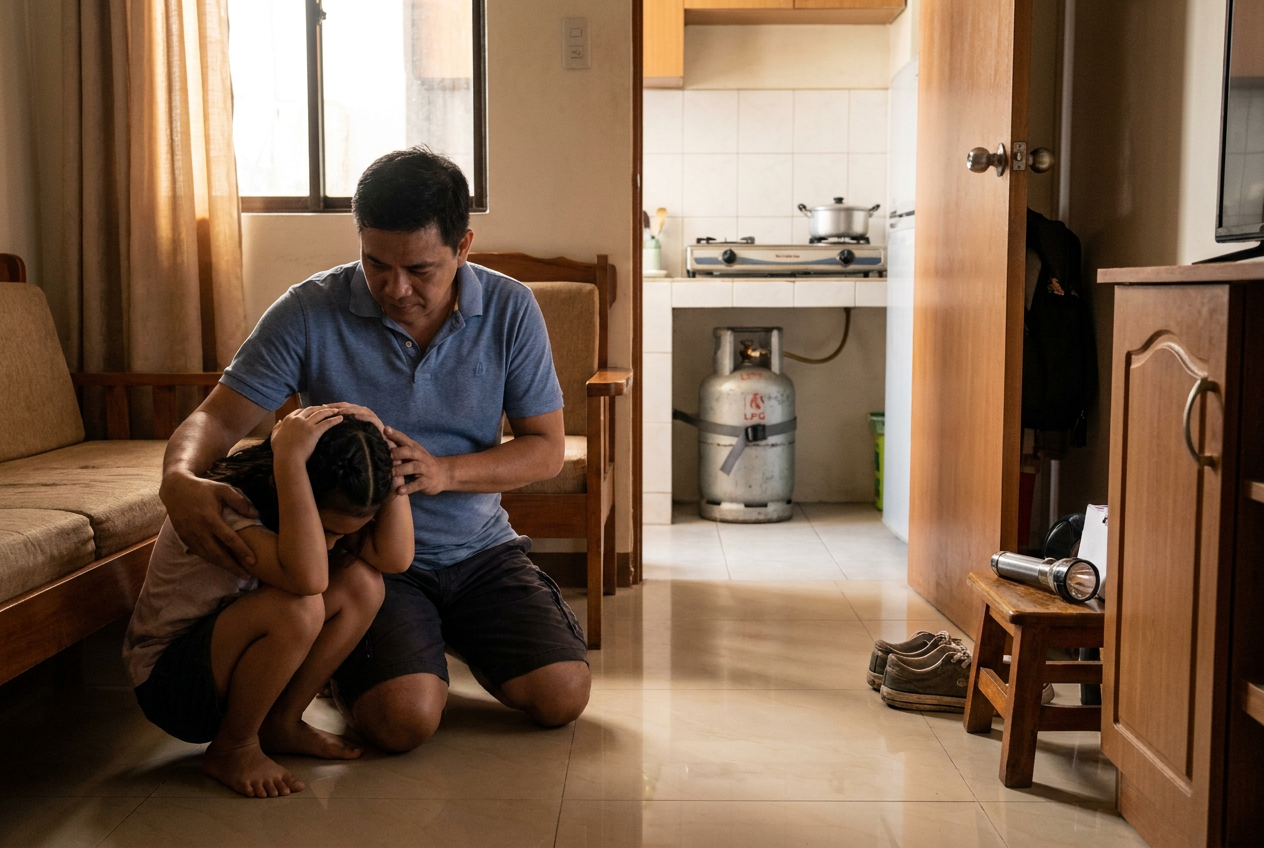
Drop-Cover-Hold On, immediately, no hesitation. Not “stand in a doorway” — that is outdated advice for old timber-frame houses, not for a concrete mid-rise in Quezon City. Drop to the floor before the shaking drops you there. Get under something sturdy — a solid table, a desk — and hold onto it, because the table will move too. Cover your head and neck with your arms either way, table or no table.
What is bolted down and what is loose in every room you actually spend time in. A structurally sound building can still put someone in the hospital with a bookshelf. This is the highest-value, lowest-cost prep there is, and almost nobody does it until after the first bad shake reminds them.
What you do in the first 30 minutes after the shaking stops. This is where people get hurt from panic, not from the quake itself — rushing for the stairs during aftershocks, lighting a candle in a room that is quietly filling with gas, calling family and jamming the cell network when a text would have gone through.
What to do — and what not to
During the shaking:
- Drop, cover, hold on. Do this immediately, wherever you are.
- If you are in bed, stay there and cover your head with a pillow rather than trying to run in the dark.
- If you are outside, move away from buildings, posts, and power lines — falling glass and signage are real hazards in Metro Manila’s older commercial strips.
- Do not run for the stairs or the elevator. Never use elevators during or right after a quake — if the power cuts, you are stuck, and aftershocks can jam the doors worse.
- If you are on a high floor and the building loses the lift, know that you may be using the stairs for a while. That is a reason to keep good shoes near the bed, not slippers.
The first 30 minutes after it stops:
- Check for injuries first — yourself, then the people near you. Do not move someone with a suspected serious injury unless they are in immediate danger where they are.
- Smell for gas. If you smell it, do not light anything — no candles, no lighters, no switches. Open windows if you can, shut off the main gas valve if you know where it is, and get everyone outside.
- Expect aftershocks. They can come minutes or hours later and can be strong enough to bring down anything already weakened. Do not treat the first stillness as “over.”
- Use SMS, not calls. Cell networks jam fast after a major quake because everyone tries to call at once. A text often gets through when a call will not — this is also how NDRRMC and local disaster offices ask people to communicate in the immediate aftermath, to keep lines open for emergency responders.
- Do not re-enter a damaged building to grab belongings, even briefly, until it has been checked. Cracks that look cosmetic can mean a compromised structure — that judgment call belongs to engineers and local officials, not to how the building looks from the doorway.
- Check on elderly neighbors and anyone with mobility issues once you know your own household is safe. This is genuinely one of the most useful things a household can do in the first hour, and it costs nothing.
Room-by-room, before anything happens
This is the part that actually prevents injuries, and it is almost entirely a weekend job:
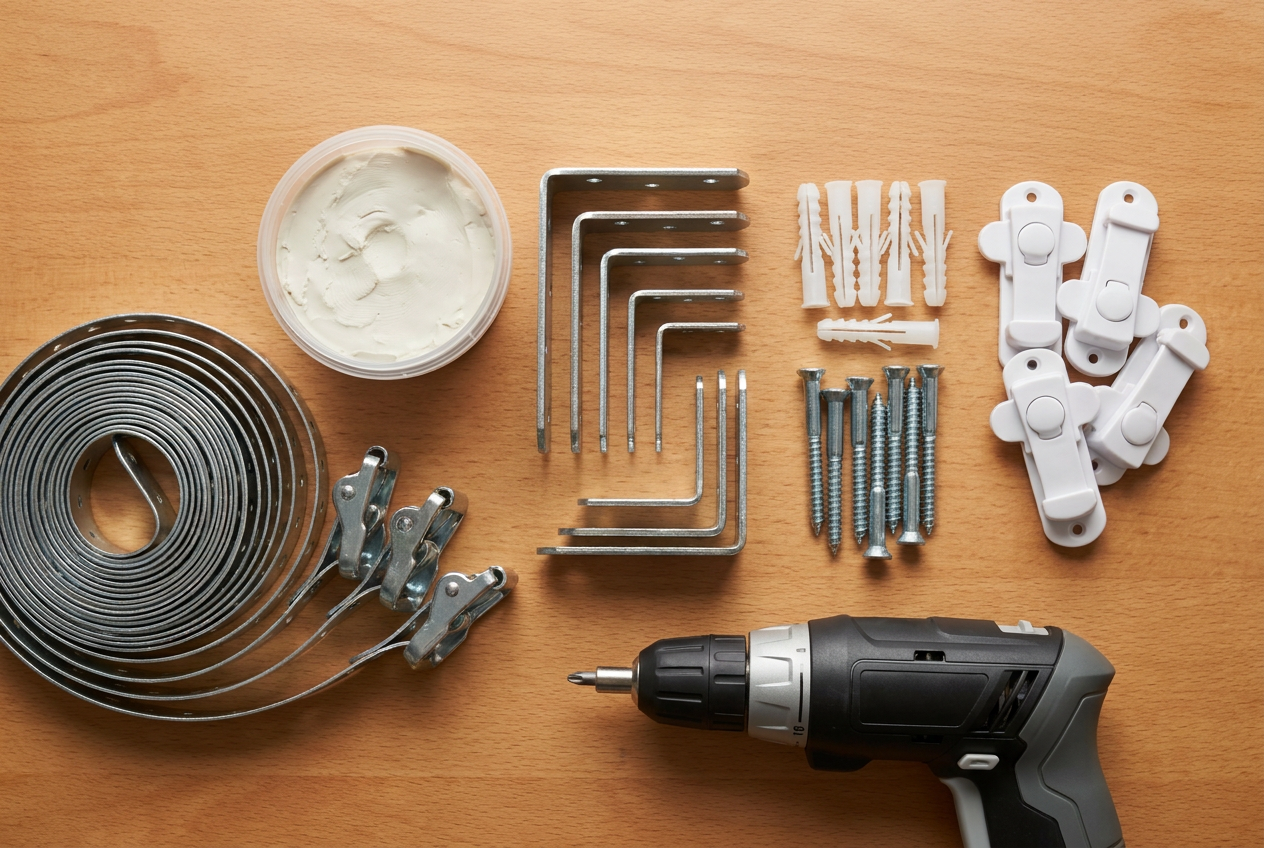
- Bedroom: Move heavy furniture away from the head of the bed. Secure tall wardrobes to the wall with an L-bracket — hardware stores sell these for under ₱150. Keep sturdy shoes and a flashlight within reach of the bed, not across the room.
- Kitchen: Latch cabinet doors so they cannot swing open and drop glassware. Know where the gas shutoff is and make sure more than one adult in the house knows it too.
- Living room: Anchor the TV and any tall shelving to the wall. A TV coming off a low cabinet at head height is a common and entirely preventable injury.
- Hallways and exits: Keep them clear. In the panic of an aftershock, a hallway stacked with boxes becomes the reason someone gets hurt trying to leave.
- Water heaters and gas cylinders (LPG tanks): Strap or chain them upright. A tipped-over gas cylinder with a damaged valve is a real fire risk, and it is a five-minute fix with a strap you can buy at any hardware store.
None of this is expensive. It is mostly the discipline of doing it before you need it, which is the same discipline that matters everywhere else in emergency prep — the gear that saves someone is the gear that was already in place, not the gear you meant to buy.
The gear that helps
You do not need anything exotic for this. You need a small number of things that work without hesitation, kept somewhere you can reach in the dark.
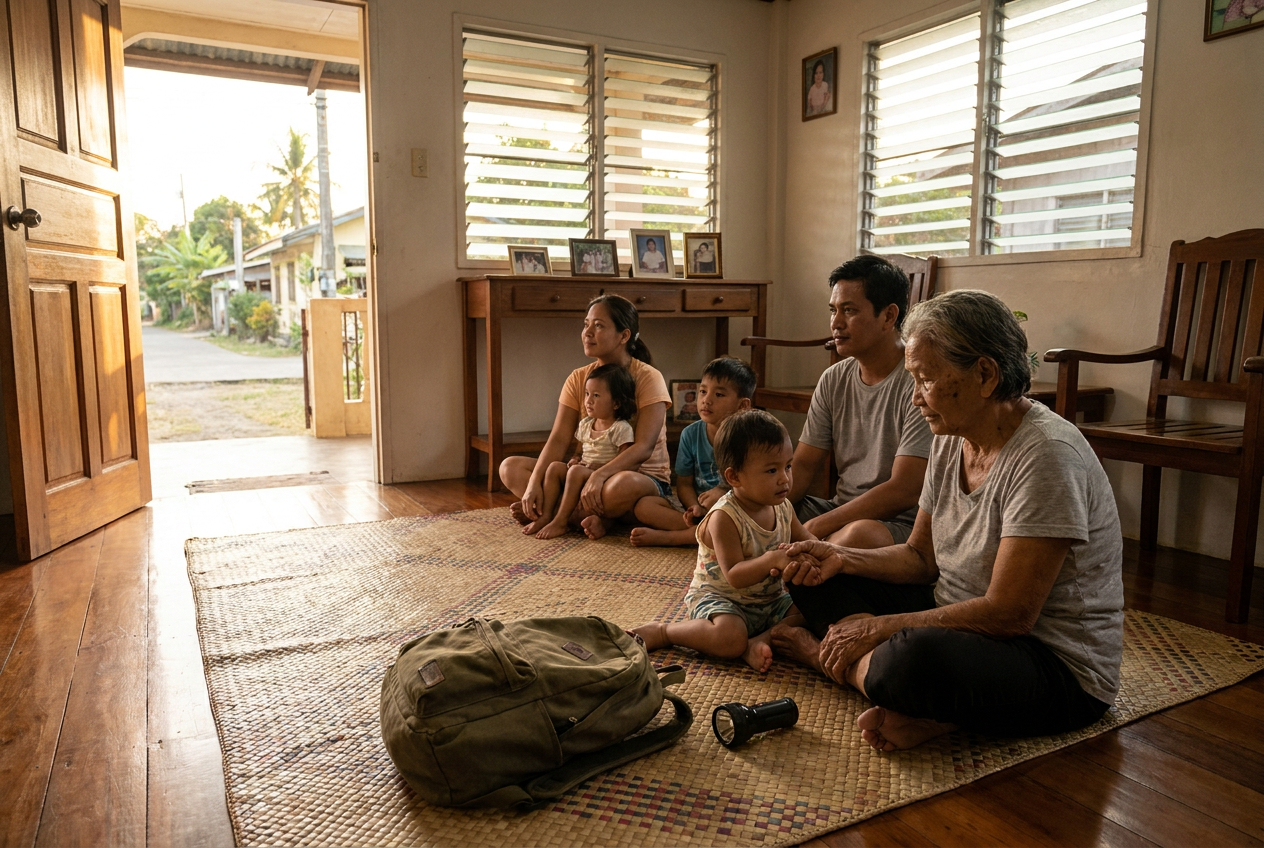
- A grab-and-go bag near the door, packed before you need it, not assembled while the floor is still moving. See our go bag guide for what actually earns a place in one.
- A headlamp, not a phone flashlight, kept by the bed. You want both hands free to move debris or help someone up.
- A whistle, in case you or someone else ends up trapped under debris and shouting is not sustainable. This is one of the lightest, cheapest items in any kit and one people forget until they need it.
- A basic first aid kit, sized for cuts, sprains, and the kind of injuries that actually happen — falling objects, not building collapse.
- A battery or hand-crank radio, since cell networks are often the first thing to jam or go down after a major quake.
- A 72-hour water and food supply per person, stored somewhere it will not be crushed if a shelf comes down on it.
For the full breakdown of what belongs in a 72-hour kit and why, our earthquake ready and go bag pages go through it item by item — we are not going to repeat a shopping list here that scores products elsewhere.
Common mistakes
Bolting nothing down because “it probably won’t happen here.” Every household we have talked to that lived through a strong shake says the same thing afterward: the cabinet strap would have taken ten minutes.
Treating the doorway as the safe spot. That is old advice for old construction. In a modern Metro Manila building, get under something sturdy and hold on.
Rushing back inside for belongings. Wallets and phones are replaceable. Wait for the building to be cleared.
Calling instead of texting. Everyone reaching for the phone to call family at the same moment is exactly what jams the network when it is needed most for coordinating help.
Packing a go bag only in your head. “I know what I’d grab” is not the same as a bag by the door with a flashlight in it. In the search-and-rescue work I have done, the gear that mattered was never the gear someone meant to bring — it was the gear that was already on them, already checked, already working. A go bag is the household version of that same discipline.
Assuming the shaking is over after the first jolt. Aftershocks are normal and can be strong. Stay alert for longer than feels natural.
The one thing to remember
You cannot predict when the ground will move, and no amount of gear changes that. What you can control is what falls on your family when it does, and what you do in the confused half hour afterward. Strap the cabinet, know where the gas valve is, keep a bag by the door, and agree as a household that you text, not call. That is not dramatic preparation — it is just the ordinary kind, done once, that quietly does its job on the one day it matters.