Earthquake-proof your home: anchor furniture room by room
Room-by-room guide to earthquake-proofing your PH home: anchor shelves, fridges, TVs and cabinets with budget hardware and peso prices. Renter-friendly.
What you’ll be able to do — and why it matters
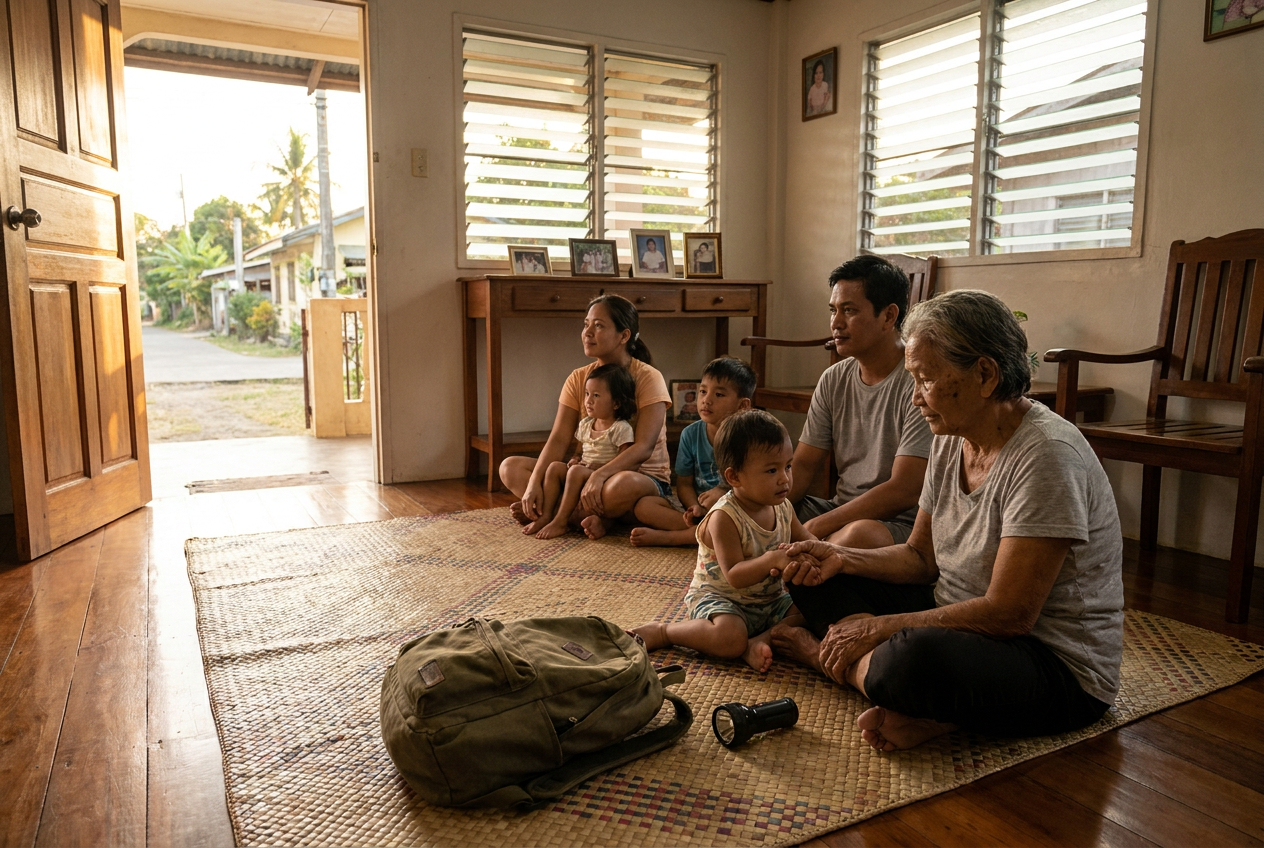
You will be able to walk through your own home, room by room, and turn the things most likely to hurt someone during a strong earthquake into things that just… stay put. That is the whole job. Not retrofitting your building, not predicting when the West Valley Fault will move — just making sure that when the shaking starts, your bookshelf does not become a falling object over the bed your child sleeps in.
Here is the uncomfortable fact that does not get said enough: in most earthquakes, the structure holds up longer than people expect. What actually injures people indoors is much more ordinary — a refrigerator tipping over, a wall-mounted TV coming off its bracket, glass frames raining down from a wall, an overhead cabinet emptying its contents onto someone standing at the counter. Almost all of that is preventable with hardware you can buy for the price of a decent meal out.
You can check roughly where you sit relative to the West Valley Fault trace using PHIVOLCS FaultFinder, but honestly, this guide applies whether you are on the fault line or two towns away. Every part of the Philippines shakes eventually. This is about the inside of your home, not the ground underneath it.
What you need
None of this requires a toolbox full of specialty gear. Most of it is small hardware you can find at True Value, Ace Hardware, your neighborhood hardware store, or Shopee and Lazada. Prices below are rough ranges based on what these items typically go for — check current listings before you shop, since prices do drift:
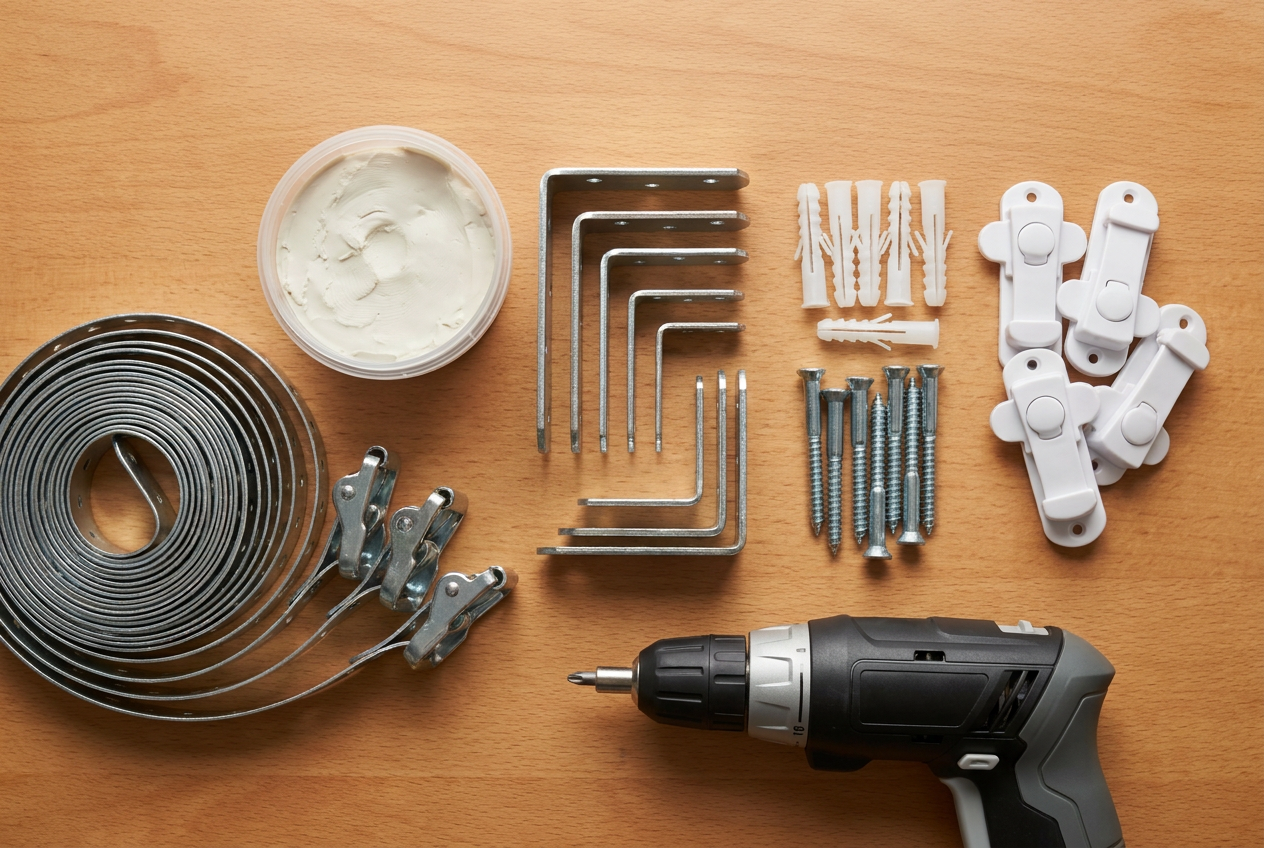
- L-brackets and metal anchor straps (roughly ₱30–₱150 each, depending on size) — for bolting shelves, cabinets, and bookshelves to wall studs or masonry.
- Furniture anti-tip straps (roughly ₱150–₱400 for a set of two) — nylon strap and buckle kits sold for exactly this purpose, often marketed for baby-proofing but just as useful for refrigerators and water dispensers. Check the weight rating printed on the packaging against the actual weight of the furniture or appliance — a strap rated for a 20-kilogram cabinet has no business holding a 70-kilogram refrigerator.
- Museum putty or earthquake gel (roughly ₱100–₱250 per pack) — reusable adhesive putty for anchoring small, light items like framed photos, vases, and countertop appliances.
- Cabinet latches (roughly ₱20–₱80 each) — simple childproof latches that keep overhead kitchen cabinets from swinging open and dumping their contents.
- A cordless drill or a basic hand screwdriver set, and a stud finder if you have one — though for masonry walls you will want masonry-rated wall anchors and a masonry bit instead of the plastic anchors made for picture frames.
- For renters who cannot drill: furniture straps looped around a fixed, heavy point instead of a drilled anchor — a built-in cabinet frame or fixed shelf works well. Adhesive strips (the Command-style kind) are fine for light decor — small frames, a lightweight clock — but they are not a substitute for a strap or bracket on anything that can tip, like a bookshelf, cabinet, or appliance. Adhesive holds against a light static pull; it does not hold against the sideways, sudden force of a tall piece of furniture trying to fall over.
None of this needs to look like a hardware store exploded in your living room. Done properly, most of it disappears behind the furniture.
The method
1. Walk the house and make a hazard list first
Before you buy anything, go room to room and write down every item that is tall, heavy, or overhead. You are looking for three categories: things that can tip over, things that can fall off a wall, and things that can fall from above onto a bed, sofa, or desk. Do this once, properly, rather than fixing things piecemeal as you remember them — a five-minute walkthrough will save you several return trips to the hardware store.
2. Anchor tall, freestanding furniture
Bookshelves, tall cabinets, and wardrobes are the classic tip-over hazard, especially once they are loaded with books or clothes that shift the center of gravity upward. Use an L-bracket or a metal anti-tip strap screwed into the top back of the furniture and into a wall stud (for wood-frame partition walls). For concrete or hollow-block walls, use a masonry-rated wall anchor sized for the weight of the furniture, not the small plastic anchors meant for picture frames — those are rated for a few kilograms of static pull, not for holding a loaded bookshelf upright during lateral shaking.
One bracket at each top corner is the standard approach for typical household shelving up to about chest height and normal loading (books, folded clothes). Skip the temptation to just anchor the middle — corners resist twisting better. For anything unusually tall, heavy, or top-loaded — a floor-to-ceiling shelf packed with hardbound books, for instance — consider a third anchor point and check the hardware’s weight rating against the fully loaded weight of the piece, not just the empty furniture.
If you cannot find a stud and your wall is hollow (drywall or hollow-block with cavities), use a proper hollow-wall toggle anchor. Buy one rated well above the furniture’s loaded weight — the number printed on the packaging is usually a straight-pull static rating, and the sideways, jolting force of an earthquake is harder on an anchor than a steady pull of the same weight. When in doubt, size up and use two anchor points rather than one. This is the single most common shortcut people take, and it is the one that fails.
3. Strap down the refrigerator and water dispenser
These two get overlooked because we do not think of them as “furniture,” but a refrigerator is one of the heaviest things in most Filipino kitchens, and a top-loading water dispenser is unstable by design — narrow base, heavy jug riding high. Furniture anti-tip straps loop around the back or side of the appliance and screw into the adjacent wall stud or a masonry anchor. Check the strap’s weight rating against your refrigerator’s actual weight (it is usually printed on a sticker inside the fridge door) before you trust it. For a water dispenser, a shorter strap anchored to a nearby wall or cabinet is enough to stop it from tipping when the full jug is on top.
If you rent and cannot put a screw in the wall, loop the same strap around a fixed, heavy point instead — a built-in cabinet frame, for instance — and keep the appliance a few centimeters clear of counters or shelving above it that could also come down.
4. Rethink the wall-mounted TV bracket
A wall-mounted TV is often assumed to be “already secured” because it is on a bracket, but plenty of brackets are only rated for static weight, not lateral shaking, and plenty more are mounted into drywall with no stud behind them at all. Check that the mounting screws are in a stud or a proper masonry anchor rated for the TV’s weight, and add a safety strap or cable from the back of the TV to the wall as a second line of defense — this is standard practice for securing wall-mounted electronics against tipping and shifting, and it means that even if the bracket flexes, the TV cannot leave the wall entirely. This is a roughly ₱100–₱300 fix that undoes a genuinely dangerous failure mode — a TV coming off the wall above a sofa or bed.
5. Secure overhead kitchen cabinets
Overhead cabinets are one of the more dangerous spots in a Philippine kitchen because they are usually full of glasses, jars, and canned goods, and they are exactly at head height for someone standing at the counter. A simple childproof latch on each cabinet door keeps them from swinging open mid-shake and dumping everything out. Where possible, keep your heaviest items — canned goods, big jars — on lower shelves inside the cabinet, and glassware toward the back, so less falls even if a door does pop open.
6. Treat glass and picture frames as flying hazards
Heavy framed pictures, mirrors, and glass-fronted display cabinets are a quieter danger — not because they tip, but because they come off the wall and shatter, often over a bed or a walking path. Use closed hooks rather than open ones (open hooks let the wire jump free during shaking), and add a small dab of museum putty behind the bottom corners of the frame to stop it from swinging.
For mirrors and glass cabinet doors, a safety film applied to the glass can reduce the chance of it scattering into sharp pieces if it cracks — it holds fragments together rather than preventing breakage entirely. It is not a magic shield: a thin, cheap film on a large mirror will do far less than a properly rated one. If you go this route, check the film’s thickness rating (measured in mils) against the size of the glass — larger panes need a thicker, better-rated film to be worth the effort. Treat it as a way to reduce injury risk from flying shards, not as a guarantee the glass will not break.
7. Anchor small, light items with putty or gel
Countertop items — a rice cooker, a small TV, decorative vases, framed photos on a shelf — do not need brackets, just enough resistance to stop them from walking off the edge. Museum putty or earthquake gel, pressed in small amounts under each corner or the base, holds the item in place under shaking but releases cleanly when you want to move it for cleaning. It is reusable and leaves no residue on most surfaces, which makes it the renter’s best friend for this category.
8. Clear the “drop zone” around beds and sofas
This is the concept that ties the whole exercise together: identify the places where people actually sit and sleep, and make sure nothing heavy can fall into that zone. Look straight up and around the bed and the main sofa — is there a shelf, a cabinet, a mounted TV, or a heavy frame positioned to fall directly onto where a person’s head or body would be? If moving the furniture entirely is not practical, moving the bed or sofa a meter to the side, out of the direct fall line, is often the simplest fix of all — no hardware required.
9. Secure the LPG tank, check the hose, and brace your water containers
An LPG tank that tips over during shaking is a fire risk, not just a mess — but the bigger post-quake danger is usually a leak, not the tipping itself. Keep the tank upright and in a ventilated spot (never in a closed cabinet with no airflow), and use a simple strap or a low frame around the base — screwed to the wall or floor — to keep it from tipping without blocking the valve or restricting airflow around it. That part matters: a frame or strap that boxes the tank in tightly can trap gas near the valve if a leak does happen.
After any strong shaking, check the hose and regulator before you use the stove — look for cracks, brittleness, or a loose connection, and do a quick smell check for gas. If you smell gas or suspect a leak, shut the valve at the tank immediately, do not switch on any electrical switch or light a flame nearby, ventilate the area by opening doors and windows, and leave the area until it clears. The Bureau of Fire Protection is the reference point here if you are unsure — LPG leaks combined with a spark are one of the more preventable fire causes after an earthquake.
Large water containers — the five-gallon jugs many households keep for backup — should sit low and braced too, both so they do not tip and become a hazard themselves, and so the water stays available afterward. Keep in mind that stored water is only part of your emergency water supply plan — if your usual water source is disrupted, water from taps or containers you were not already treating as drinking-safe should still be treated or boiled before use. That is covered in more detail in our water storage guide.
Variations & conditions
Condo and apartment renters: Skip anything that requires drilling into shared walls if your lease forbids it. Furniture straps that loop around a fixed point (a built-in closet frame, a heavy fixed shelf) work almost as well as a drilled anchor for many items, and museum putty handles everything small. Adhesive strips are fine for light decor but are not a substitute for a strap or bracket on anything that can tip. Ask your building administration whether in-unit drilling for safety anchors is allowed — many buildings are fine with small anchor screws even if they restrict larger modifications.
High floors: If you are on a high floor and the elevator is out after a quake (which is common), your hazard list matters even more, because you may be moving through your unit by flashlight with debris on the floor before you can leave. Keep a clear path from the bed to the door.
Old versus new construction: Concrete hollow-block walls need masonry-rated wall anchors and a masonry drill bit; wood-frame partition walls need you to find the actual stud. Guessing at either one is how anchors pull out under load. A ₱150 stud finder is a good one-time buy if you are doing a whole house.
Households with children or elderly members: Prioritize the rooms where they sleep and spend the most time first. A child’s room with a tall wardrobe over the bed is a higher priority than a guest room with the same wardrobe.
Common mistakes
- Using picture-frame anchors for furniture-weight loads. The small plastic anchor that holds a photo frame will not hold a bookshelf. Match the anchor rating to the actual loaded weight of the furniture, not a guess.
- Trusting adhesive strips to stop something from tipping. Adhesive strips hold light, static items well. They are not designed for the sideways force of a tall cabinet or appliance trying to fall over — use a strap or bracket anchored to a fixed point instead.
- Anchoring only the middle of a tall shelf instead of both top corners. A single center point still lets the furniture twist and tip sideways.
- Forgetting the water dispenser and LPG tank. These get treated as “small” items, but a top-heavy dispenser or an unsecured, unchecked gas tank are both real hazards, not afterthoughts.
- Boxing in the LPG tank so tightly it cannot ventilate. A frame or strap should stop tipping without trapping gas near the valve if a leak occurs.
- Leaving cabinet doors unlatched because “they’re just glasses.” Falling glass is one of the more common causes of injury after an earthquake, precisely because people assume the small stuff does not matter.
- Treating the drop zone as optional. You can anchor everything else perfectly and still leave a heavy shelf hanging directly over where someone sleeps. Look up before you call the job done.
- Doing it once and never rechecking. Straps loosen, putty dries out over a year or two, latches wear. A yearly walkthrough — PAGASA’s start of typhoon season is as good a reminder as any — keeps the anchoring actually functional.
How to practise safely
This is not a skill you drill like Drop-Cover-Hold On, but there is still a right way to build it into a habit rather than a one-off chore. Do the hazard walkthrough with the whole household, not alone — a second set of eyes catches the shelf you walk past every day and no longer notice. Take photos of each room before and after, partly to track what you have done and partly because it is satisfying to see the list get shorter.
Test what you have installed with a real check, not a glance: place a hand near the top corner of the anchored furniture and push with moderate, steady force — roughly what you would use to shut a stuck drawer. The furniture should not lift away from the wall, and the bracket or strap should not visibly flex or the screws pull at the wall. If you can rock the top of the piece more than a centimeter or two, or the anchor point flexes, it needs a better anchor — a bigger toggle, a second point, or a stud you missed the first time. If a strap feels loose or a latch does not catch properly, fix it now, not after the next strong shake tells you it mattered. And once a year, walk the house again. Furniture gets rearranged, new items get added to shelves, and a hazard you fixed in one spot has a way of reappearing in another room entirely.
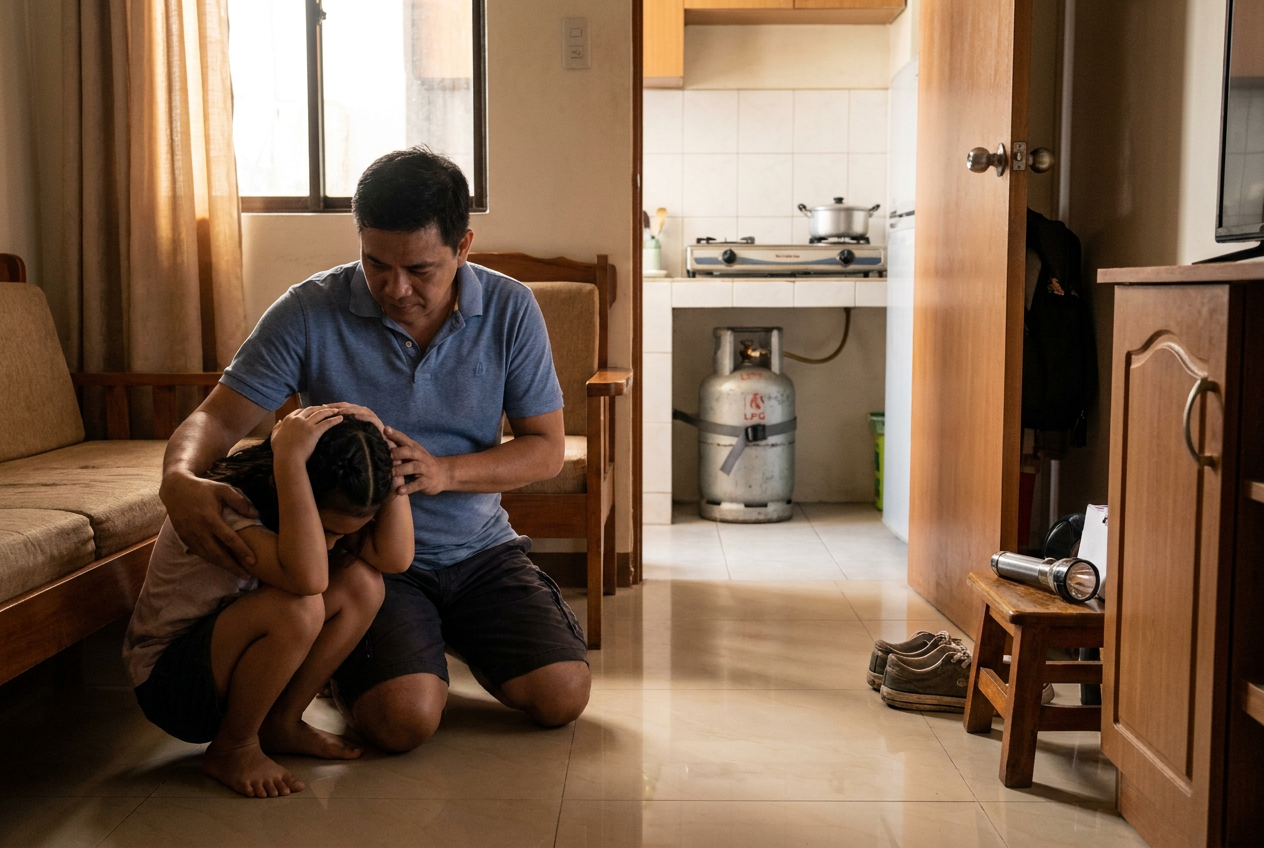
None of this replaces knowing what to do when the shaking actually starts — that is Drop, Cover, and Hold On, and it is worth reading up on separately in our earthquake-ready guide. This is the part that happens before any of that: making sure the room you drop and cover in does not have a bookshelf waiting to fall on you.