Earthquake aftermath guide: aftershocks, safety, and family
What to do after a major earthquake: handling aftershocks, checking building safety, rationing supplies, and calming family fear until PHIVOLCS gives the
The situation
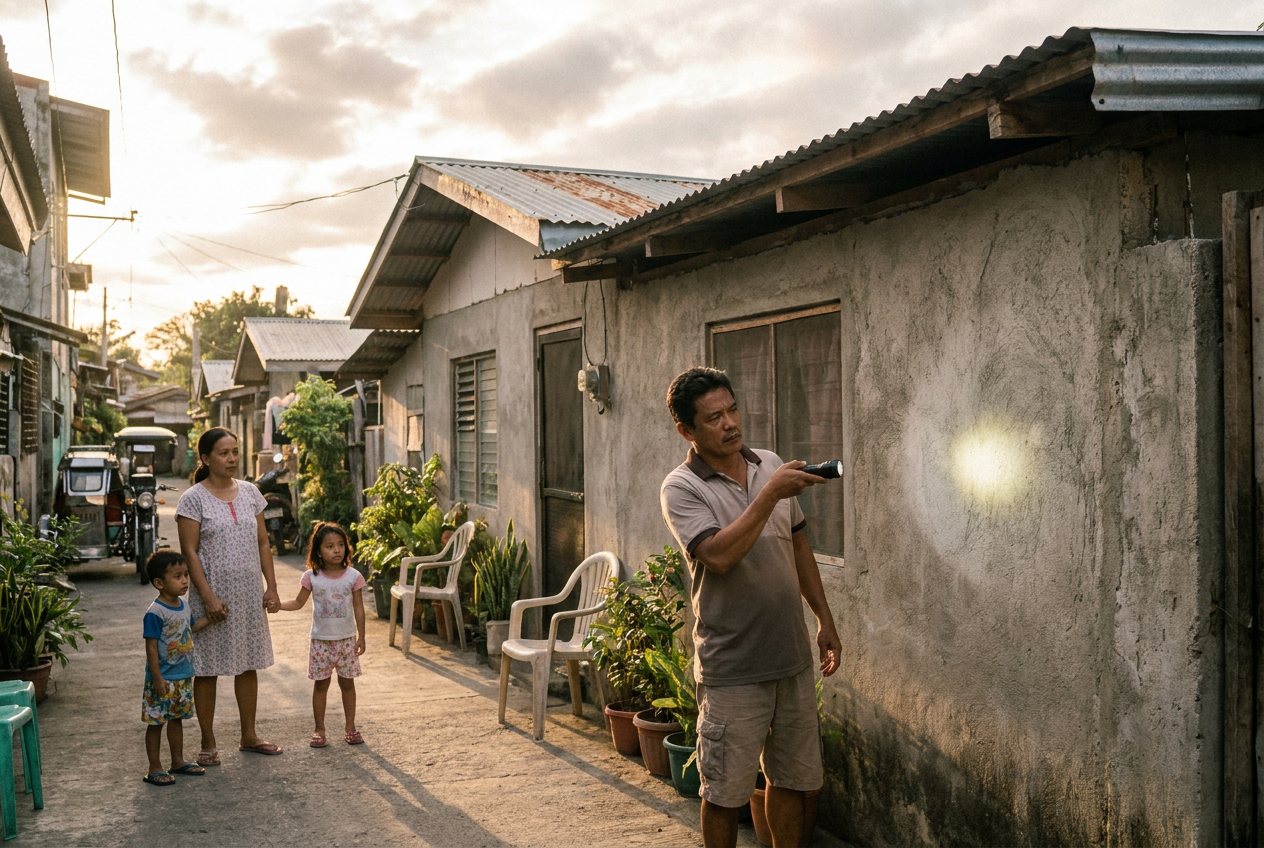
The first quake is over. The ground has stopped moving, the dogs have stopped barking, and everyone in the house is standing in the doorway asking each other if it’s really finished. It isn’t, not really. What comes next is the part nobody trains for: the hours and days of aftershocks, the not-knowing whether your building is safe, the kids who won’t sleep, and the lolo or lola who keeps asking if it’s going to happen again.
Aftershocks are smaller quakes that follow a major one, caused by the crust settling back into place around the original rupture. They can go on for days, sometimes weeks, and while most are weaker than the main shock, a few can be strong enough to bring down anything the first quake already weakened. This is the window where people get hurt — not always in the big quake, but in the days after, from collapsing debris, panic, and bad decisions made on too little sleep. This guide is about getting your household through that window safely, whether you’re in a Quezon City condo, a Cebu subdivision, or a Davao barangay hall serving as an evacuation center.
What actually matters
A few things make the real difference in this period:
- Knowing aftershocks are normal, not a sign the worst is still coming. They taper off over time, but “over time” can mean days. Don’t panic at every rumble — but don’t ignore them either.
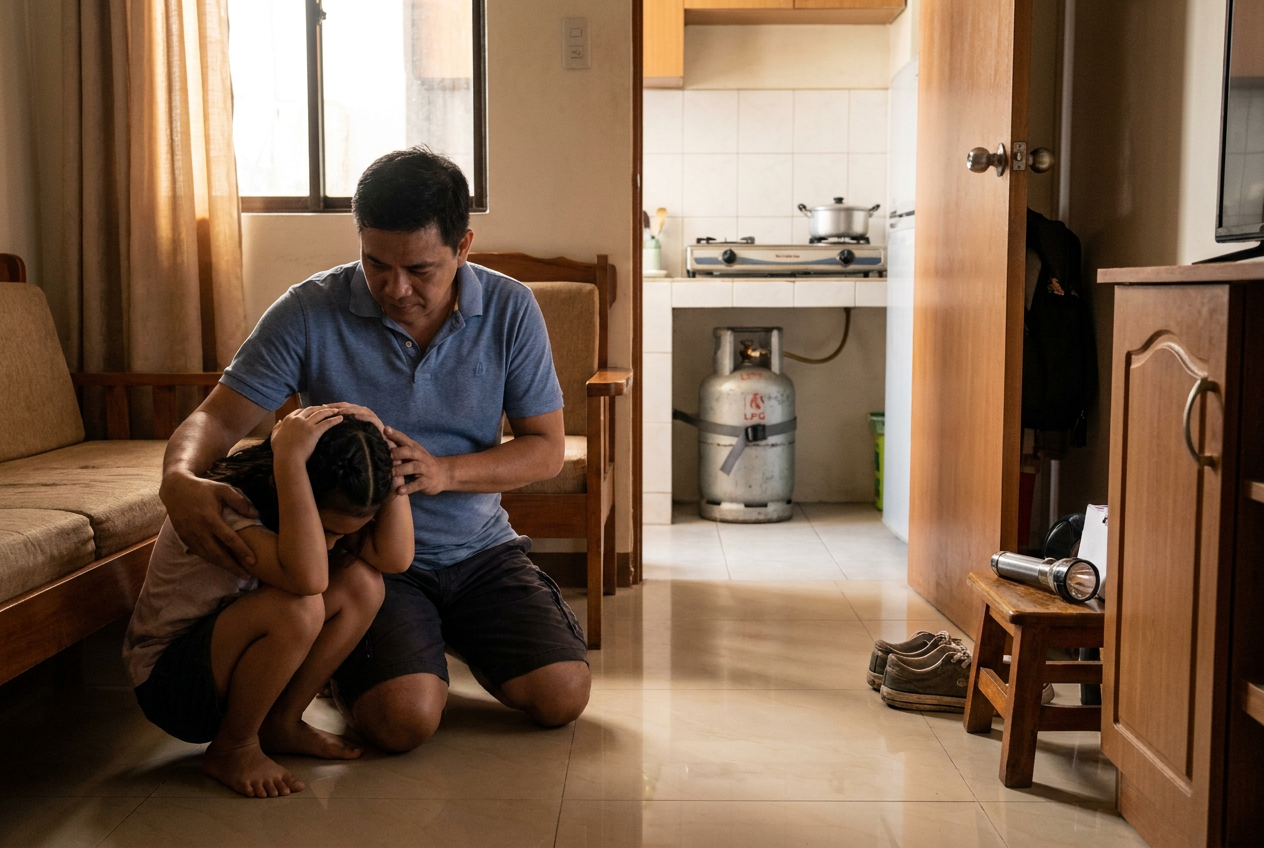
- Reacting the same way every time the ground moves. Drop, Cover, and Hold On is not just a first-quake move. Do it for every aftershock, no exceptions, even if it feels like overkill by the tenth one.
- Not guessing about building safety. Cracks, tilted walls, jammed doors — these are signs to stay out, not signs to inspect further yourself.
- Managing fear as seriously as physical injury. A frightened child or a shaking lola is a real problem to solve, not a distraction from the real problem.
- Stretching what you have. Water, power, and phone signal may all be limited at once. Rationing early beats running out later.
- Listening to the people whose job this is. PHIVOLCS tracks aftershock activity and puts out real numbers, not guesses. Your local government and the NDRRMC decide when an area is safe or needs to evacuate. That’s their call, not yours, and not mine.
What to do — and what not to
Every time the ground shakes again: Drop, Cover, Hold On. Get low, get under something sturdy or against an interior wall away from windows, and hold on until it stops. It doesn’t matter if it’s the fifth aftershock that day and you’re tired of it. The one you stop taking seriously is the one that catches you standing near a bookshelf.
Do not go back into a damaged building to grab things. I know the pull — your documents, your medicine, the box under the bed. If the building has visible cracks in walls or beams, doors that won’t close right, or a lean that wasn’t there before, treat it as unsafe until a professional says otherwise. This isn’t structural engineering advice I can give you from an article; it’s a plain rule: wait for a professional assessment, arranged through your barangay or LGU, before anyone goes back in. A cracked wall might be cosmetic, or it might be load-bearing and one aftershock from letting go. You cannot tell the difference by looking, and neither can I.
Check on people before things. Account for everyone in the household, then check for injuries, gas leaks, and obvious hazards like broken glass or downed wires. If you smell gas, shut it off at the source if you can do so safely and get everyone outside.
Follow evacuation orders when they come, without arguing the point. If your barangay, city, or the NDRRMC calls for evacuation, go. No bag, no plan, and no amount of “but our house looks fine” replaces leaving when told to leave. Bring your go bag if you have one ready; if you don’t, grab water, medicines, IDs, and a phone charger and go anyway.
Get your information from one place: PHIVOLCS. They issue updates on aftershock activity and magnitude — real data, not the neighbor’s group chat forecasting “mas malakas pa raw darating.” Check it once every few hours, not every ten minutes. Constant refreshing feeds anxiety without giving you anything new to act on.
Ration what you have, starting now, not when you notice you’re low. If power and water are both out, assume it could be days. Split water into drinking versus washing, keep phones on airplane mode between check-ins to save battery, and use a hand-crank or solar radio for updates instead of burning phone power. If you’re sheltering with neighbors, agree early on how supplies get shared — it’s much easier to be generous on day one than to renegotiate on day three.
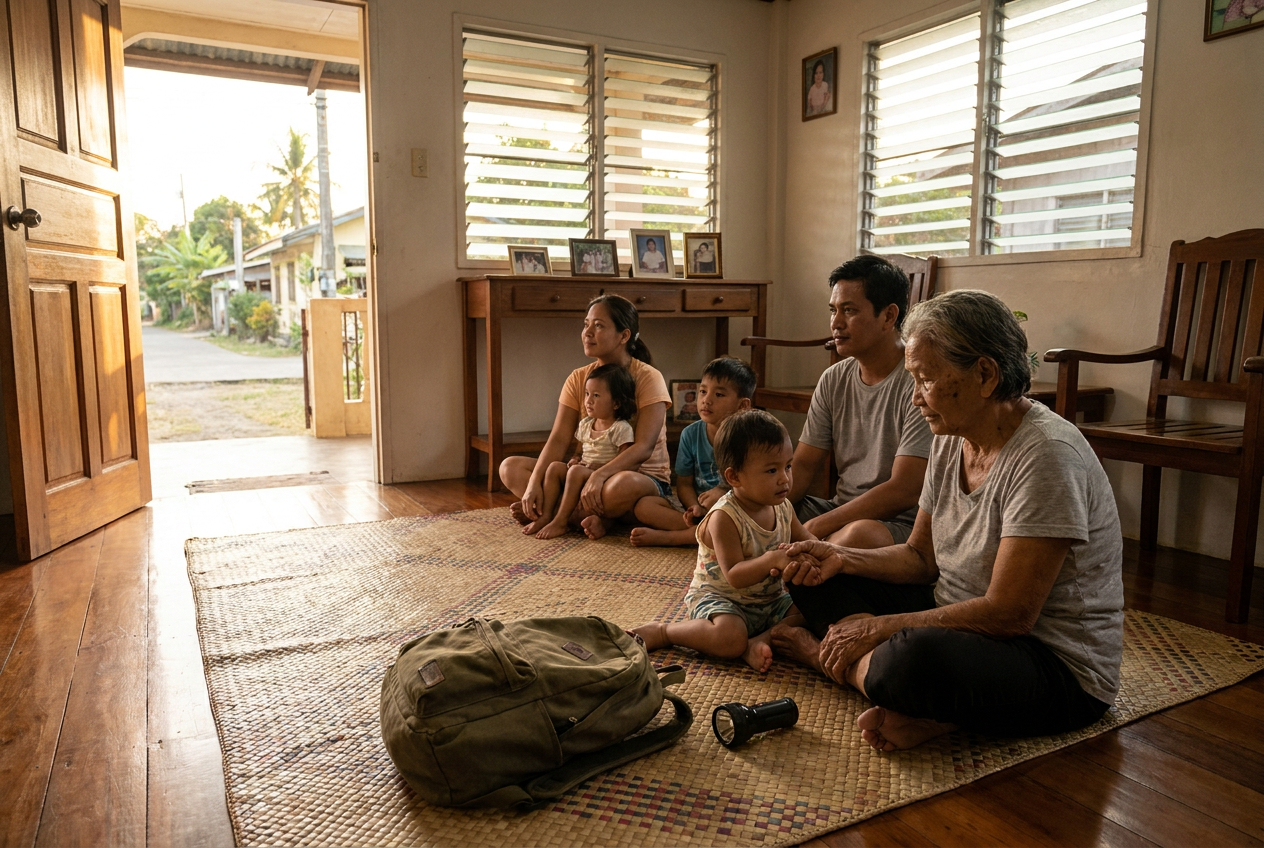
Manage fear like a task, not an inconvenience. Children pick up on adult tension fast, and repeated aftershocks can undo a calm first response quickly. Keep explanations simple and honest: “The ground will keep moving a little, and every time it does, we do the same thing — drop, cover, hold on.” Give them a job, even a small one, like holding the flashlight or counting how many minutes since the last shake. For elderly family members, the fear is often quieter but just as real — check in directly, keep routines like meals and medication times as normal as you can, and don’t dismiss “I’m just tired” as nothing.
The gear that helps
Nothing exotic is needed here — mostly the same gear that should already be staged before a quake, now earning its keep:
- A go bag per person, packed and by the door, so nobody is negotiating what to grab while the floor is still moving. See our go bag guide for what belongs in one.
- A basic first aid kit you actually know how to use, for cuts and scrapes from broken glass and debris — see our first aid guide.
- A battery or hand-crank radio for updates when data and power are both unreliable.
- A headlamp or flashlight per person, not one shared torch — fumbling in the dark during an aftershock is how ankles get twisted.
- Enough stored water to ration sensibly for several days, not just a couple of bottles in the fridge door.
None of this is about buying more. It’s about having the ordinary things staged and ready, because the day you need them is not the day to be figuring out where you put them.
Common mistakes
- Treating the first quake as the event and relaxing afterward. The aftershock period is still the event.
- Re-entering a cracked or leaning building “just for a minute.” Minutes are exactly what these things take.
- Ignoring smaller aftershocks after the first few. Fatigue makes people stop dropping and covering. Don’t let it.
- Waiting for an official evacuation order to start preparing to leave. Have your bag by the door before the order comes, not after.
- Letting kids and elders sit with unspoken fear. Silence doesn’t mean they’re fine — it usually means the opposite.
- Relying on rumor over PHIVOLCS. Group chats amplify fear. PHIVOLCS gives you facts you can act on.
The one thing to remember
Aftershocks are the ground settling, not a countdown to something worse. Respond to every one of them the same calm way, stay out of anything that looks damaged until someone qualified says it’s safe, and get your information from PHIVOLCS and your local government rather than the rumor mill. The one thing to remember: you don’t need to be fearless in this window, you just need to be consistent — drop, cover, hold on, every single time, for as long as it takes.