Portable solar kits vs rooftop solar for Philippine outages
Portable solar kit or rooftop system? A clear guide for Filipino households on solar power for brownouts and typhoon outages — costs, capacity, permits.
The situation
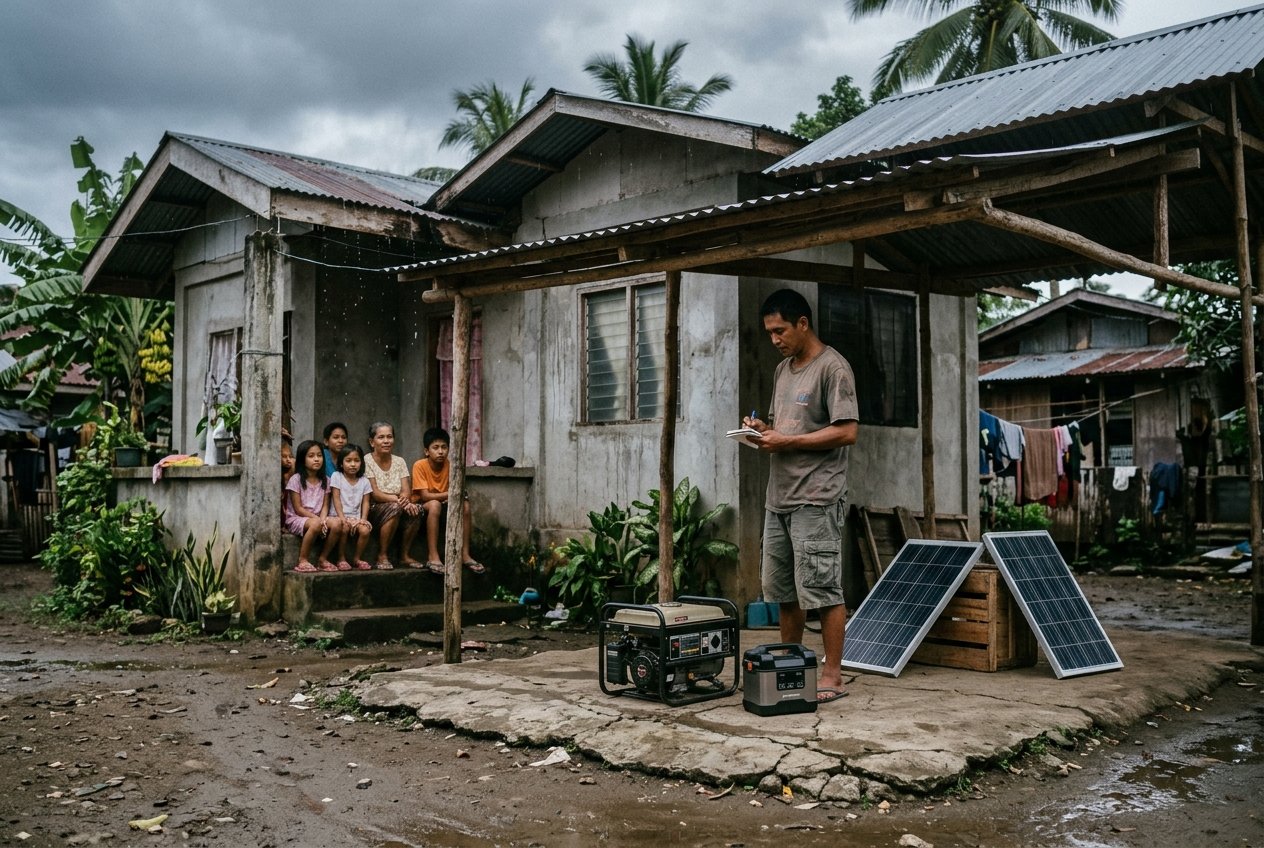
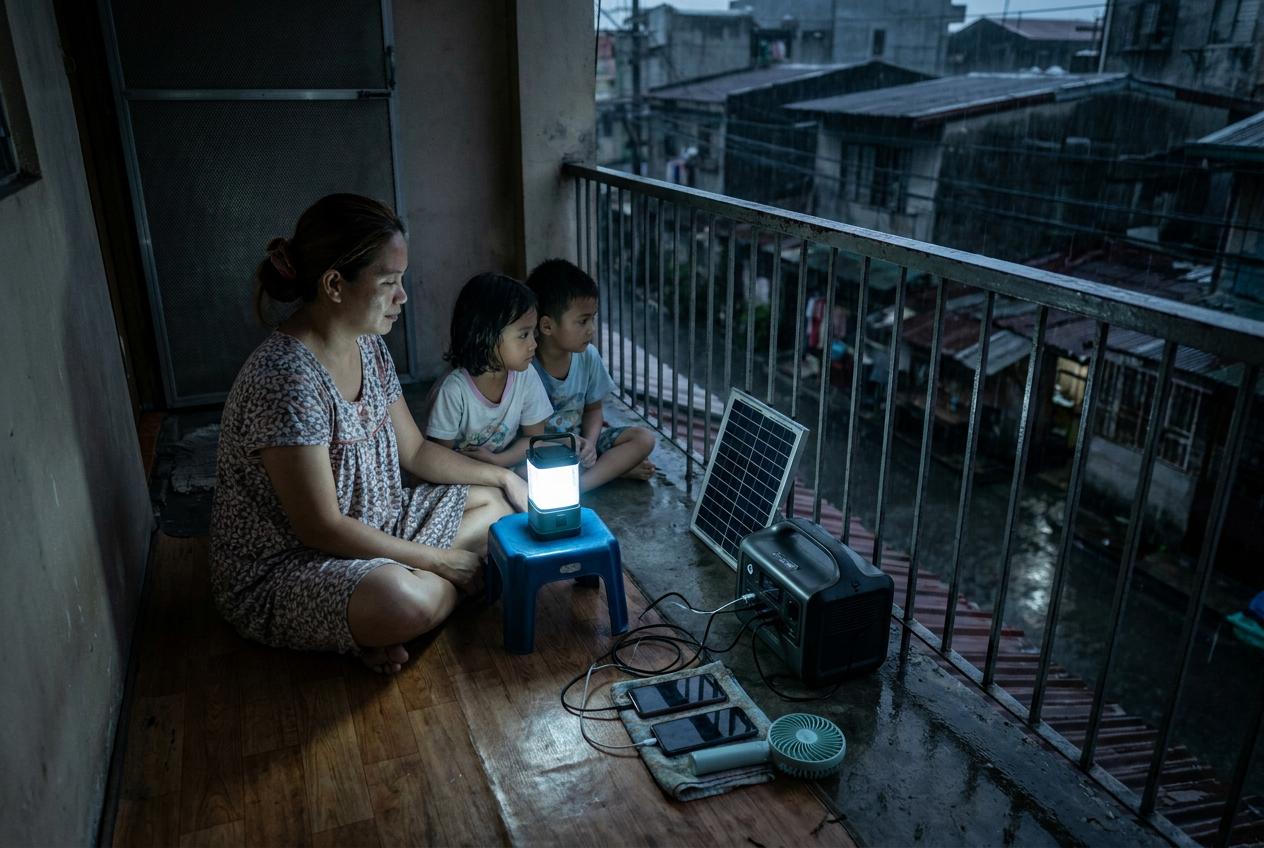
Every brownout in this country teaches the same lesson twice: once when the lights go out, and again a few hours later when your phone battery hits 15% and the fan stops moving air across a room that’s now 33°C. During typhoon season, that second lesson can stretch into days. A grid outage after a Signal No. 3 storm isn’t a one-evening inconvenience — it’s your phone going dark when you need to check PAGASA updates, your router down when the barangay group chat is the only way you’re getting flood warnings, and your fridge quietly losing its cold while you’re not looking.
Solar has become the obvious answer people reach for, and it’s a reasonable one. But “solar” covers two very different things in the Philippine market — a plug-and-play kit you can set up in twenty minutes, and a rooftop system that involves permits, wiring, and a homeowner’s name on the title. Confusing the two is where a lot of household budgets go sideways. This guide is about telling them apart, and being honest about what each one can and can’t do for you when the grid goes down.
This isn’t a sustainability pitch. I’m not here to talk about your carbon footprint. I’m here to talk about keeping a router alive through a brownout and not paying for more system than your actual outages call for.
What actually matters
Peak sun hours, not panel wattage, is the number that decides everything. A panel rated 100 watts doesn’t give you 100 watts for eight hours. The Philippines gets roughly 4 to 6 hours of usable peak sun per day, depending on season, cloud cover, and whether a storm system is sitting overhead — which, inconveniently, is exactly when you need the power most. Budget your expectations around that 4–6 hour window, not the number printed on the panel.
A “solar kit” for brownout use is really two separate purchases: the power station (the battery with outlets) and the panel that recharges it. Many starter bundles sell them together, but understanding them separately helps you avoid overpaying for a panel you don’t need, or underbuying a battery that can’t hold what the panel makes.
Renters need portable kits. Homeowners have a choice. If you don’t own the roof, a rooftop system is off the table regardless of budget — you can’t legally or practically install one without title, and no landlord is signing off on it for a tenant’s brownout comfort. That alone decides most of this decision before price even enters the conversation.
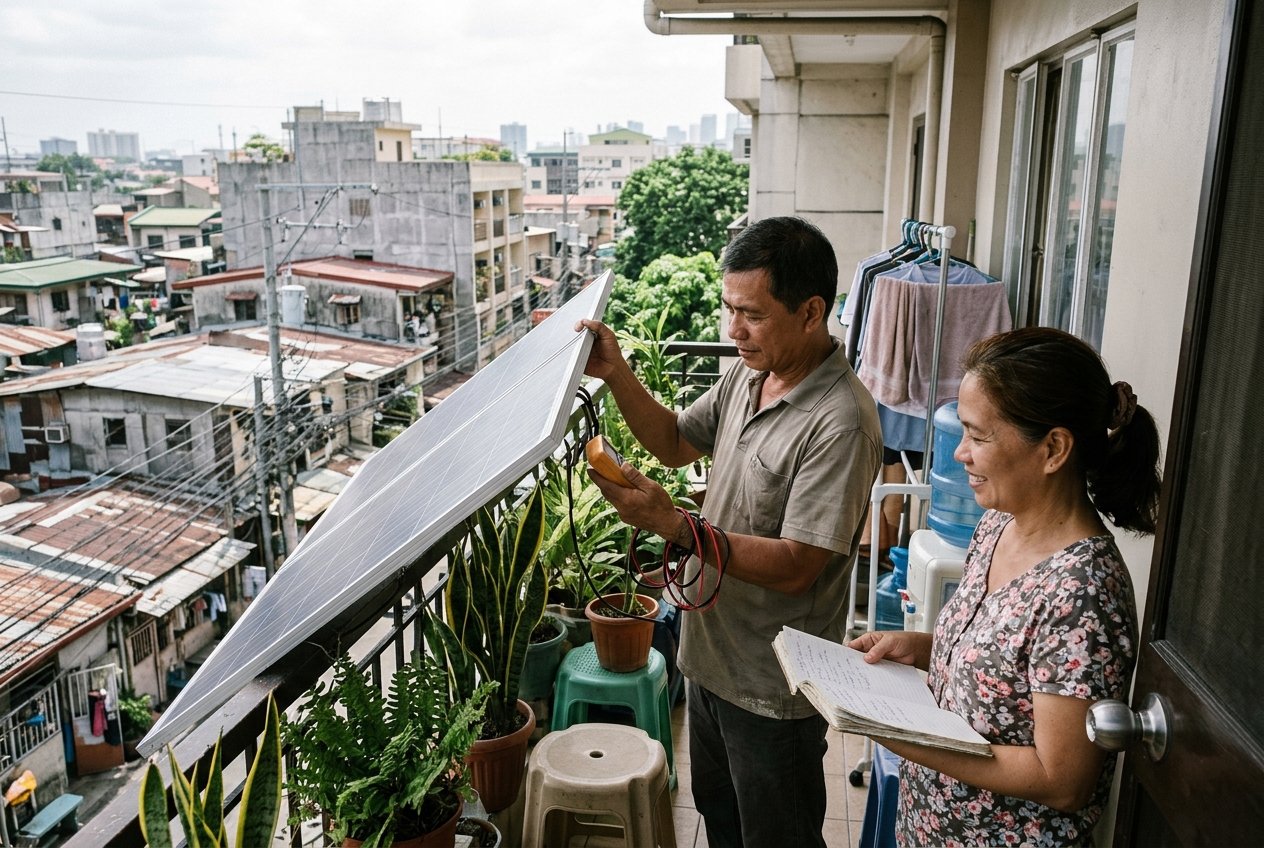
Rooftop systems are not a weekend DIY project. Grid-tied solar requires a permit from your local government unit, sign-off that typically runs through your barangay, and coordination with your utility (Meralco or your local electric cooperative) for interconnection and metering. This is installer territory — a licensed electrician or solar contractor pulls the permits and does the wiring. Anyone offering to skip that step is offering you a fire hazard, not a shortcut.
Know your appliance math before you shop. A small portable kit will comfortably run a phone, a router, LED lights, and a standing or USB fan — the things that matter most for staying connected and cool through a brownout. It will not run an air conditioner or an electric stove. Those draw far more power than a portable battery in this price range can deliver, and trying to run them will just drain the unit in minutes and disappoint you. If aircon-level backup is the goal, that’s a generator or a much larger, professionally installed system — a different guide, a different budget entirely.
What to do (and what not to)
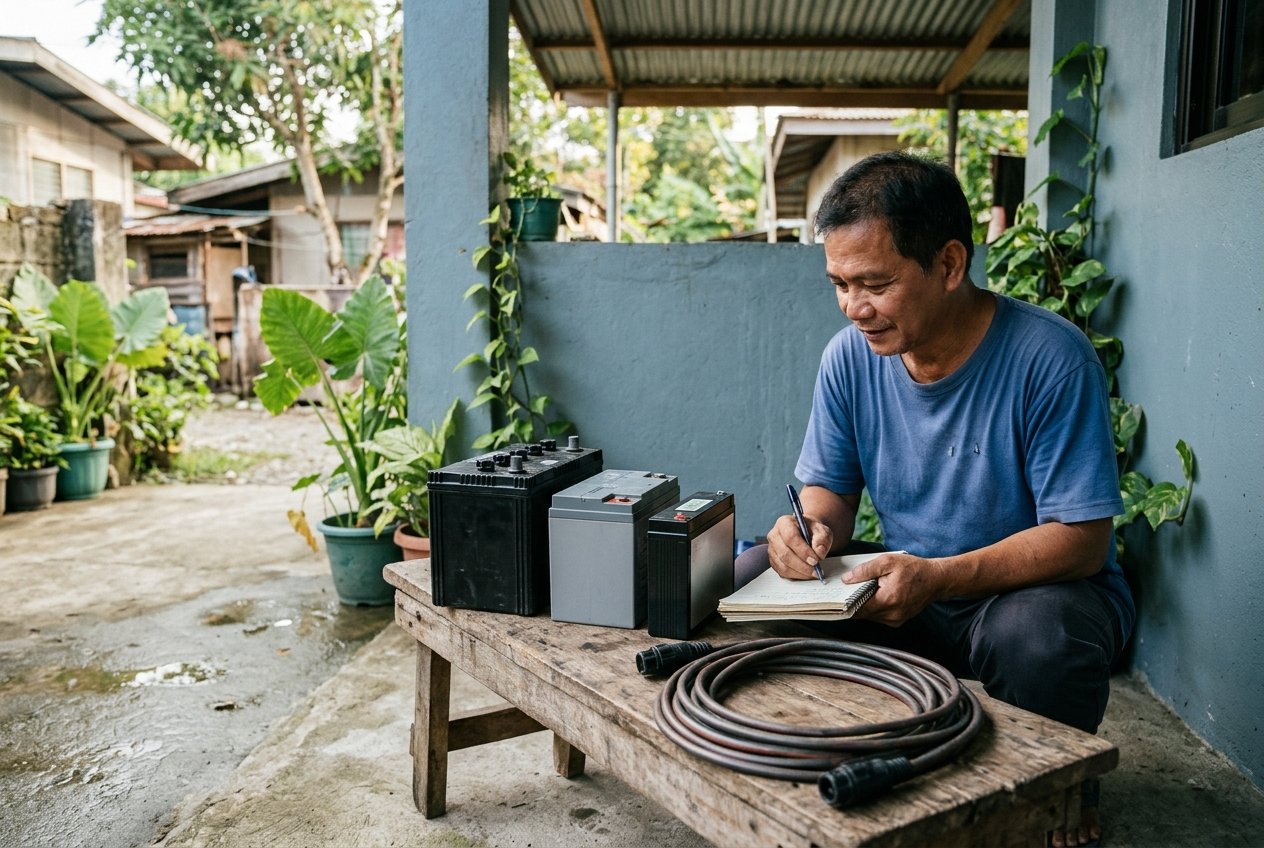
Start by listing what you actually need powered during an outage — not everything in the house, just the essentials. For most families that’s: phone charging, a router, a few LED lights, and a fan. Write down the wattage if you can find it on the appliance label; if you can’t, assume a phone charger draws 10–20W, a router 10–15W, an LED bulb 5–10W, and a standing fan 40–60W. Add it up. That total tells you what capacity power station you’re actually shopping for — not the biggest one on the shelf.
Buy the power station and panel as a matched set if you’re new to this. Mismatched components — an undersized panel paired with a large battery, or vice versa — just mean slower charging or wasted capacity, and it’s an easy mistake to make when shopping loose components on marketplace listings.
Don’t buy based on the total watt-hour number alone without checking the outlets and ports match what you’ll actually plug in. A power station with no AC outlet, only USB ports, won’t run a fan that has a wall plug.
Don’t expect a rooftop system to be a same-week decision. Between permit processing, utility coordination, and installer scheduling, a proper rooftop install is a project measured in weeks to months, not a Shopee checkout.
Don’t skip the barangay and utility paperwork on a rooftop system to save time or money. An uninspected, unpermitted grid-tied setup risks both electrical safety and disputes with your utility over billing and interconnection later.
The gear that helps
For most renters and most families whose real goal is surviving the next outage, a portable solar-plus-power-station kit is the sensible starting point. These typically run somewhere in the ₱10,000–₱30,000 range depending on battery capacity and panel wattage, and the appeal is that they need nothing more than an outdoor spot to sit the panel and a wall-clear space for the battery. No electrician, no permit, no landlord conversation. You charge it during daylight, you draw down from it after dark or during the outage. It travels with you if you move houses, which matters more than people expect in a country where a lot of families rent.
At the lower end of that range, expect a smaller battery (roughly enough for a few phone charges and a fan for an evening) paired with a modest folding panel. At the upper end, larger units can keep a router running continuously through a multi-day outage alongside lighting and charging, provided you get a few hours of sun each day to top it back up. We review individual power stations and panels on the site as we get hands-on time with them — check our power outage and off-grid pages for the current lineup.
For homeowners who want to go further — meaning a rooftop grid-tied or hybrid system — the starting point isn’t a purchase, it’s a conversation with a licensed solar installer who can walk you through permitting with your barangay and utility. This route makes sense if you’re already committed to a long-term reduction in grid dependence, not just brownout coverage for a few appliances. It’s a bigger investment, a longer timeline, and it is genuinely not something to shop for on a marketplace app.
Both Lazada and Shopee carry portable kits from a range of brands, and they’re a reasonable place to start browsing once you know your target capacity. A word of caution that applies to any electronics purchase on these platforms: stick to official brand stores or sellers with strong, verified reviews and clear specs listed. Solar and battery gear is an easy category for counterfeit or mislabeled capacity claims to slip through, and a battery that quietly holds half of what it claims is a problem you only discover during the outage you bought it for.
Common mistakes
The biggest one is buying a big, expensive kit expecting it to run an aircon unit or an electric stove, and feeling let down when it can’t. That’s not a defect — it’s physics. Those appliances need far more continuous power than a portable battery in this price bracket is built to deliver.
Another is buying the panel and battery from different, mismatched listings without checking the panel’s output actually suits the battery’s charging input — you end up with painfully slow recharge times and no way to know if that’s normal or a fault.
A third is assuming a rooftop system is a simple purchase like the portable kits. It isn’t. Skipping the barangay and utility permit steps to save time is how installations end up unsafe, or disputed later when the utility notices unauthorized interconnection.
And a quieter mistake: buying capacity you don’t need. A family whose real requirement is “keep the router and a fan running for one evening” doesn’t need the largest power station on the shelf — they need the one that matches their actual appliance list, at a price that doesn’t strain the household budget for a scenario that might only happen a few times a year.
The one thing to remember
A solar-plus-power-station kit won’t get you through a brownout untouched — it will keep your phone charged, your router alive, and a fan moving air, which for most families is exactly the resilience they were after. Know your appliance list, match your battery and panel to it, and buy from a seller you trust. No panel replaces good information, and no battery replaces leaving early when the warning says to.