Generators vs solar backup: which makes sense for your Philippine household
A plain comparison of generators and solar-battery backup for Philippine brownouts, weighed by housing type, outage length, fuel, noise and upkeep, so you can pick what actually fits your home.
What you’ll be able to do, and why it matters
By the end of this guide you’ll be able to look at your own home, your outage history, and your budget, and say with some confidence: generator, solar-battery, both, or neither yet.
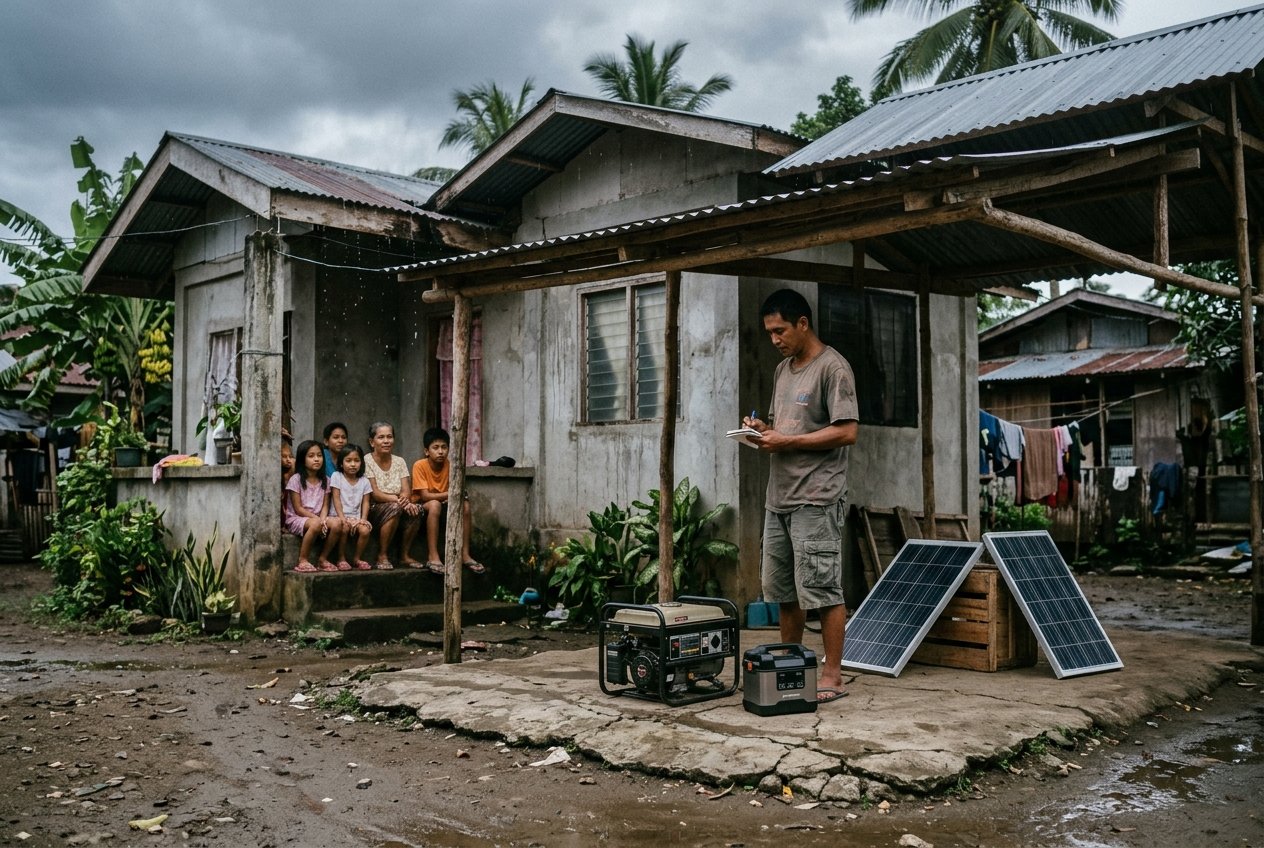
Brownouts in the Philippines aren’t all the same animal. A yellow alert in Metro Manila might mean an hour of flicker. A typhoon in a provincial barangay can mean five days with no grid at all. The right backup for one household can be the wrong, expensive choice for another.
This guide is about matching the tool to the actual problem, not buying what your neighbor bought.
What you need
You don’t need to own either system yet. What you need is information about your own situation:
- Your outage pattern. Check your electric cooperative’s or utility’s outage history if they publish one, and your own memory of the last two typhoon seasons. Short and frequent is a different problem than long and rare.
- Your housing type. Renter, condo unit, townhouse in a subdivision, or a standalone provincial house. This decides what’s even allowed, before cost enters the picture.
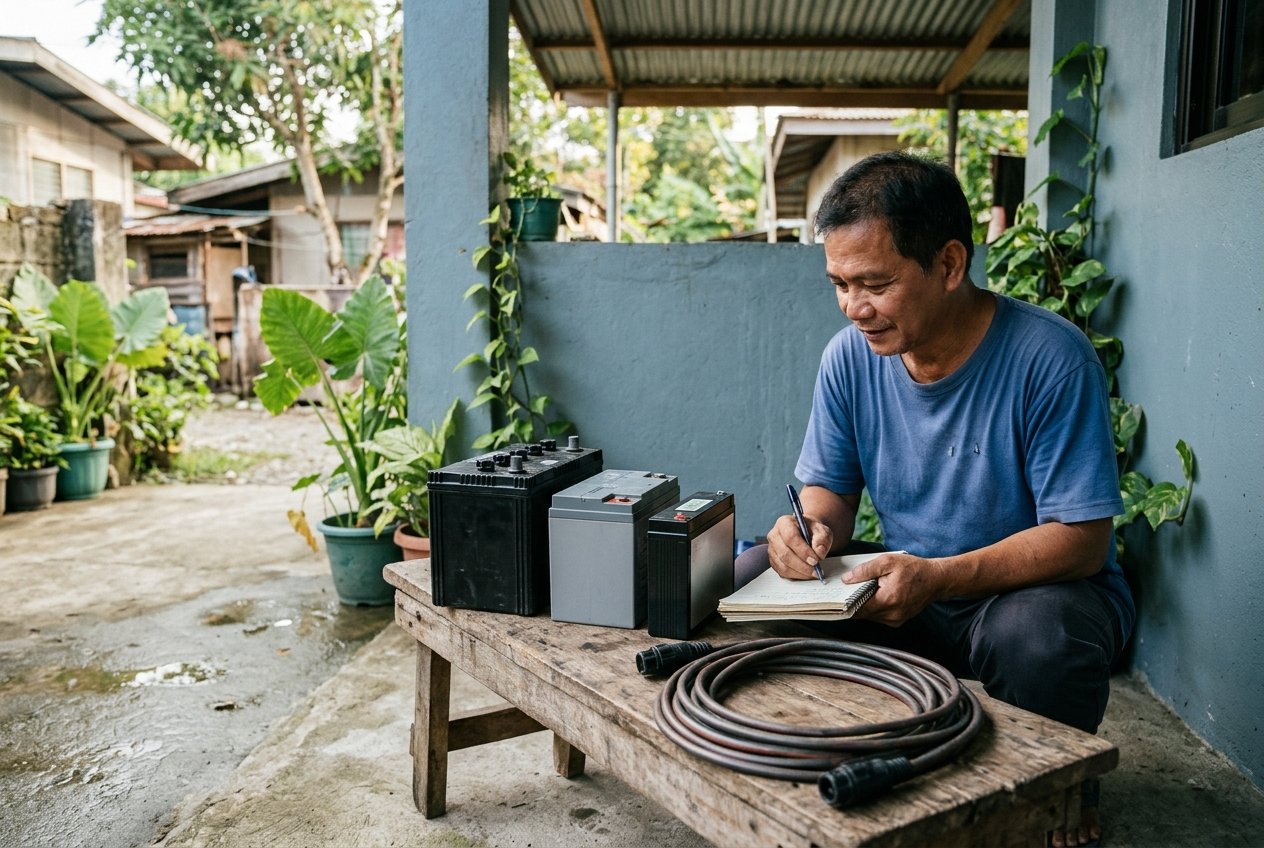
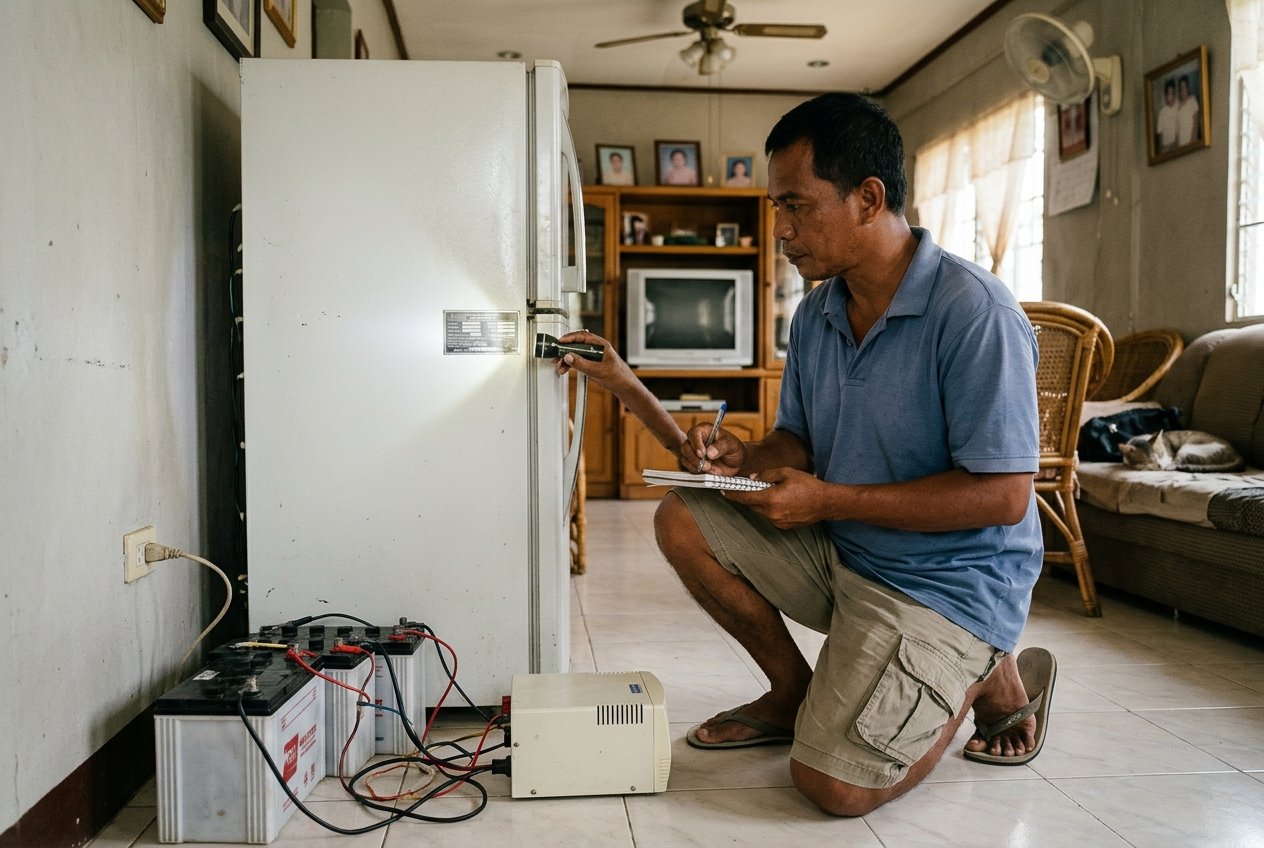
- Your must-run loads. A fridge, a CPAP machine, a fan, lights, a phone charger. Add them up roughly in watts; most appliance labels or manuals list this.
- A sense of your budget ceiling, not just the sticker price of the unit, but fuel, maintenance and storage over a few years.
If you want the detail on generator safety specifically, carbon monoxide risk, where to run one, and what not to do, that’s already covered in our generator carbon monoxide safety guide. I won’t repeat it here.
If you’re shopping for solar panels or batteries themselves, other articles in this series cover selection. This piece is only about the choice between the two approaches.
The method: working through the decision
Step 1: Rule out what your housing type doesn’t allow
Start here, because it removes options fast.
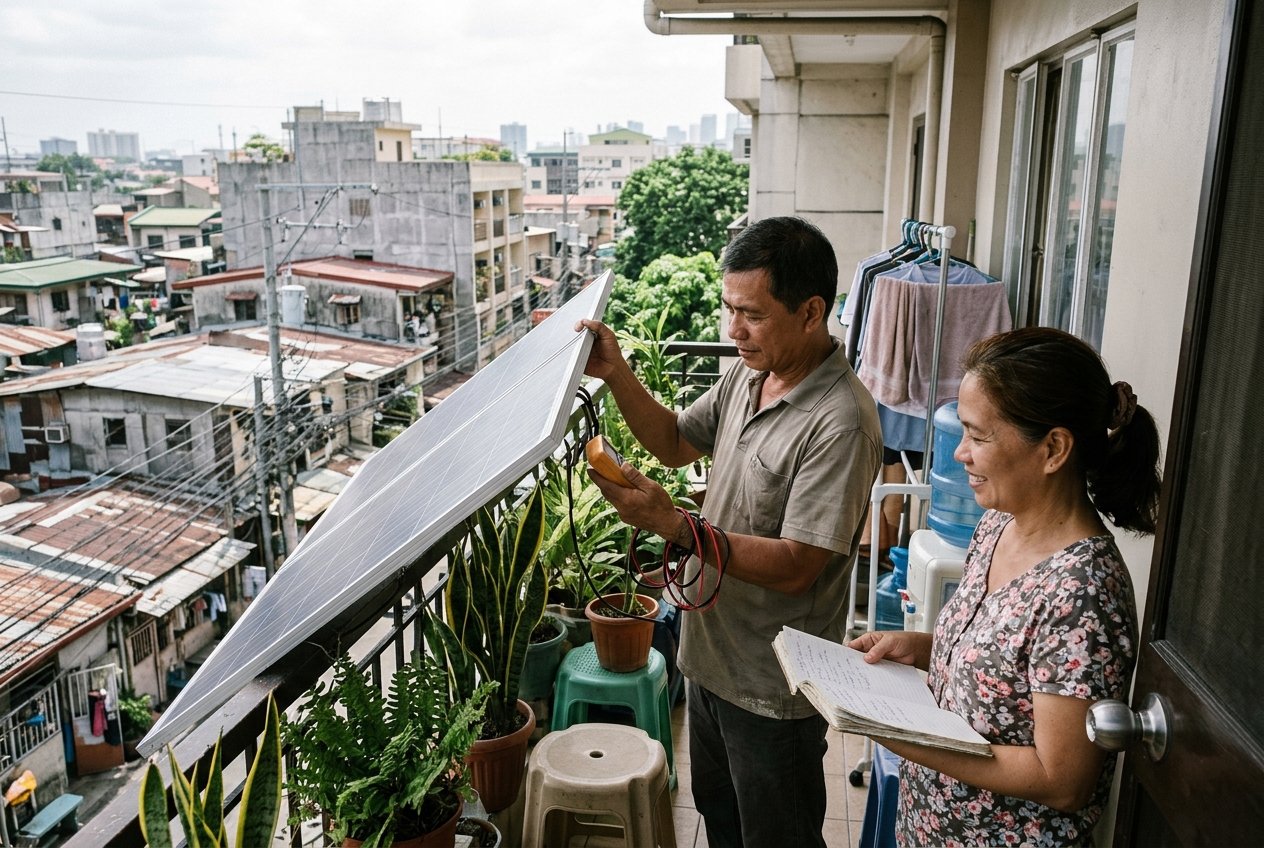
- Condo unit: Most condo associations ban generators entirely, for noise and exhaust reasons, and many units have no safe outdoor space to run one anyway. A small solar-battery unit charged indoors, with no combustion and no exhaust, usually isn’t restricted the same way. Check your condo’s house rules before assuming either is fine.
- Renter in a subdivision or apartment: Ask your landlord in writing. Some subdivisions have noise ordinances or homeowner association rules limiting generator hours. A battery system is quieter to clear with a landlord because there’s nothing to complain about next door.
- Standalone provincial house with some yard space: You have the most freedom here. A generator run outdoors, away from windows and doors, is workable. So is solar, especially if you already lose grid power for days at a time during typhoon season.
If a generator isn’t allowed where you live, the decision is already made. Move to solar-battery, or accept shorter backup from a smaller battery alone.
Step 2: Match the system to how long your outages actually last
This is the question I’d ask before any other. A system that’s perfect for a two-hour brownout can be wrong for a five-day one, and the reverse is just as true.
- Short, frequent brownouts (minutes to a few hours), typical of many Metro Manila feeders on a yellow or red alert day: A solar-battery setup, or even a battery alone charged from the wall between outages, usually covers this well. You’re bridging a gap, not running a household indefinitely.
- Occasional outages of half a day to a full day: Either option can work. A mid-size generator gives you more total watts for less upfront cost. A larger battery bank gives you quiet, no fuel runs, but costs more per watt-hour of backup.
- Extended outages of several days, the kind that follow a major typhoon making landfall. PAGASA warnings may still be active while crews work through fallen lines. A generator with stored fuel, or a solar-battery system with enough panel capacity to recharge daily, both have a role. A battery alone, with no way to recharge, will run out, so if you expect the grid to stay down for days, pair solar panels with the battery.
Step 3: Price the whole system, not just the sticker
A generator’s upfront cost is usually lower than a comparable solar-battery setup. Based on typical Lazada and Shopee listings I checked in early 2025, a small inverter generator capable of running a fridge and some lights often runs somewhere in the ₱15,000 to ₱35,000 range. That range moves with brand, output and import costs, so treat it as a rough starting point, not a quote.
A solar-battery setup with enough panel and battery capacity to do the same job, and recharge the next day, often costs several times that.
But the generator’s real cost shows up after the purchase:
- Fuel. Gasoline or diesel has to be bought, often during the same typhoon when everyone else is also queueing at the one gas station with power to run its pumps.
- Fuel storage. Keeping a reserve safely at home means proper containers, away from heat and open flame, and fuel that can degrade if stored too long unused.
- Maintenance. Oil changes, spark plug checks, and run-and-rest cycles to keep the engine from seizing up from disuse between typhoons.
Solar-battery costs are mostly upfront. Once installed, your fuel is the sun, free and with no queue.
Maintenance is lighter: keeping panels clean, checking battery health over the years, and replacing the battery itself eventually, since batteries degrade with age and charge cycles regardless of brand.
Step 4: Weigh noise against capacity
A running generator is loud, usually loud enough to hear from several houses away, and that’s before accounting for the exhaust smell. In a tight subdivision or near shared walls, that noise is a real cost. It tells every neighbor exactly whose house still has power, and in some areas that isn’t a comfortable thing to advertise.
A solar-battery system is silent. There’s no engine, no exhaust, nothing for a neighbor or association to complain about.
The tradeoff is capacity. A generator can usually push out more total power for heavier loads like an aircon unit or a water pump. A home battery bank sized for an apartment budget is better suited to a fridge, lights, fans and charging devices.
Step 5: Decide, or decide on both
Many households that face long, repeated outages end up with a mix: a smaller solar-battery setup for daily, quiet backup, and a generator kept in reserve for the rare multi-day event where raw power output matters more than quiet. That’s not a failure to choose. It’s matching two different tools to two different problems.
Variations and conditions
If you’re a renter with no fixed address commitment: A portable battery pack with a small folding panel travels with you and needs no installation or landlord approval. It won’t run a fridge for days, but it covers phones, a fan and lights.
If you’re in a high-rise condo on an upper floor: Elevators often stop working in a brownout, so the practical question isn’t only backup power, it’s whether you can get up and down your building at all. A battery system solves power; it doesn’t solve stairs.
If you’re in a flood-prone low-lying area: Store any generator and its fuel on a shelf or upper level, above the highest flood line you’ve seen at your address, and never run or refuel a generator in a flooded, wet or enclosed space. Running a generator always means outdoors, well away from windows, doors and any flood water underfoot. A battery system has no fuel to contaminate or lose, which is one less thing to worry about when water starts rising.
If someone in the household is on medical equipment or a maintenance medicine needing refrigeration, such as insulin: plan backup power around that need first, and keep that device on its own dedicated outlet or circuit if your system allows it. Keep insulin out of direct heat and sunlight, never let it freeze, and check the product leaflet for exactly how long and at what temperature it keeps once unrefrigerated, since this varies by product. Ask your pharmacist about your own supply before typhoon season arrives; don’t guess at timing from a different product’s leaflet.
Common mistakes
- Buying generator capacity you don’t need. A bigger unit costs more, burns more fuel per hour, and is heavier to move and store. Size it to your actual must-run loads, not a worst-case guess.
- Assuming a battery will recharge itself with no sun. Several cloudy, rainy typhoon days in a row will slow recharging. Don’t treat a solar-battery system as infinite just because it isn’t diesel.
- Storing fuel without checking local rules. Safe quantities, container types and storage location for household fuel can vary by city or barangay. Ask your barangay hall or local fire station to confirm what applies to your address before you stockpile fuel; the Bureau of Fire Protection is the agency whose local offices handle this.
- Running a generator anywhere near windows, doors, or in a garage “just for a bit,” even with the door open. That single mistake is the one that kills people through carbon monoxide poisoning, and it’s already covered fully in our generator carbon monoxide safety guide. Read it before you buy a generator, not after. Run generators outdoors only, well clear of any opening into the house.
- Ignoring noise rules until a neighbor complains. Check your condo or subdivision’s actual rules in writing before you assume a generator is allowed.
How to practise safely
Test your system before you need it, not during the next typhoon.
- Run your generator outdoors, in daylight, well away from windows and doors, for a short trial. Time how long a full tank actually lasts under your real loads. The number on the box is rarely the number you get at home.
- Charge your solar-battery system fully, then do a trial run powering just your must-run loads, fridge, lights, a fan, overnight. See how much charge is left by morning.
- Walk through your fuel storage and refill plan once, including where you’d buy more fuel if the usual gas station has no power either.
- If you added a generator, read the carbon monoxide safety guide in full and physically confirm the outdoor spot, away from any window or door, where you’ll actually place it during a storm.
The one thing to remember
Match the backup to your outage length and your housing rules, not to what’s popular: short, frequent brownouts favor quiet solar-battery setups, long multi-day outages favor a generator with stored fuel or solar with enough panel to recharge daily, and condo living often decides the question before cost does.
Galing Gear shares general preparedness and first aid information based on sources such as the DOH, WHO and the Philippine Red Cross. It is not a diagnosis or prescription, and it does not replace a doctor, nurse, pharmacist or trained responder. We never give medicine doses. Follow the latest advice of the DOH, your local health office and your medicine’s label. In an emergency, call 911. Philippine Red Cross: 143. Mental health crisis (NCMH): 1553 (landline). When unsure, get checked.
Free downloads
From the series: Going Off-Grid: A Filipino Household's Guide to Backup Power