Putting it together: a complete off-grid backup power plan for a Filipino home
A plain, step-by-step way to combine panels, battery, inverter and generator into one backup power system, sorted by the kind of home you actually have.
The situation
By this point you’ve probably read about panels, batteries, inverters and generators one at a time. The hard part isn’t picking any single piece. It’s making them work together as one system that turns on when the grid goes down and doesn’t confuse anyone in the house at 2 a.m. during a brownout.
Most backup power plans in Philippine homes fail not because the gear is bad, but because nobody sat down and decided the order things turn on, what runs on what, and who’s allowed to plug in a rice cooker. This part is about that sequencing, not about which battery to buy.
What actually matters
Three things decide whether your setup works when you need it, not just when you’re testing it on a calm Sunday.
- Matching capacity to need. A battery and inverter sized for a few lights and a router will brown out the moment someone plugs in a refrigerator. Know your must-run loads before you wire anything.
- A clear order of operations. Grid fails, then what? If the answer lives only in your head, it won’t help the household when you’re not home.
- One person who understands the whole system. Not every family member needs to know electrical theory, but someone should know where the main switch is and what order to flip things.
What to do (and what not to)
Start with your household type. The right setup looks different for a renter in a Quezon City condo than for a family in a provincial house with its own roof and yard.
Renter with a portable kit
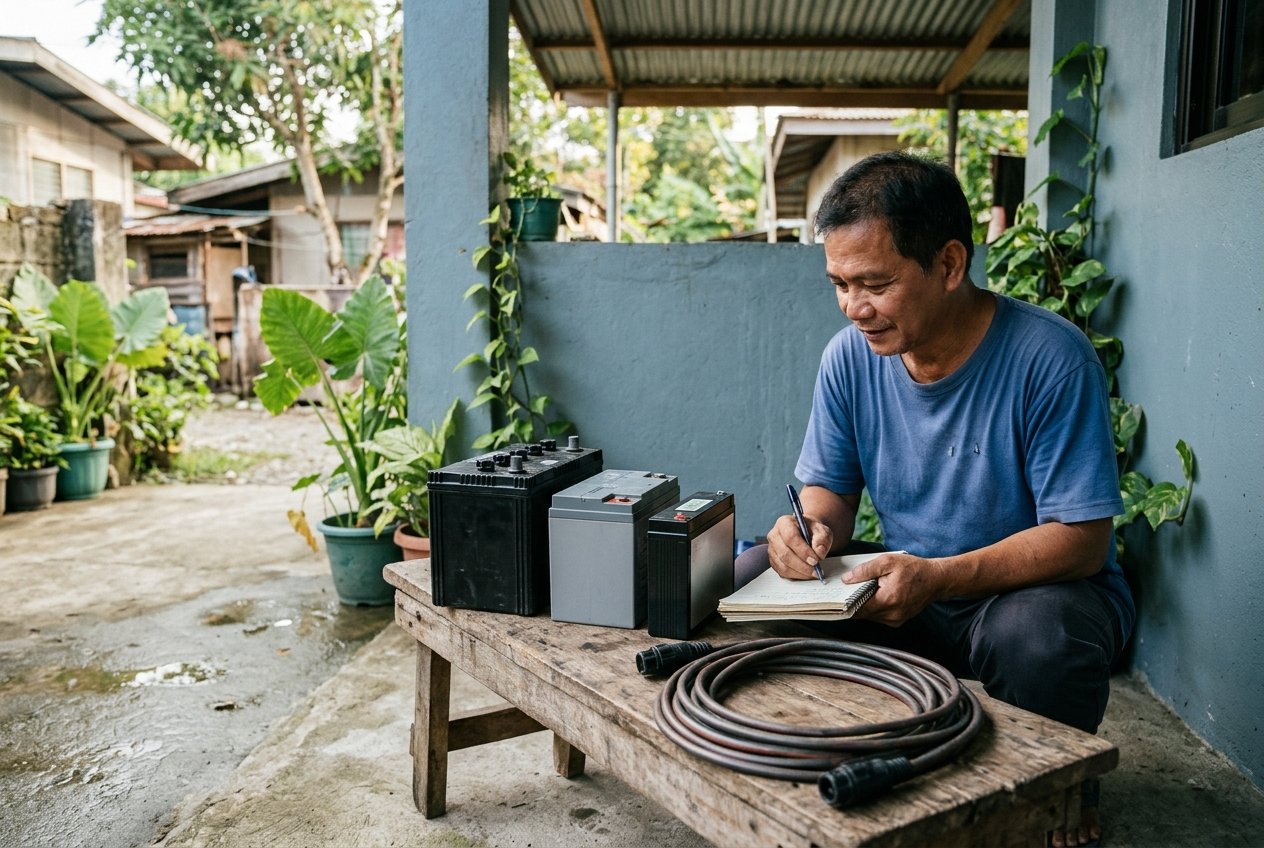
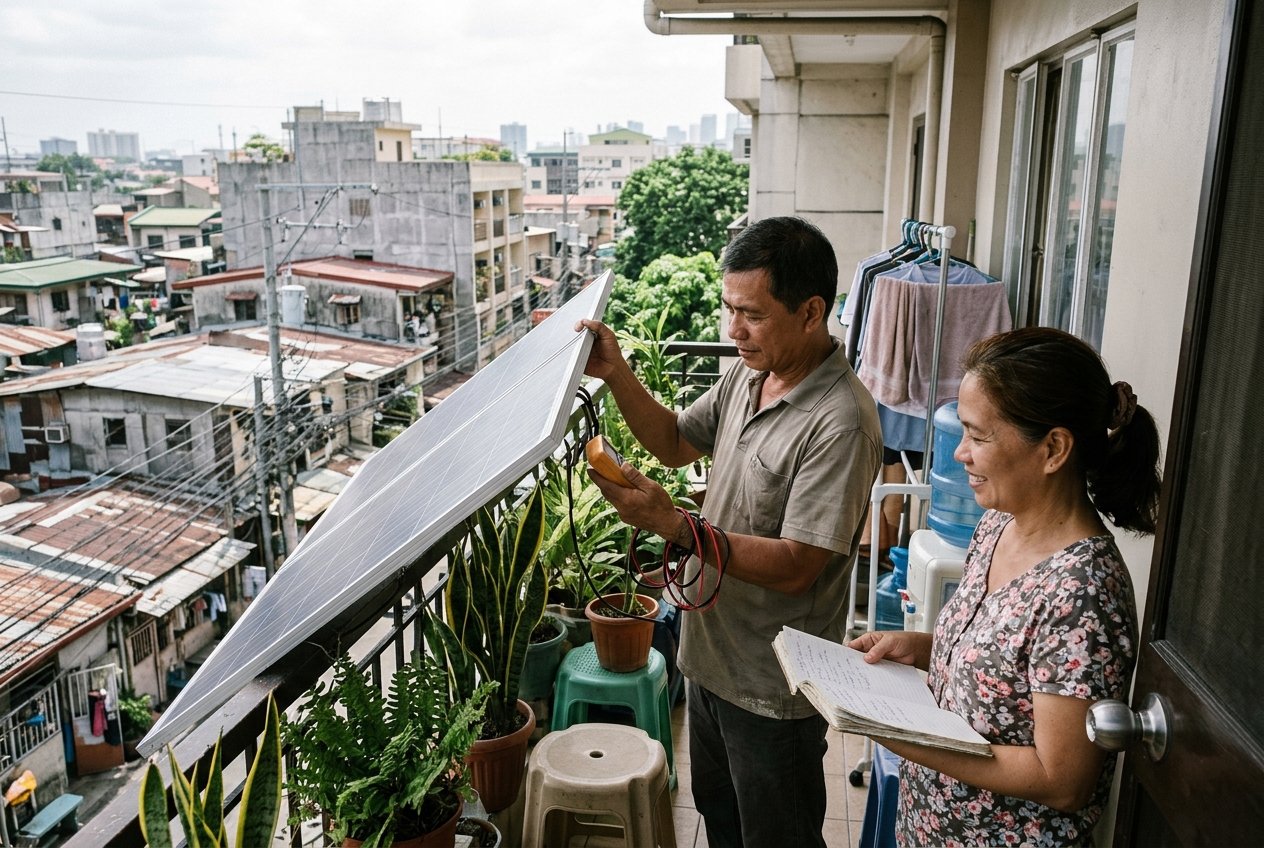
If you rent, your plan is mobility, not rooftop solar. A portable power station (a battery with built-in inverter and outlets) paired with a folding solar panel covers lights, phones, a fan and a router.
- Keep the power station charged at all times, not just when a typhoon is forecast. PAGASA bulletins give you a few days’ notice, not always more.
- Identify two or three must-run items only: phone chargers, a fan, maybe a CPAP machine or a small medical device. Don’t plan around running a rice cooker on battery.
- When the grid drops, plug directly into the power station’s outlets. No rewiring, no electrician needed. That’s the whole appeal of this tier.
- Recharge from the wall when grid power returns, and top up with the folding panel during the day if the outage runs long, placing it where direct sun actually reaches, not just near a window.
This setup won’t run a refrigerator and it isn’t meant to. If your building loses the lift along with the grid, factor that into evacuation planning too: a battery doesn’t solve stairs.
Homeowner with rooftop solar
If you own the roof, the sequence usually looks like this: panels feed a charge controller, the charge controller feeds a battery bank, and an inverter draws from the battery to power a sub-panel of chosen circuits in the house.
- Decide which circuits go on the backup sub-panel before anything is installed. Lights, router, refrigerator and a few outlets is a common list. Air-conditioning units and electric water heaters almost always stay off this panel because they draw too much.
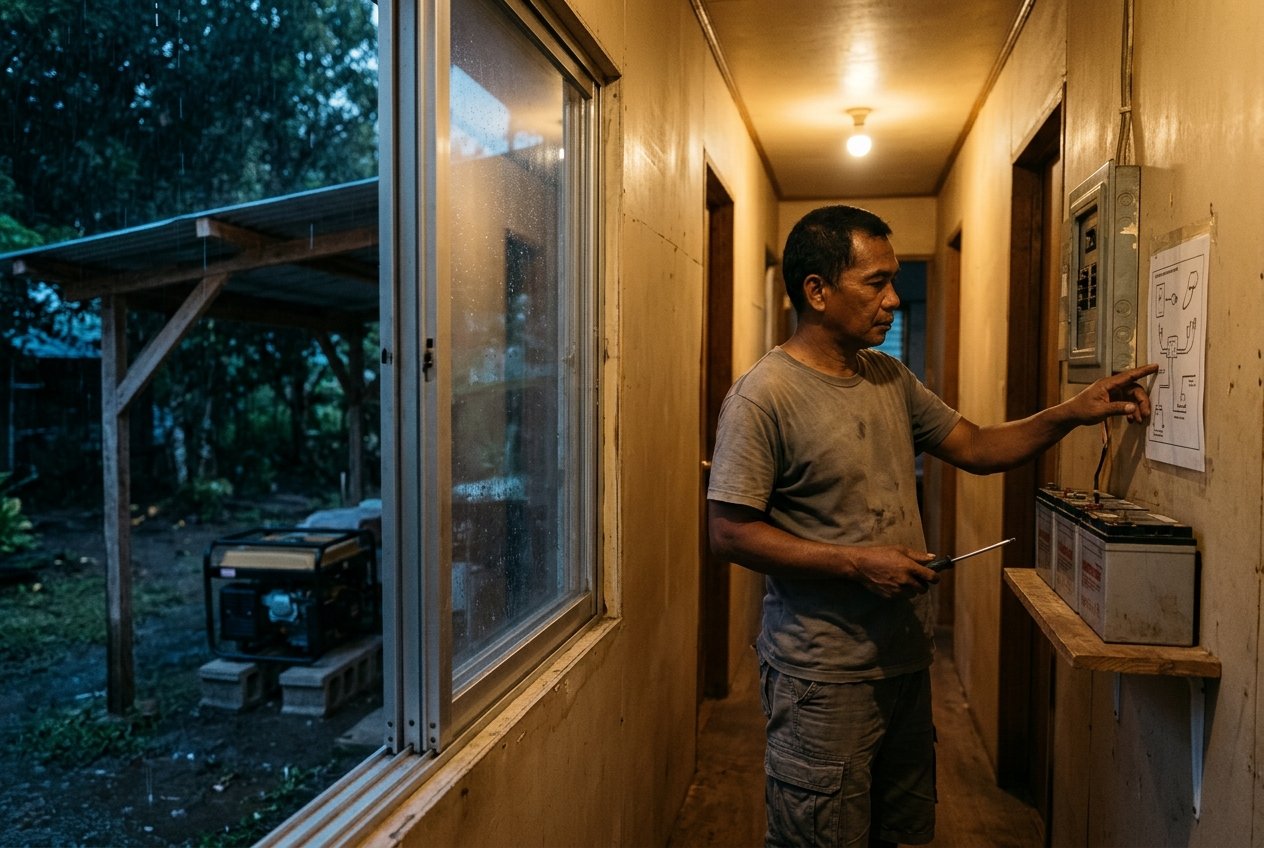
- Have a licensed electrician install an automatic or manual transfer switch. This is the part that keeps your solar system from feeding power back into a “dead” grid line, which is a real hazard to utility workers repairing it. Don’t skip this for cost reasons.
- Test the system monthly by manually triggering the transfer switch, not just waiting for an actual outage. A system that works in theory but hasn’t been tested is a system you’re guessing about.
- Keep the charge controller and battery documentation somewhere the whole household can find it, not just saved on one person’s phone.
This setup is the biggest investment of the three and the most capable, but it still won’t run everything. Be honest with household members about which outlets are “backup” and which aren’t, so nobody overloads the sub-panel making kape during a long outage.
Provincial house with generator backup
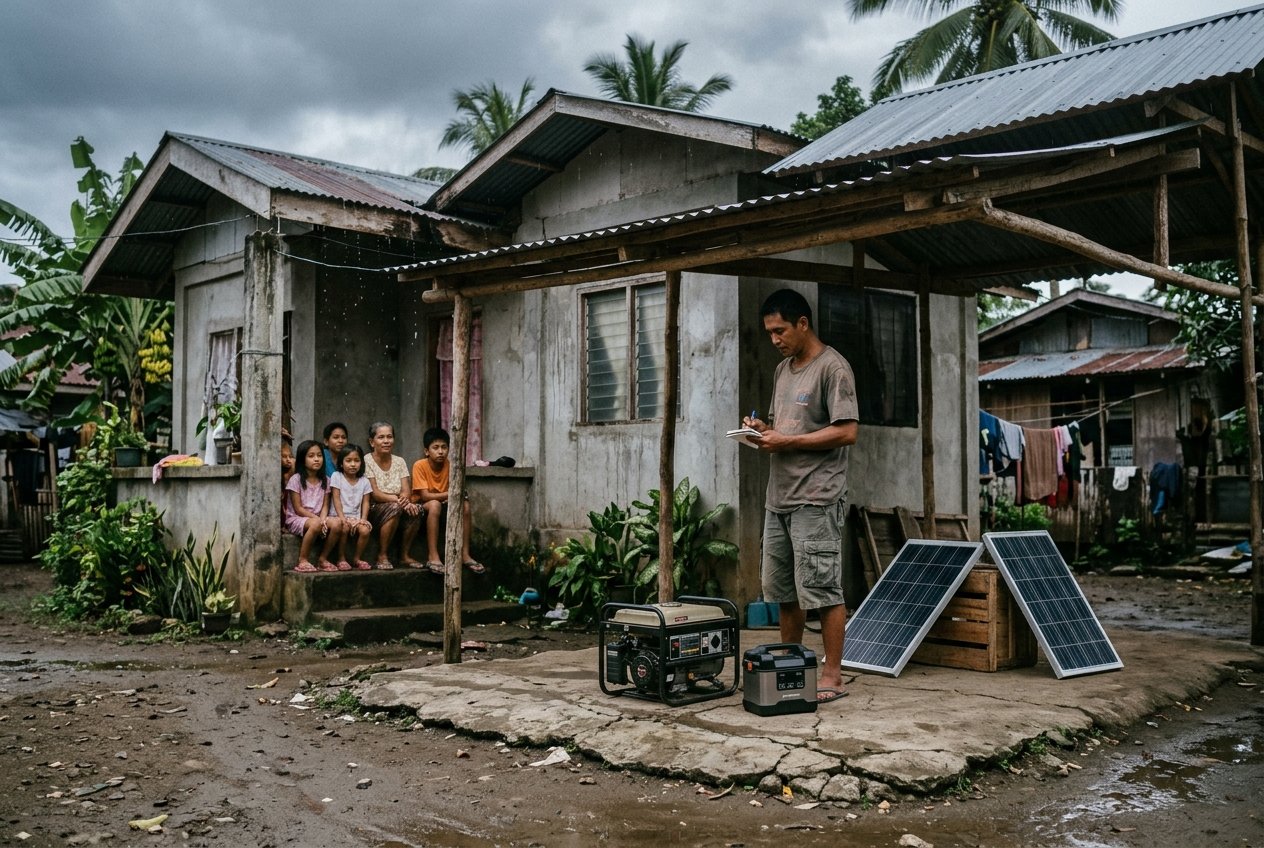
If you’re on a bigger property, often with intermittent grid service already, a generator paired with a smaller battery setup is common. The generator carries heavy, short-burst loads (a water pump, power tools); the battery and inverter quietly carry lights and electronics overnight without the noise and fuel cost of running the generator continuously.
- Run the generator outdoors only, away from windows, doors and any enclosed space, including a garage with the door open. Carbon monoxide builds up fast and has no smell. This rule has no exceptions.
- Let the battery and inverter handle baseline loads (lights, fans, phone charging, the router) around the clock.
- Start the generator only for scheduled, heavier tasks: pumping water to a tank, running a washing machine, recharging the battery bank faster than solar alone would.
- Store fuel in approved containers, away from living areas and any open flame, and check local fire safety guidance from the Bureau of Fire Protection on safe storage amounts for a residential property.
In search-and-rescue we never trusted equipment that needed a perfect startup sequence to work. The same thinking applies here: if starting your generator at night, in the rain, half-asleep, involves more than a few simple steps, you’ll get it wrong exactly when you need it most. Keep the startup process short and the instructions laminated near the unit.
The gear that helps
This part is about sequencing, so I won’t re-walk individual product picks here. If you haven’t settled on your panels, battery, inverter or generator yet, our earlier reviews in the off-grid series cover each component on its own.
What ties them together, whatever tier you’re in, is a transfer switch or clear manual switch-over process (for solar homeowners), a labelled sub-panel or outlet list, and a written, short procedure anyone in the household can follow without you there to explain it.
Common mistakes
- Sizing the inverter to the battery, not to the load. A big battery with a small inverter still can’t start a refrigerator’s compressor. Check the inverter’s surge rating, not just its continuous wattage.
- Skipping the transfer switch to save money. Backfeeding a solar or generator system into main grid lines without proper isolation is dangerous to utility workers and against electrical code. This step always needs a licensed electrician.
- Running a generator in a garage “just for a bit” during rain. Carbon monoxide doesn’t wait for a bit. Outdoors only, every time, no exceptions.
- Never testing the system until the actual outage. A transfer switch that hasn’t been tried in six months is not a tested system, it’s a hope.
- Writing the plan only in your own head. If you’re not home when the brownout hits, the rest of the household needs to know the order of operations too.
The one thing to remember
Build the system around a clear, written order of operations that anyone in the house can follow, and leave the wiring and transfer switch to a licensed electrician. The gear matters, but the sequence is what actually keeps the lights on safely.
Galing Gear shares general preparedness and first aid information based on sources such as the DOH, WHO and the Philippine Red Cross. It is not a diagnosis or prescription, and it does not replace a doctor, nurse, pharmacist or trained responder. We never give medicine doses. Follow the latest advice of the DOH, your local health office and your medicine’s label. In an emergency, call 911. Philippine Red Cross: 143. Mental health crisis (NCMH): 1553 (landline). When unsure, get checked.
Free downloads
From the series: Going Off-Grid: A Filipino Household's Guide to Backup Power