Barangay evacuation order: what to do in 10 minutes
Barangay evacuation order? Learn the critical first 10 minutes: what to grab, who to gather, and where to go before floodwaters cut off your escape.
The situation
The barangay tanod is outside with a megaphone, or your phone buzzes with an LGU advisory: evacuate now. This is the moment every go-bag was packed for, and it never quite feels like you expected. Part of you wants to wait — to see if the water really rises, to finish charging one more device, to check if the neighbors are actually leaving. That hesitation is the single biggest danger in the whole event.
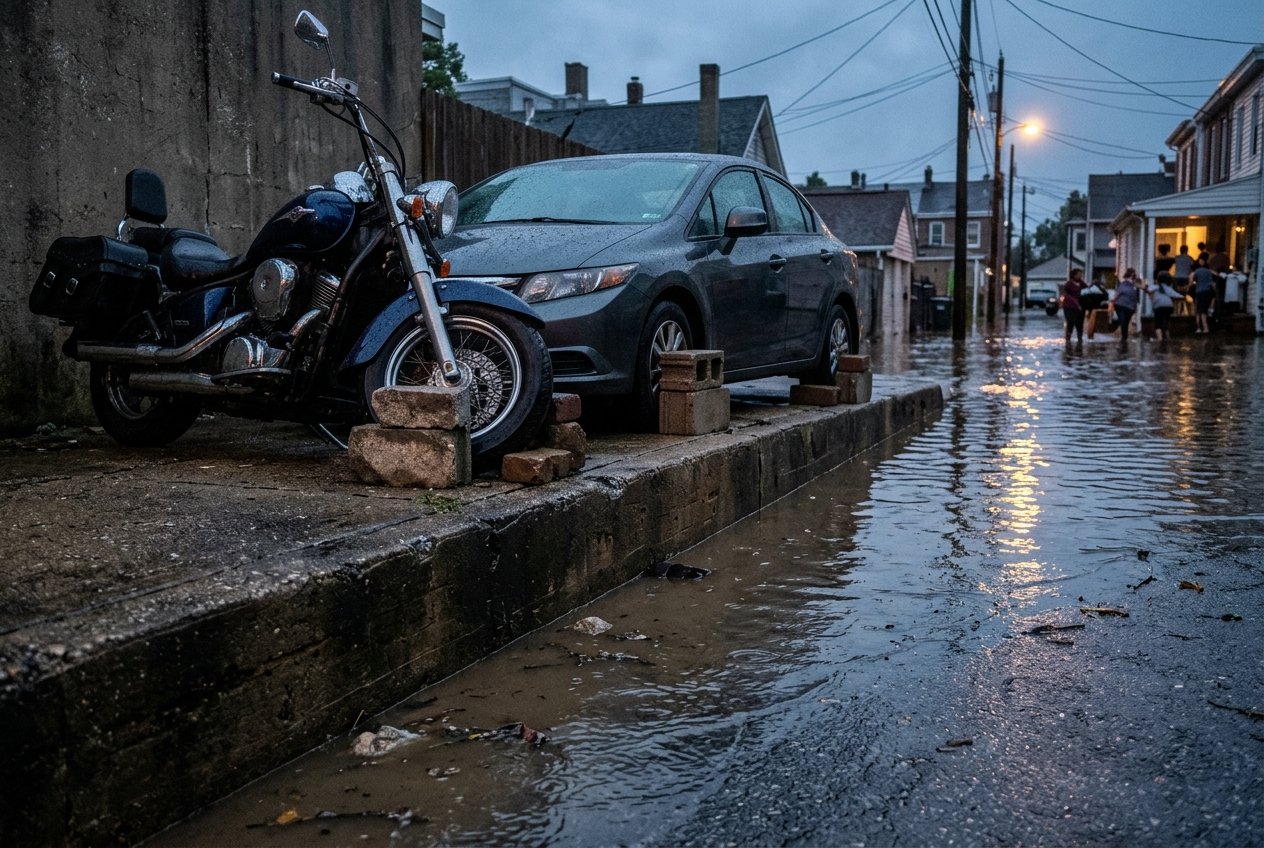
It helps to know that not all evacuation orders are the same. Local disaster councils generally issue a preemptive (precautionary) evacuation first — a call to move while it’s still safe, based on forecast rainfall, dam release schedules, or a rising water level upstream — and reserve a forced evacuation for when the danger is imminent or already arriving, which barangay and police officials can legally enforce, including removing people who refuse to leave. In flood-prone barangays around Metro Manila, Cagayan Valley, Bicol, and the Visayas, that first, preemptive order is usually issued while the roads are still passable and the tricycles are still running. Wait for the water to prove the order right, and you may be leaving by boat instead of on foot, if you can leave at all.
PAGASA issues rainfall and flood advisories, and dam operators coordinate release schedules with local disaster offices, generally giving lead time before the flood peak reaches a community — but that lead time varies by storm, by watershed, and by how fast a dam is filling, so treat the barangay’s order as the trigger, not a formality to double-check against the sky outside your window. If your local government or NDRRMC channel says go, the assumption should be that they know something about timing that you don’t yet see from your doorstep.
This guide is for the ten minutes after that order comes, not for what is in your bag — you have already packed that — and not for what happens when you come home. Just the leaving.
What actually matters
A few things separate a calm, safe evacuation from a chaotic one, and none of them are about having fancier gear.
- Speed of decision, not speed of packing. The families who leave well are the ones who decided days earlier that “when the barangay says go, we go” — no debate, no vote, no waiting to see what the neighbors do.
- Knowing where you’re going before you need to know. An evacuation center is only useful if you know which one is yours and how to get there without crossing water.
- Accounting for every person and animal by name, not by headcount. “We have five” is not the same as “Where is Lola, where is the dog, where is the toddler’s hand.”
- Leaving the house secure but not delaying over it. A locked door and a shut breaker matter — when it’s safe to touch them. A perfectly tidy house does not.
None of this is complicated. It just has to happen in order, under a bit of pressure, which is exactly why it helps to have thought it through beforehand rather than inventing the sequence on the spot.
What to do — and what not to
The first ten minutes
- Turn off the main breaker — but only if it is dry and you can reach it safely. If water has already entered the house, if the breaker panel is wet, or if your feet or hands are wet, do not touch it. Electricity and water together are exactly the combination that kills; leave the power on and get everyone out instead. If it’s genuinely still dry and safely reachable, switching it off takes seconds and removes the risk of live current reaching floodwater later. If a gas stove is on or a fire risk is the concern, shut off the LPG tank valve at the tank, not just the stove knob, before you go.
- Grab the go-bag(s) you already packed. Don’t repack. Don’t add “just one more thing.” If it isn’t already in the bag, it isn’t coming.
- Grab documents only if they aren’t already in the bag — and only the ones in a folder or waterproof pouch you can find in ten seconds. Anything you have to search for stays behind.
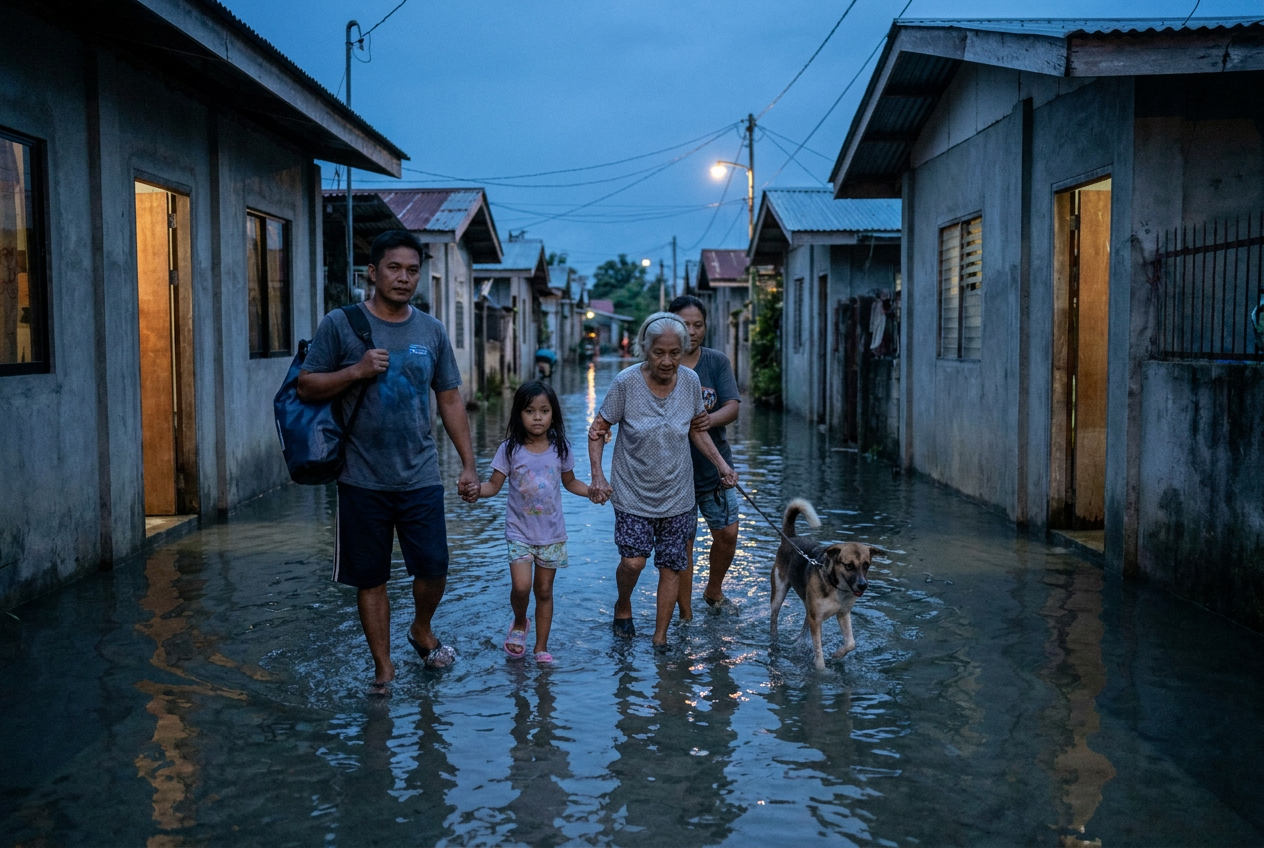
- Physically gather every person. Say each name out loud. Small children get a hand or a wrist tether, not just an instruction to “stay close.” Elderly relatives get an arm, not a shouted reminder to hurry. For a wheelchair user, a bedridden relative, or anyone with a mobility disability, don’t leave the transport plan to the last minute — this is one to arrange with the barangay in advance, before typhoon season, so a tricycle, an assisted-evacuation team, or a specific neighbor is already assigned to help when the order comes.
- Leash and carry pets, and know before this day whether your evacuation center accepts them — many barangay halls and schools have limits or separate holding areas for animals. If pets can’t come inside, a neighbor, relative, or a covered, secure spot near (not in) the center is the fallback — decide this in advance, not on the doorstep.
What to leave
Leave the dishes in the sink. Leave the TV. Leave the “I’ll just quickly” instinct at the door. I have never once heard a family say afterward that they regretted leaving the electronics — but I have heard the opposite regret, about the ten minutes lost looking for a charger while the water kept rising.
Moving safely
- Don’t wade through moving floodwater, even water that looks shin-deep. As little as six inches (about 15 cm) of fast-moving water can knock an adult off their feet, and roughly knee-to-thigh-deep moving water can sweep away a small vehicle — so if you can see the water visibly flowing, treat it as impassable on foot, full stop. Before crossing even calm-looking water, use a stick or pole to check the depth and feel for current ahead of each step; you cannot see open drains, debris, or downed wires underneath. If your street is already flowing, look for a different route or wait for barangay-assisted evacuation rather than walking through it.
- Don’t drive through flooded streets. If water is above the bottom of your wheel hub, do not attempt to cross — the vehicle can stall, float, or the current can push it sideways, and a stalled car in rising water becomes its own emergency.
- Stick to the route the barangay or MMDA has cleared, even if it’s longer than your usual way.
- If a fire, not a flood, is the reason for evacuation, get out and stay out. Once everyone in the household is confirmed outside, never go back inside for anything — not pets, not documents, not the router. This is standard guidance from the Bureau of Fire Protection: trained crews handle re-entry because they have the equipment and training for it, and you do not.
Where to go
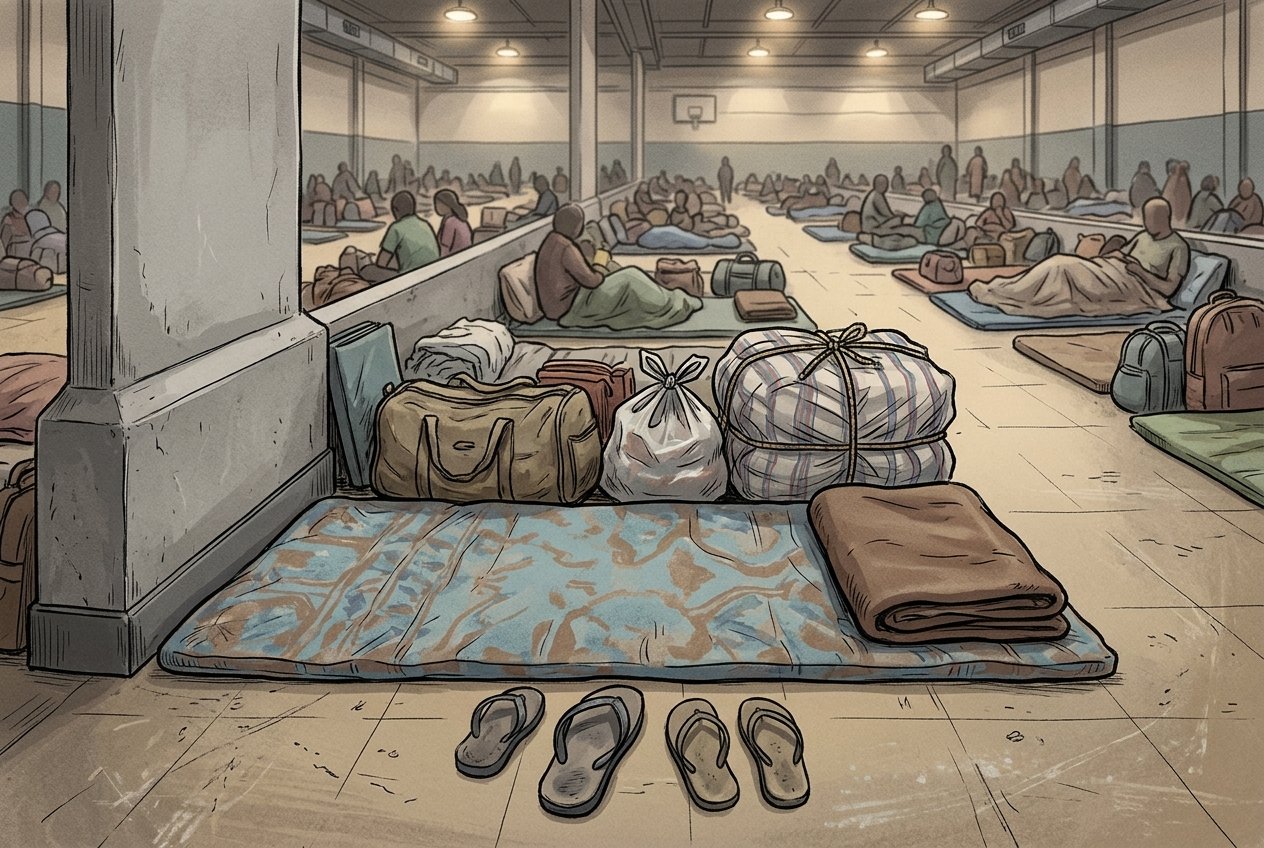
Most barangays direct residents to the barangay hall, a covered court, or the nearest public elementary or high school — these are the default evacuation centers across most of the Philippines, and it is worth confirming yours before typhoon season starts, not during the walk there. If you have a relative on higher ground or in a non-flood-prone barangay nearby, that can be a better option than a crowded center, provided you tell someone — a neighbor, a barangay official — where you’re actually headed. Evacuation lists exist so responders know who is accounted for; disappearing off that list to go to Tita’s house without telling anyone creates real confusion for people trying to help.
The gear that helps
You don’t need new gear for this moment — you need the gear you already packed to be ready to grab without thinking. A few things make that grab genuinely fast:
- A go bag staged by the door, not in a closet or under the bed. If it takes more than a few seconds to reach, it’s in the wrong place.
- A small waterproof document pouch (a basic resealable one runs well under ₱200 on Shopee or Lazada), packed once and never dug into for everyday paperwork, so it’s always complete when you need it.
- A headlamp or flashlight kept clipped to the bag itself, not loose in a drawer — evacuation orders don’t wait for daylight.
- A whistle (often just a few dozen pesos, and usually already on a cheap headlamp or paracord bracelet) and a simple contact card for young children, pinned inside a jacket or backpack, in case the family gets briefly separated in a crowded center.
None of this is exotic. It’s the same list covered in our go bag and flood ready articles — the value here is just having it staged and rehearsed, not sitting in a box you haven’t opened since you bought it.
Common mistakes
- Waiting to “see if it’s really necessary.” By the time the flood confirms the order, your safest routes may already be gone.
- Touching the breaker or fuse box when the area is already wet. If water beat you to the panel, or your hands and feet are wet, that step is no longer worth the risk — leave it and get out.
- Splitting the household to grab extra belongings. Every minute someone spends going back for a phone charger is a minute the rest of the family is standing around exposed, or worse, someone gets left behind in the confusion.
- Not knowing the evacuation center in advance. Figuring out “where do we even go” while the barangay tanod is waiting outside costs precious minutes you don’t have.
- Not pre-arranging help for a household member with limited mobility. Assuming “someone will help” in the moment is not a plan; asking the barangay in advance is.
- Leaving pets loose or unaccounted for, either forgetting them or assuming they’ll be fine to swim out later. Decide their plan ahead of time.
- Assuming a text to family covers it. Tell an actual person — a neighbor, a relative, a barangay official — where you’re going, especially if you’re not heading to the official center.
The one thing to remember
No bag replaces leaving early, and no amount of preparation replaces the decision, made calmly in advance, that when the order comes, you go — without debate, without one more errand, without waiting for the water to convince you. Everything else in this guide is just detail around that one decision. Make it before typhoon season starts, tell your household what it looks like in practice, and when the barangay captain’s voice comes down the street, the only thing left to do is walk out the door you already know how to reach.