Leptospirosis and Philippine floods: what it is, how it spreads, and how to protect your family
A plain-language explainer on leptospirosis — what the bacteria actually is, how it gets into your body through floodwater, and what an ordinary household can do before, during, and after habagat season to stay safe.
This article is archived: some details may be out of date.
The situation
Every habagat season, somewhere between the first flooded street and the last, someone in the neighborhood ends up in the hospital with leptospirosis. It happens quietly enough that a lot of families never really learn what it is — just that “baha” and “lepto” get mentioned in the same breath, and that you’re supposed to be careful. I want to slow that down and actually explain it, because understanding the thing you’re avoiding makes you much better at avoiding it.
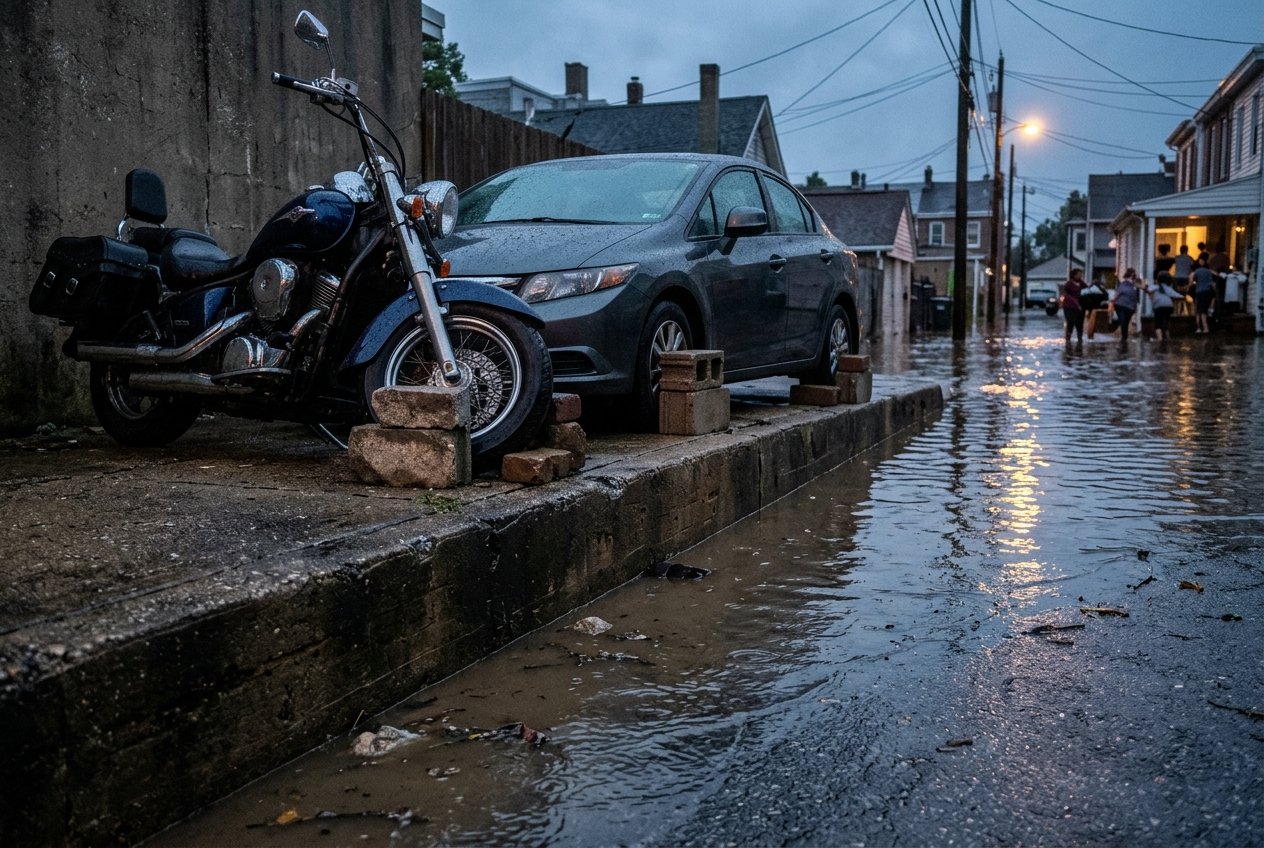
Leptospirosis is a bacterial infection. The bacteria — called Leptospira — live in the kidneys of infected animals, most commonly rats, but also dogs, cattle, and other mammals. Those animals shed the bacteria in their urine, often without looking sick themselves. In normal dry conditions that urine breaks down in the soil and stops being much of a problem. But when floodwater rises, it picks up everything sitting in gutters, canals, ditches, and yards — including old rat urine sitting in mud and soil — and carries it into the water you and your kids end up wading through.
This is why lepto is a common flood-season disease here. We have a huge rat population living close to people, a lot of low-lying, poorly drained barangays, and a wet season that reliably puts ankle- to waist-deep water on the street for hours or days at a time. Put those three things together and you get a predictable, recurring risk every single year, not a freak event.
What actually matters
A few facts make the real difference in how seriously to take this, and how to act on it.
It gets in through breaks in your skin, not by being near dirty water. The bacteria enter through cuts, scrapes, blisters, insect bites — even ones you don’t notice — and through the soft membranes of your eyes, nose, and mouth. Prolonged soaking of unbroken skin, especially on feet that have been in wet shoes or socks for hours, can also let it through, because skin left wet for a long time softens and becomes easier to penetrate. This is why the barefoot kid pushing a stalled tricycle through floodwater, and the adult who wades in with an unnoticed heel blister, are both at real risk, while someone standing well back from the water is not.
It does not spread from person to person. You cannot catch leptospirosis from a family member who has it — not by sharing a room, a meal, or caring for them. The only source is contact with contaminated water, mud, or soil, or in rarer cases, direct contact with an infected animal. That matters practically: if someone in your household gets sick, you don’t need to isolate them from the rest of the family the way you would with a contagious illness. You do need to figure out where the exposure happened and keep everyone else away from it.
Timing is everything for treatment. Leptospirosis starts out looking like a lot of other things — fever, headache, muscle aches, sometimes chills — which is exactly why people brush it off as a cold or exhaustion after days of flood cleanup. Caught early, it is treatable. Left alone, it can get serious. The gap between “I think it’s just tiredness” and “I should see a doctor” is the single most important decision point in the whole disease.
What to do (and what not to)
Before the water rises, if you know a typhoon or sustained heavy rain is coming, this is worth doing:
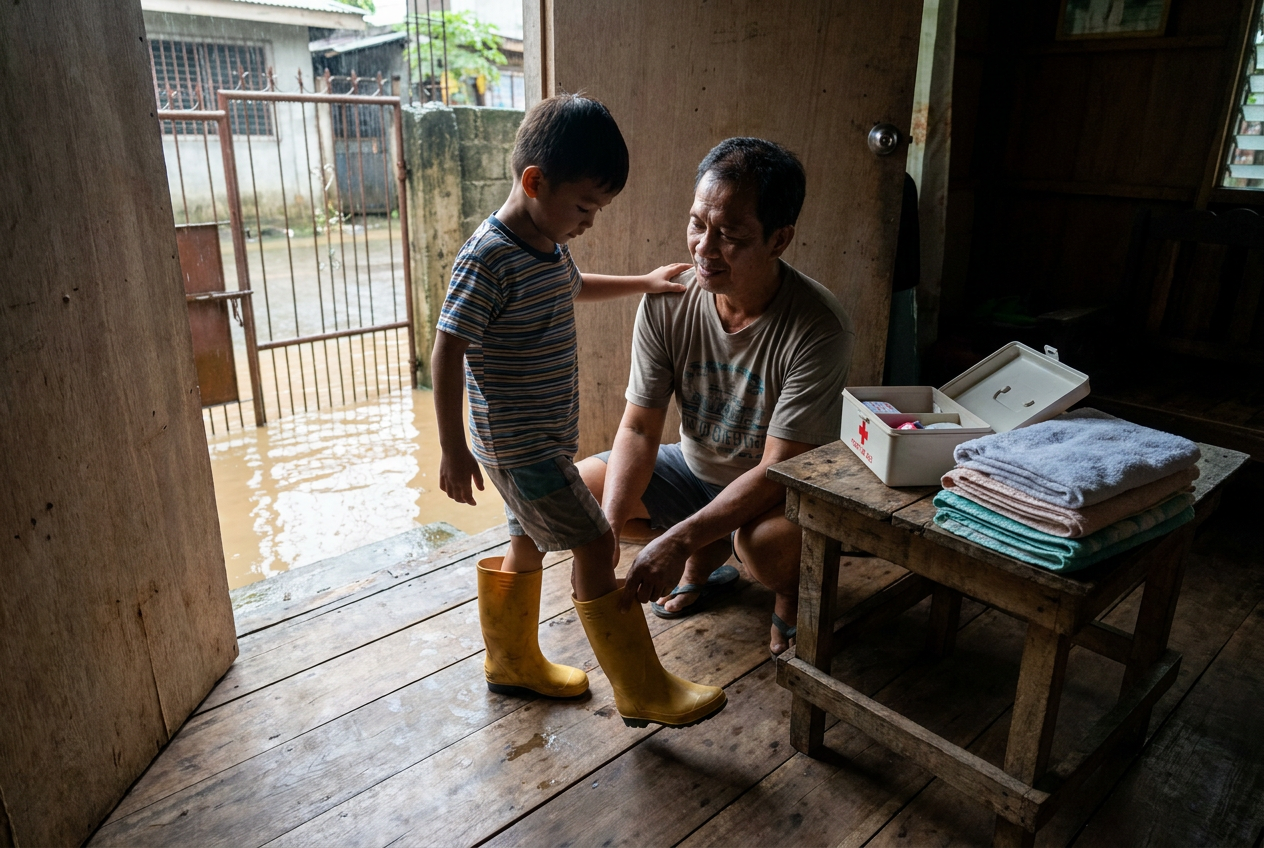
- Keep rubber boots for every household member, including kids, somewhere you can actually reach them — not buried in a storage box on top of a cabinet.
- Cover any existing cuts, scrapes, or wounds with a fully waterproof dressing before anyone goes out into standing water. If the dressing gets soaked through, it isn’t doing its job anymore.
- Talk to your household about avoiding wading when there’s another option. I know this sounds obvious, but in practice people wade constantly during floods — to check on a tricycle, to move a car, to walk to the sari-sari store — when there was a drier route or a reason to just wait it out.
During and right after flood exposure:
- Wash exposed skin thoroughly with soap and clean water as soon as you’re able to, paying attention to feet, ankles, and hands.
- Don’t touch your eyes, nose, or mouth with hands that have been in floodwater until you’ve washed them.
- Dry your feet properly and change out of wet socks and shoes rather than staying in them for hours — this is a small habit that meaningfully lowers risk.
- Keep children out of floodwater play. It looks harmless and it is one of the more common ways kids get exposed.
If you or someone in your household has already waded through floodwater, wash with soap and clean water as soon as you can, and see a doctor within 24–48 hours of the exposure, even if you feel fine. Don’t take leftover antibiotics or any other medicine on your own; let the doctor decide.
If anyone develops fever, body aches, headache, or feels unusually unwell in the days after wading through floodwater, the right move is a prompt visit to your barangay health center or a hospital — not waiting it out, and not self-medicating. Leptospirosis can look mild for the first day or two and then escalate, and it’s genuinely not something to diagnose or treat yourself with whatever is left over in the medicine cabinet. Tell the health worker plainly that you were in floodwater — it changes what they check for.
The gear that helps
None of this needs to be complicated or expensive, and none of it replaces good judgment about when to just stay indoors. A few categories worth having ready before flood season starts:
- Rubber boots, tall enough to matter, for every family member who might need to step outside during flooding. Cheap ones from the palengke are fine as long as they actually keep water out.
- A basic first-aid kit with waterproof dressings, kept somewhere dry and easy to grab — covering cuts before exposure is a small habit that does real work. Our first aid guides go into building one properly.
- A stocked go bag with soap, alcohol, and a change of dry clothes and footwear, so you’re not stuck in wet shoes for hours after wading. See our go bag guide if you haven’t put one together yet.
- Clean water for washing and drinking kept separate from whatever comes out of the tap during a flood, since municipal supply can get compromised too — our clean water guide covers storage and treatment.
Common mistakes
The biggest one I see is treating “I only got wet for a minute” as automatically safe. It doesn’t take long exposure to get bacteria into a cut you didn’t know you had. A second common mistake is waiting for symptoms to look dramatic before seeking care — by the time that happens, the illness has usually had a few days’ head start. And a third is self-medicating with leftover antibiotics from a previous illness, which isn’t the same treatment, isn’t at the right dose for this, and can mask symptoms without addressing the actual infection — all the more reason to let a doctor or barangay health worker make that call.
For current advisories, local case activity, or specific guidance for your area, the Department of Health and your barangay health office are the right places to check — they publish updated guidance as typhoon season develops, and your barangay will know what’s circulating locally in a way a national bulletin can’t.
The one thing to remember
Leptospirosis is one of the more predictable costs of living in a flood-prone country — cases rise every year during typhoon season, not because anything unusual is happening, but because the same conditions that bring the rain also bring the rats’ waste into the water on your street. That predictability is actually useful: it means the same handful of habits — boots on, cuts covered, wash thoroughly, don’t wait to see a doctor if you feel off — genuinely do most of the work of keeping your family safe. No amount of gear replaces good judgment about when to just stay out of the water in the first place, but for the times you can’t avoid it, knowing what you’re actually dealing with is what lets you take it seriously without panicking about it.
Galing Gear shares general preparedness and first aid information based on sources such as the DOH, WHO and the Philippine Red Cross. It is not a diagnosis or prescription, and it does not replace a doctor, nurse, pharmacist or trained responder. We never give medicine doses. Follow the latest advice of the DOH, your local health office and your medicine’s label. In an emergency, call 911. Philippine Red Cross: 143. Mental health crisis (NCMH): 1553 (landline). When unsure, get checked.