20 best long-term storage foods for Filipino households
20 long-term storage foods every Filipino household needs, plus 3 storage tips each to survive heat, humidity, pests, and floods.
What you’ll be able to do — and why it matters
By the end of this guide you will have a practical, peso-conscious plan for stocking 20 foods that actually survive Philippine pantry conditions — heat, humidity, ants, weevils, and the occasional brownout or flood scare — and you will know exactly how to container, place, and rotate each one.
This is not about panic-buying. Typhoon season in the Philippines is predictable even if the storms themselves are not — PAGASA tracks it every year — and a household that already has two or three weeks of shelf-stable food on hand doesn’t have to join the pre-typhoon supermarket rush, doesn’t lose anything if the barangay floods for a few days, and doesn’t waste money on food that spoils quietly in the back of a cabinet before it’s ever needed.
I am not going to repeat what we’ve already covered elsewhere. If you want a deep dive into rice specifically — sacks vs. bins, weevil prevention, humidity — that’s in our rice storage guide. If you want help building a rotating ration system from scratch, see our ration pack guide. This article is the wide list: 20 everyday foods, three tips each, so you can jump straight to what’s in your kitchen right now.
What you need
Nothing exotic. Most of what makes food last longer in a Filipino home is not the food itself but what you put it in and where you put it:
- Food-grade airtight containers — square or round plastic bins with rubber-gasket lids, sold cheaply in supermarkets, palengke plastic stalls, and Lazada/Shopee kitchenware stores. Look for “food-grade” on the label; not all cheap containers are.
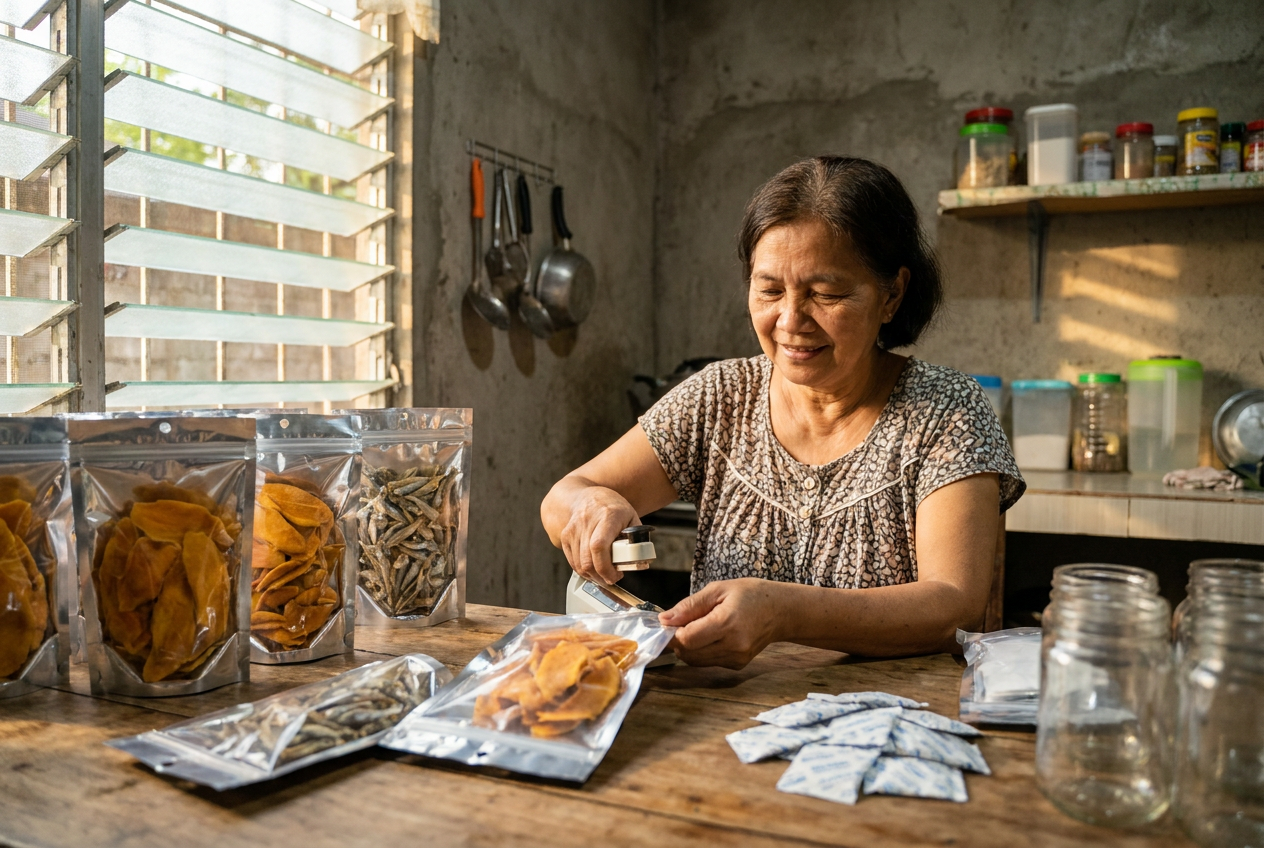
- Resealable zip bags or a basic vacuum sealer — a ₱600–₱1,500 vacuum sealer from Shopee pays for itself over a year if you buy dried goods in bulk.
- Glass jars with rubber-seal lids — good for anything you’ll open and close often, since glass doesn’t hold odors or absorb oil the way plastic can.
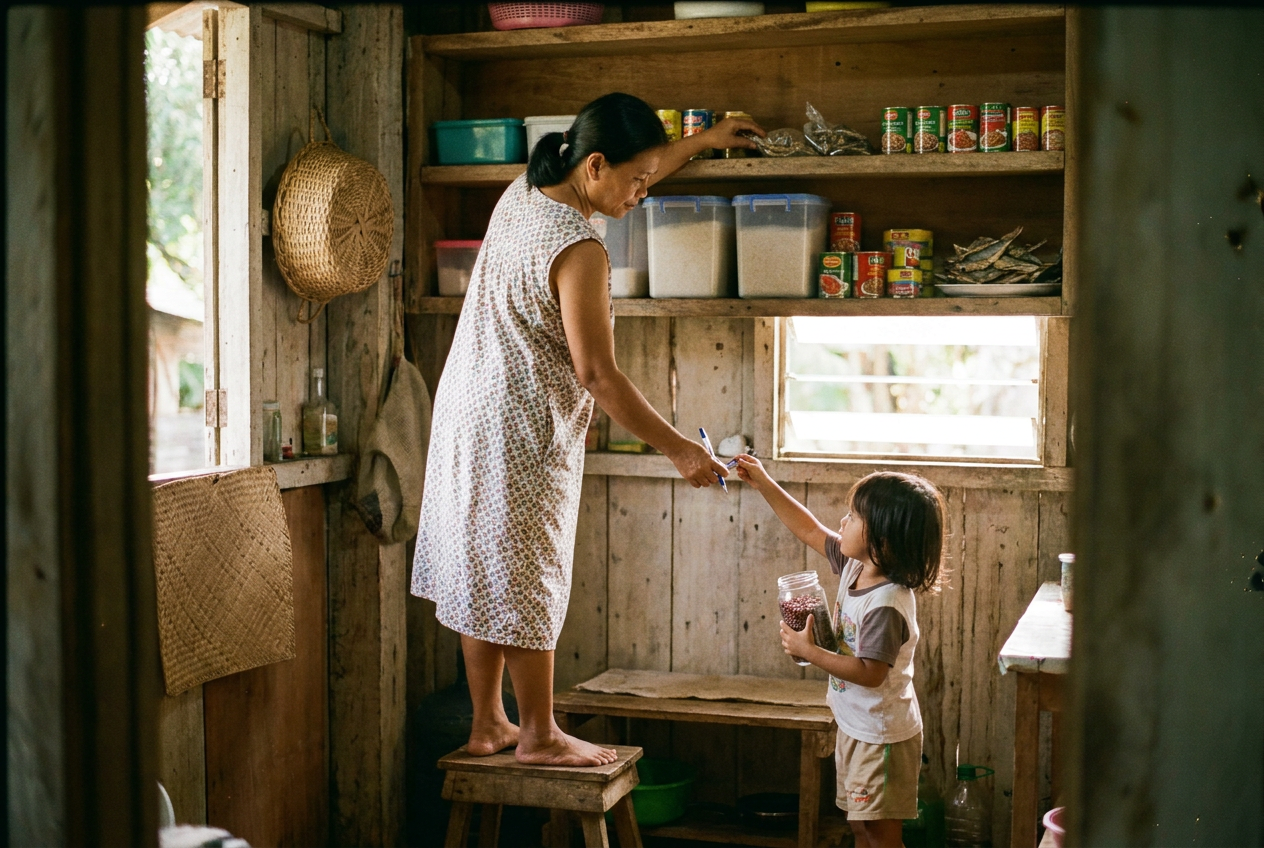
- Elevated shelving — even a simple wooden or plastic rack that gets your stash a foot off the floor matters more than people think, especially on ground floors in flood-prone barangays.
- Masking tape and a marker — for dating everything. This one habit does more for food safety than any container you buy.
None of this needs to be bought all at once. Build it the way most households actually can: a container or two every payday, until the shelf is covered.
The method — 20 foods, three tips each
1. Rice
- Store in a food-grade plastic bin with a tight lid, not the original sack, once opened.
- Keep on an elevated shelf, away from the stove and away from any wall that gets damp during heavy rain.
- For the full method — layering, weevil prevention, how much to keep on hand — see our rice storage guide.
2. Mongo beans (munggo)
- Keep in a glass jar or airtight container after transferring from its plastic bag.
- Store in a dark cabinet — light speeds up the loss of what little moisture keeps beans from turning brittle and slow-cooking.
- Check every few months for small holes in the beans, a sign of weevils; freezing a new batch for 48 hours before storing kills eggs before they hatch.
3. Canned sardines
- Leave in the original can; it’s already an airtight, food-safe container designed for years of storage.
- Store in a cool cabinet away from the stove — cans stored near heat degrade faster than the label date suggests.
- Rotate oldest-first and check for bulging or dented cans before buying; never stock a can that’s already swollen.
4. Corned beef
- Original can is fine; no need to repackage unless it’s already dented.
- Store off the floor, ideally in a cabinet rather than directly on a concrete floor where moisture collects.
- Wipe cans dry if they’ve been near a flood line, and rotate stock so the oldest cans get eaten first, not left for “someday.”
5. Instant noodles
- Keep in original wrapping; if you buy loose or bulk packs, transfer to a large resealable container so mice or ants can’t get at the seasoning packets.
- Store in a dry cabinet away from any leak-prone pipe — noodles absorb moisture and go stale fast once the pack is compromised.
- Check expiry dates every few months; noodles are cheap enough to rotate often rather than hoard past their date.
6. Dried fish (tuyo/daing)
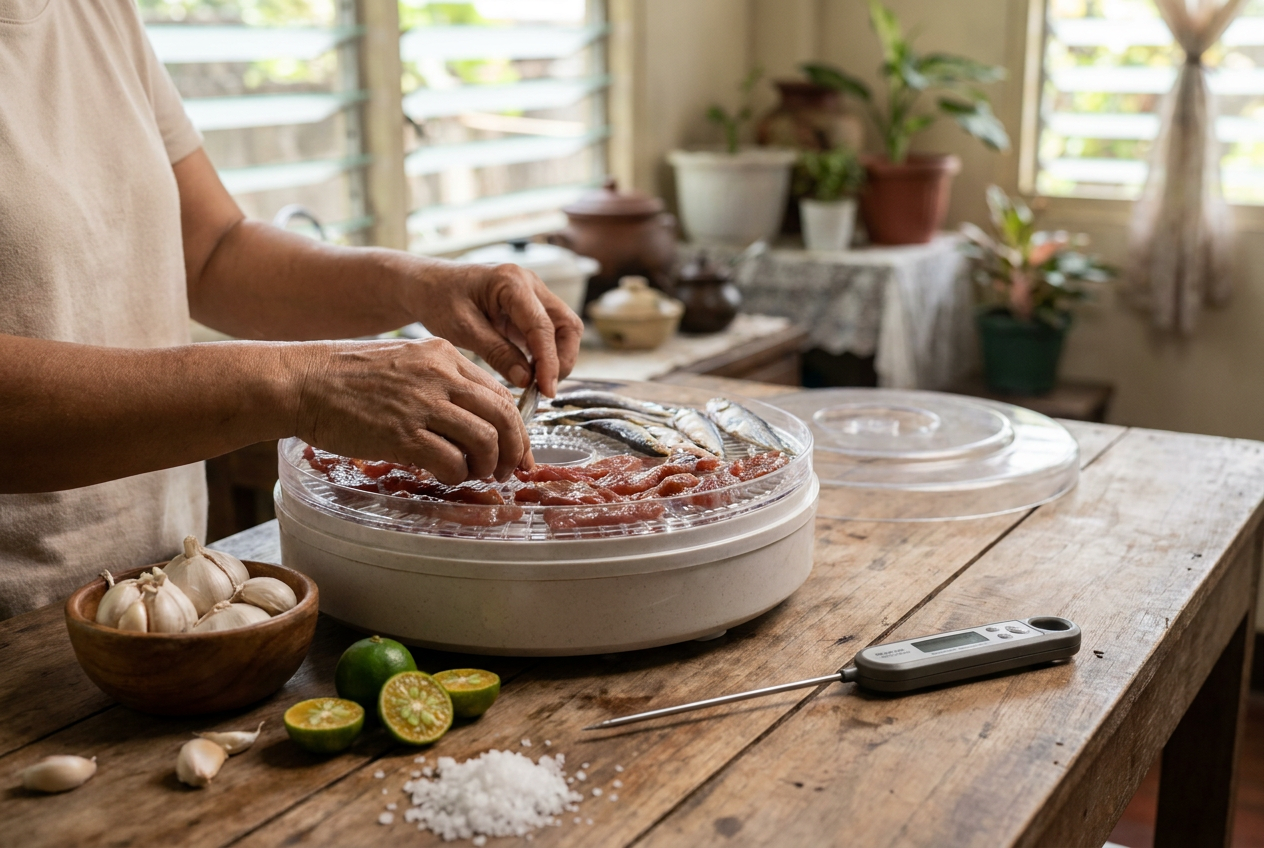
- Store in a vacuum-sealed bag or a tightly closed container lined with paper towels to absorb any residual oil.
- Keep somewhere cool and dry, ideally not in the same cabinet as strong-smelling items — dried fish carries odor both ways.
- Check monthly for rancid smell or mold; buy in smaller batches if your household can’t finish a stock within two to three months.
7. Coffee (instant or ground)
- Keep in an airtight container or glass jar once opened; the foil sachet alone isn’t enough after the seal is broken.
- Store away from the stove and away from sunlight — heat and light both flatten the flavor quickly.
- Buy what you’ll actually drink in two to three months; coffee doesn’t spoil dangerously, but it does go flat and stops being the small comfort it’s meant to be during a long outage.
8. Sugar
- Store in an airtight container; sugar left in its paper bag will harden into a block the moment humidity gets in.
- Keep on a dry shelf, not on the floor or near a window where condensation forms.
- If it does clump, it’s still usable — just break it up. Watch instead for tiny ants, which sugar attracts faster than almost anything else in the pantry.
9. Salt
- Store in any airtight container; salt is forgiving and doesn’t need much protection.
- Keep it anywhere dry — it’s one of the few pantry items unbothered by heat.
- No real rotation needed; salt doesn’t spoil. Just keep it away from moisture so it doesn’t cake.
10. Cooking oil
- Keep in its original sealed bottle until opened; after opening, make sure the cap seals tightly.
- Store away from the stove and out of direct sunlight — heat and light both push oil toward rancidity faster.
- Smell before using if it’s been stored a long time; rancid oil smells noticeably “off” and should be discarded, not risked.
11. Powdered milk
- Store in an airtight container after opening; the foil pouch alone lets in humidity once cut.
- Keep in a cool, dry cabinet, never near the stove or a window that gets afternoon sun.
- Use a dry spoon every time — introducing any moisture into the container shortens its life dramatically and can spoil the whole batch.
12. Canned meat loaf / luncheon meat
- Original can is sufficient; no repackaging needed while sealed.
- Store off the ground, ideally on a shelf rather than a floor-level box, especially in homes that have flooded before.
- Rotate oldest-first, and after opening, transfer leftovers to a glass container in the refrigerator rather than leaving it in the can.
13. Crackers
- Store in an airtight container or resealable bag once the box is opened — the paper box alone doesn’t keep moisture or pests out.
- Keep in a dry cabinet away from cooking steam.
- Check for softness or a stale smell; crackers that have gone soft from humidity are a sign your storage container needs a better seal.
14. Oats
- Store in an airtight container or vacuum-sealed bag after opening.
- Keep in a dry, dark cabinet — oats absorb moisture and odors from nearby food easily.
- Check occasionally for small bugs (pantry moths are common in oats); if you see fine webbing, discard the batch rather than risk the rest of your pantry.
15. Dried beans (other than mongo — kidney, white beans, etc.)
- Store in a glass jar or food-grade container with a tight lid.
- Keep in a dark, dry cabinet away from the stove.
- Buy in quantities your household will use within six months to a year; older dried beans take much longer to soften and cook evenly.
16. Bouillon cubes / seasoning cubes
- Keep in the original box or transfer to a small airtight container if the box has been opened and resealed poorly.
- Store in a dry cabinet; humidity turns cubes soft and eventually crumbly.
- Check foil wrappers for tears — a torn wrapper means that cube should be used soon, not saved for later.
17. Vinegar
- Original glass or plastic bottle is fine; make sure the cap is tightly closed after each use.
- Store away from direct sunlight, though vinegar is otherwise one of the least fussy pantry items.
- Vinegar essentially doesn’t spoil in the danger sense; discoloration or sediment over a long time is cosmetic, not usually a safety issue, but replace if it smells notably different from fresh.
18. Soy sauce
- Keep in its original bottle, tightly capped.
- Store in a cool cabinet, not on a shelf that gets direct afternoon sun.
- Check the cap seal periodically; a bottle that’s been opened for over a year is worth replacing even if it looks fine, since flavor fades well before safety becomes a concern.
19. Canned fruit or vegetables
- Leave in the original can; it’s already built for multi-year storage.
- Store on a shelf, not directly on a concrete floor, and away from any spot prone to dampness.
- Rotate oldest-first and inspect cans for rust or bulging before storing a new batch.
20. Peanut butter (or other nut spreads)
- Original jar is fine; make sure the lid seals fully after each use.
- Store in a cool cabinet away from the stove — heat can cause oil separation faster and shorten shelf life.
- Stir well if oil separates; this is normal for natural varieties. Discard if you see any mold on the surface rather than scraping it off.
Variations & conditions
A small city condo and a provincial house on stilts need different versions of the same plan. In a small Quezon City kitchen with no extra storage, prioritize compact airtight containers that stack, and keep your stash in the highest cabinet you have rather than under the sink. In a low-lying or flood-prone barangay, elevation matters more than container quality — even a good airtight bin is useless if floodwater reaches the shelf it sits on, so the first move is always to get food up, not just sealed up. If your area loses power for days at a time during a storm, this list is deliberately built around foods that need no refrigeration; nothing here depends on a working fridge to stay safe.
Common mistakes
The most common mistake I see is treating “long shelf life” as “no maintenance needed.” Canned goods still get old, oil still turns rancid, and sugar still clumps if nobody checks the cabinet for six months. The second most common mistake is storing everything at floor level because that’s where the space is — in a country where a heavy monsoon can put water inside a ground floor overnight, floor storage is the single easiest thing to fix for free, just by moving a shelf or a rack. The third is buying in bulk without a rotation habit; a big sack of something cheap is only a bargain if you actually eat it before it goes bad.
How to practise safely
Building this stash isn’t a one-day errand — treat it like a habit, not a project. Pick one payday a month to check dates, top up what’s low, and physically move older stock to the front so it gets used first. Do a five-minute pest check each time you’re in the cabinet anyway — small ants around the sugar or fine webbing in the oats is much easier to deal with early than after it’s spread. And once a year, before typhoon season really sets in, walk through the full list above and ask honestly: if the barangay flooded tomorrow and the power went out for a week, would this shelf get my family through it comfortably? If the answer is no, that’s the gap to close first — not with panic, just with the next payday’s shopping list.