Rice storage for emergencies: the complete Filipino guide
How to store rice long-term at home for typhoon or earthquake prep. Compare containers, airtight storage, and vacuum sealing so your rice reserve lasts.
The situation
When the water starts rising in your street, or the shaking finally stops and you are standing in the doorway deciding whether it is safe to go back inside, rice is not the thing on your mind. It should be, though, because rice is the thing that gets your household through the week after. It cooks with almost nothing — a stove, a fire, sometimes just hot water and time — and it is the one food most Filipino families already keep in quantity. The problem is that most of us store it the way our mothers did, in whatever sack or tub is handy, and never think about it again until we scoop up a cup of it and find it has weevils in it, or it smells wrong, or it has gone soft and clumped in the corner of the container.
There are two separate reasons to get rice storage right, and it is worth naming both. The first is readiness. After a typhoon, PAGASA warnings can mean days without market access, and after a strong earthquake, roads and bridges near a barangay can be blocked long enough that resupply is not a same-day thing. A properly stored rice reserve is one of the simplest, cheapest forms of household insurance you can build. The second reason is plainer and less dramatic: buying rice in bulk from a wet market or a wholesaler is usually cheaper per kilo, and it means fewer trips out. But bulk buying only pays off if the rice survives long enough to be eaten. Twenty-five kilos of rice that goes buggy in three months is not a bargain. It is money and effort thrown away.
This guide is the overview. It will not walk you through the fine details of any one storage method — each of the three main methods has its own dedicated article for that. What this guide will do is help you understand how rice actually spoils, what separates good storage from bad, and which method (or combination of methods) fits your household.
What actually matters
Rice spoils for a small number of predictable reasons, and almost every storage mistake comes down to ignoring one of them.
Moisture is the biggest threat. Rice that gets damp — from humid air, condensation, or a container that was not fully dry when filled — turns soft, clumps together, and eventually molds. This is the fastest way to lose a whole batch.
Oxygen feeds insect eggs that may already be in the grain and speeds up the slow oxidation that eventually makes rice taste stale or “off.” Less air in the container generally means longer life.
Heat speeds up every other process. A container stored near a stove, a window that gets full sun, or a hot metal roof will age its contents faster than one kept in a cool, shaded corner.
Pests, mainly weevils, are the most visible problem. Weevil eggs can already be present in rice when you buy it, invisible until they hatch weeks later. Once a batch is infested, the insects spread quickly to anything stored nearby.
Light and strong odors matter too, but they are minor next to the four above. Rice does absorb smells from its surroundings, which is one more reason not to store it next to chemicals, fuel, or cleaning products — beyond the obvious safety issue of keeping food away from those things at all.
White rice versus brown rice matters more than most people realize. White rice has had the bran and germ removed, which is exactly the part of the grain that contains oil. Brown rice keeps that oil, which is good for nutrition but bad for shelf life — the oil goes rancid over time, and rancid rice smells and tastes noticeably off even if it has not spoiled in any dangerous way. If long-term storage is the goal, white rice is the more forgiving choice. Brown rice can still be stored well, but expect a shorter window and check it more often.
As rough guidance only — not a guarantee, since conditions vary a lot from one household to the next — white rice stored well (cool, dry, airtight, off the floor) can reasonably last on the order of years, while the same rice stored poorly (open sacks, humid storage areas, heat exposure) may only be good for a matter of months before quality drops. Brown rice under the same good conditions typically has a noticeably shorter safe window than white rice, because of that oil in the bran. Treat these as planning ranges, not promises — always judge the rice in front of you by how it looks, smells, and feels, not by a date alone.
What to do (and what not to)
Do:
- Check rice before storing it — look for existing insects, off smells, or dampness in the sack.
- Freeze new stock briefly before long-term storage. A short spell in the freezer kills insect eggs that may already be in the grain, before they get a chance to hatch inside your storage container.
- Label and date every container. Six months from now you will not remember which tub is oldest.
- Rotate stock first-in, first-out. Use the oldest rice first, always.
- Keep containers off the floor and away from walls, to reduce moisture contact and make it harder for pests to find a way in.
- Use only food-safe containers, rated for food contact — not repurposed paint buckets or containers of unknown origin.
Don’t:
- Don’t store rice near chemicals, fuel, gasoline, or anything with a strong smell. Rice absorbs odors, and some of these are outright contamination risks.
- Don’t assume a sealed sack from the market is pest-free. Treat every new batch as if it might carry eggs.
- Don’t mix old and new stock in the same container without knowing which is which.
- Don’t trust a container just because it “looks” airtight. If you can smell rice from outside it, air is getting in.
The three storage methods, at a glance
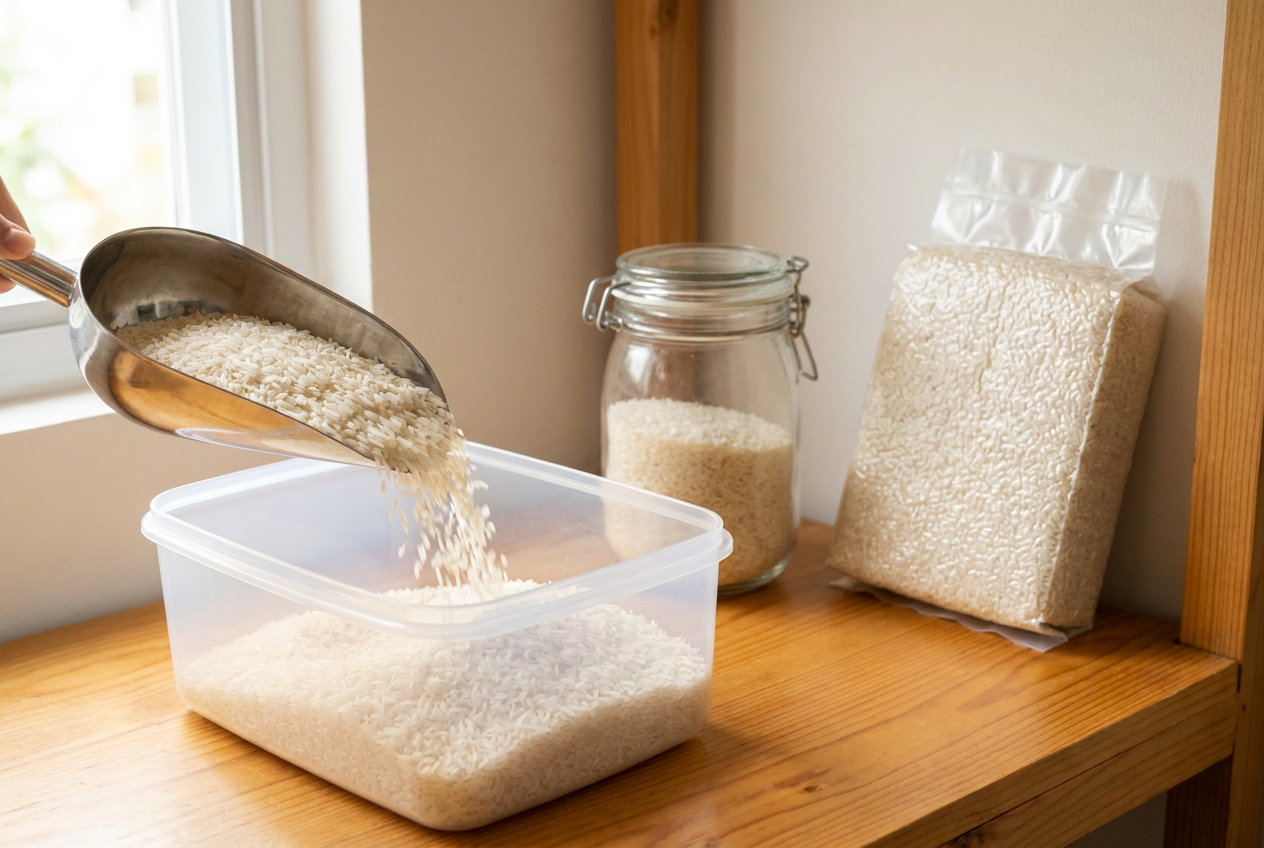
Bulk rice storage in 25kg food-safe containers is the classic approach for a household reserve. You buy a full sack at wholesale price and transfer it into one or two large, food-safe bins with tight lids. It suits families who want a straightforward emergency stockpile and don’t mind the upfront cost and the floor space a 25kg container takes up. The trade-off is that every time you open it to scoop out rice for the week, you let air and moisture back in — so it is better suited to being a reserve you dip into occasionally than a jar you open daily.
Storing rice in airtight containers on a shelf is the everyday method most households already half-do, just usually without the airtight part. Smaller containers — a few kilos each — sit on a kitchen shelf and get refilled from the bulk supply as needed. This suits daily cooking and gives easy access without exposing your whole reserve to air every time. The trade-off is that these containers protect against moisture and pests reasonably well, but not as thoroughly as vacuum sealing, and they still need regular checking.
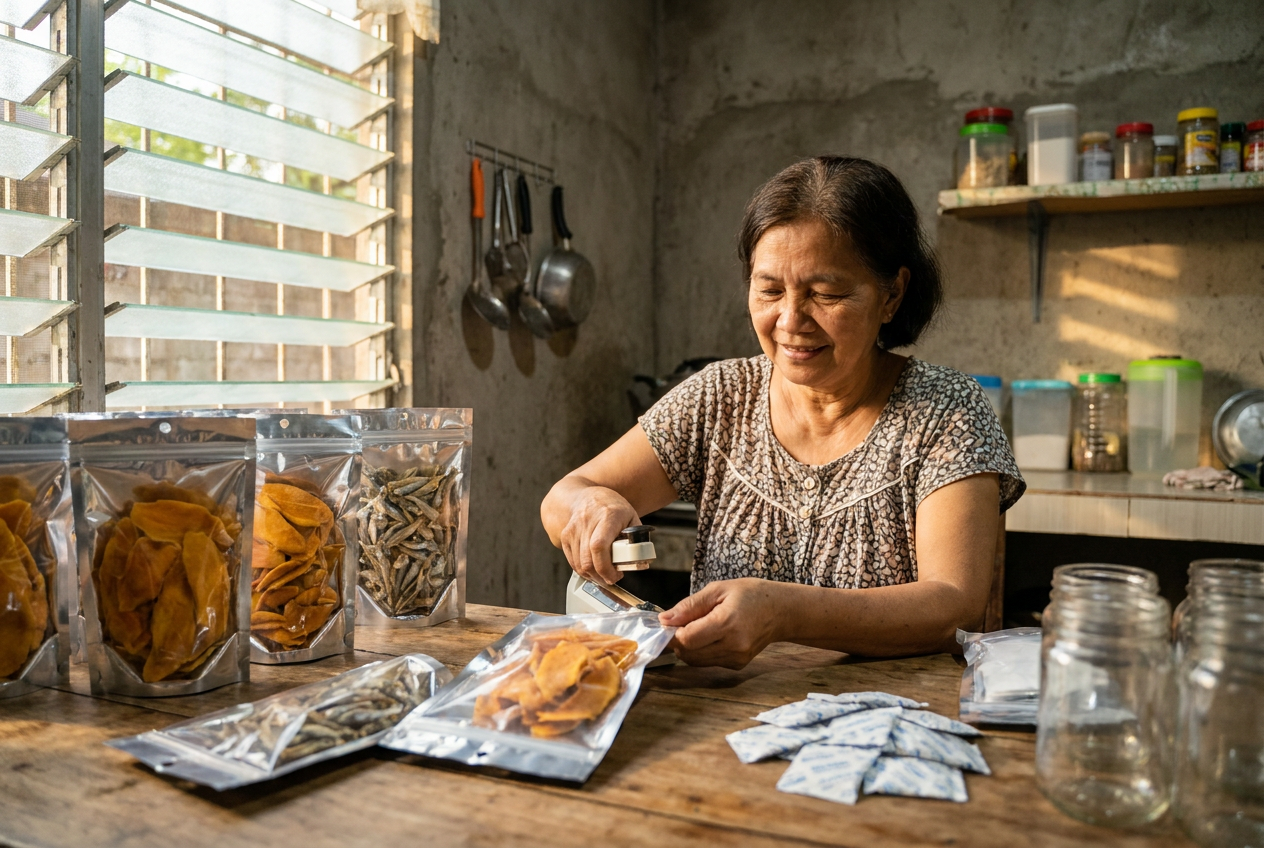
Vacuum-sealing rice for long-term storage takes the air out entirely, which is the single biggest lever you have over shelf life and insect risk. This suits smaller portions meant to last a long time without being touched — think go-bag rations or a deep, rarely-opened long-term stockpile. The trade-off is that it takes more equipment and effort per batch, and once a bag is opened, that portion needs to be used or re-stored some other way — you can’t just reseal a vacuum bag with a spoon and expect the same protection.
Comparing the three methods
| Bulk 25kg container | Airtight shelf containers | Vacuum-sealed bags | |
|---|---|---|---|
| Cost | Low per kilo, moderate upfront for the container | Low, spread over several small containers | Moderate — needs a sealer and bags/rolls |
| Space needed | High — one large bin | Low to moderate, several small containers | Low — flat, stackable packs |
| Expected shelf life | Good, but drops each time it’s opened | Moderate | Longest, especially unopened |
| Day-to-day ease | Awkward for daily scooping | Easy, built for daily use | Not for daily use — meant to stay sealed |
| Pest resistance | Good if lid seals well | Fair — depends on container quality | Best — least air, least entry point |
| Best use case | Emergency reserve | Daily use | Long-term stockpile / go-bag |
Combining methods
Most households do not need to pick just one. A sensible setup looks like this: a bulk container as the emergency reserve that you rarely touch, a smaller airtight container on the shelf that you refill from the bulk supply for actual daily cooking, and a few vacuum-sealed packs set aside specifically for a go-bag or for the back of the stockpile you genuinely do not plan to open for a year or more. Each layer covers a different need — daily convenience, medium-term reserve, and true long-term insurance — and none of them has to do all the work alone.
How to tell if stored rice has gone bad
Trust your senses before you trust the calendar. Rice that has gone bad usually shows one or more of these signs: a musty or rancid smell when you open the container, visible discoloration or dark spots on the grains, live insects or larvae moving in the rice, or clumping and stickiness that suggests moisture has gotten in.
If you see or smell any of that, discard the affected rice. Do not try to salvage it by rinsing, drying in the sun, or picking out the bad-looking grains — moisture damage and pest infestation are rarely limited to what you can see, and the cost of getting sick from spoiled rice is far higher than the cost of the rice itself. When in doubt, throw it out and start the next batch properly.
The one thing to remember
Rice storage is not complicated, but it punishes shortcuts. Keep it dry, keep it sealed, keep the air out as much as you reasonably can, and rotate what you have so nothing sits forgotten for years. Do that, and a sack of rice bought cheap from a wholesaler becomes real security — the kind that is still good to eat whether the emergency is a typhoon warning from PAGASA or just a month where you’d rather not go back to the wet market yet.