Dried, canned, or frozen: best PH emergency food stash
Dehydrated vs canned vs frozen food: which survives Philippine brownouts and typhoons best? A practical cost, weight, and shelf-life comparison.
The situation
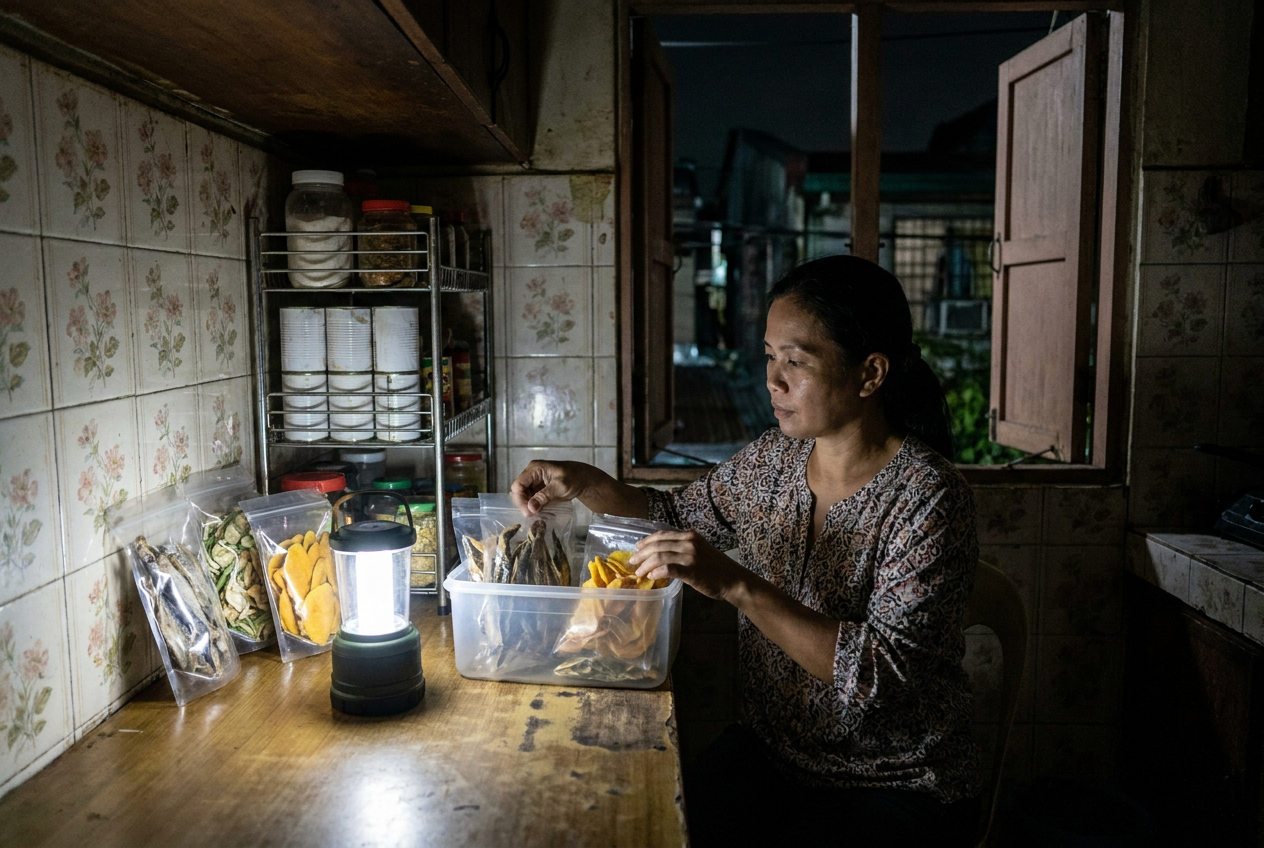
Every household in this country ends up building some kind of emergency food stash, usually without calling it that. It starts with a shelf of canned goods bought after a bad flood, or a chest freezer stocked before a typhoon, “just in case.” That instinct is right. But the how matters more than most people think, because a brownout, a flood, or three days of impassable roads will expose the weak points in whatever system you picked.
I have sat through outages that ran past the 48-hour mark, the kind where you stop checking your phone for the “power restored” update because you already know the transformer needs a truck and a crew, not a technician on a motorbike. In that kind of stretch, the food that keeps you calm is not always the food you assumed would.
This is not a how-to on drying your own mango or malunggay yet — that comes later. This is the decision in front of you right now: canned, frozen, plain pantry staples, or dehydrated. Each has a real place. But if you are building a reserve meant to survive a real Philippine wet season, one of these options quietly does more work than the rest.
What actually matters
Four things decide whether an emergency food reserve actually helps you, or just sits there until it goes bad:
Shelf life without power. A brownout is not an inconvenience here — it is the default condition during a typhoon. Anything that depends on a working freezer is a bet against PAGASA’s own storm forecasts. Dehydrated food does not care if the grid is down for six hours or six days. Canned goods also do not need power, which is their real strength. Frozen food needs power constantly, and once it thaws you are on a clock, not a plan.
Weight and space. A go-bag has a limit, and canned goods hit that limit fast. A can of corned beef is mostly water and steel. A cup of dehydrated vegetables weighs a fraction of its fresh equivalent and packs flat. If your family ever has to leave on foot — to a barangay evacuation center, up several flights when the elevator’s out, or just further from a flooded ground floor — every gram in that bag is either helping you move or slowing you down.
Cost per actual meal. Canned goods look cheap per piece but a can rarely makes a full meal for a family on its own. Dehydrated staples rehydrate to several times their dry weight, so the real cost per meal is often lower than it looks on the shelf sticker, even though the upfront ₱ per pack seems higher.
What it tastes like on day three. This is the part people underrate. Emergency food is not eaten once — it is eaten meal after meal while everyone is already tired, out of routine, and possibly out of clean water for washing dishes. Canned goods get monotonous fast. Frozen food, once the power is back, is genuinely good — but that is exactly the period when it is least reliable. Dehydrated meals, if chosen well, hold flavor and variety better than people expect, because drying keeps more of a vegetable’s identity than the retort-canning process does.
What to do (and what not to)
Do build a mixed reserve — this is not a call to throw out your canned goods. Canned sardines and corned beef are genuinely good at what they do: no prep, no water needed to cook, and they survive rough handling. Keep some.
Do treat your freezer as a short-term convenience, not a reserve. It is excellent for the first few hours of an outage, when things are still cold and you are eating down what you already have. It is a poor foundation for day two onward. If your barangay has a habit of long outages during typhoon season, do not build your food security around anything that needs to stay cold.
Do think about your go-bag and your home pantry as two different problems. At home, weight barely matters — a sack of rice earns its space. In a bag you might actually carry out of a flooded street, weight and pack volume matter as much as calories. This is where dehydrated food quietly wins: it is the only category that is light enough for the bag and shelf-stable enough for the pantry.
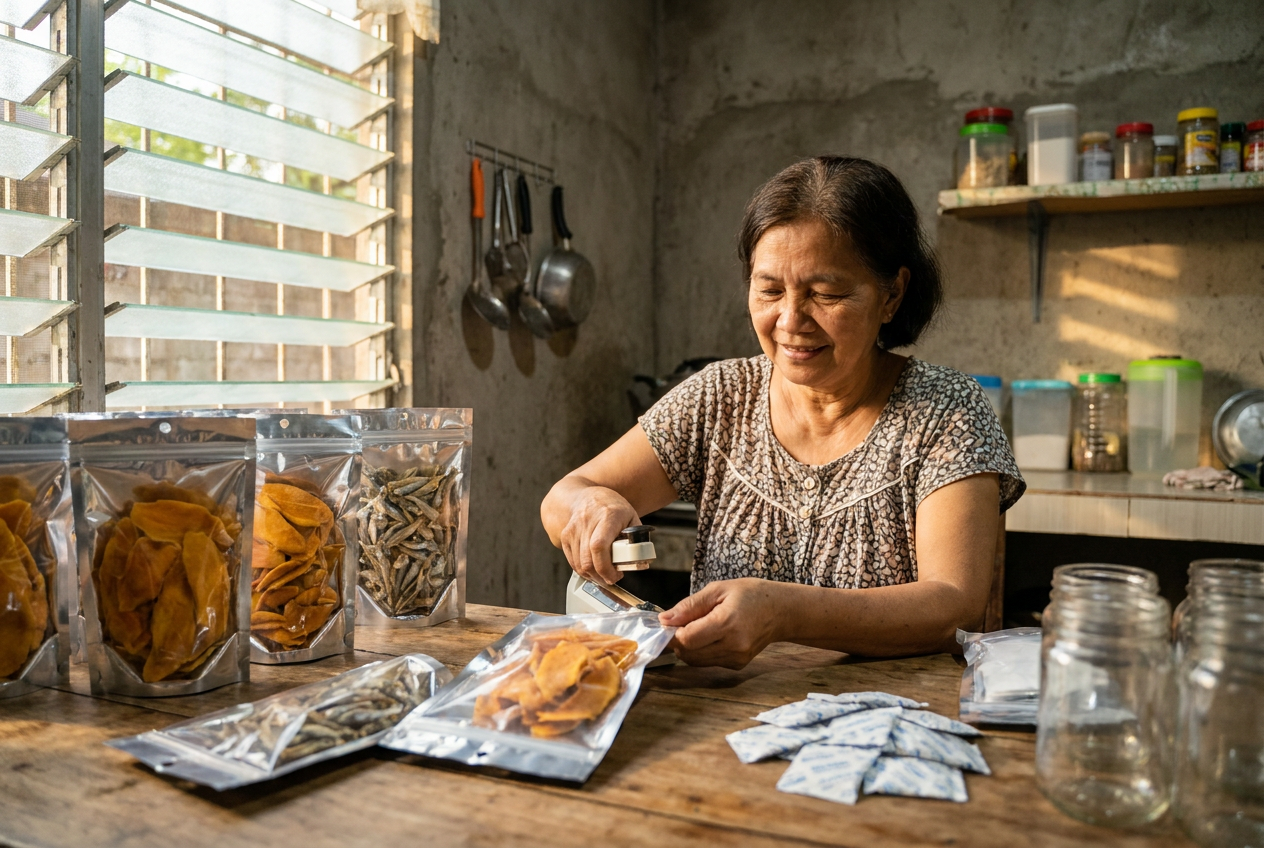
Don’t assume “no refrigeration needed” means “no attention needed.” Dehydrated food still needs to be kept dry and sealed — humidity is the actual enemy here, and our climate supplies plenty of it. A bag left open in a humid closet will disappoint you exactly when you need it not to.
Don’t over-rely on any single category. In search-and-rescue work, we never trusted one system to carry the whole plan — redundancy is what got people through when the first option failed. The same logic applies to a home food reserve: rice plus canned goods plus a dehydrated stash covers you across more failure modes than any one of them alone.
The gear that helps
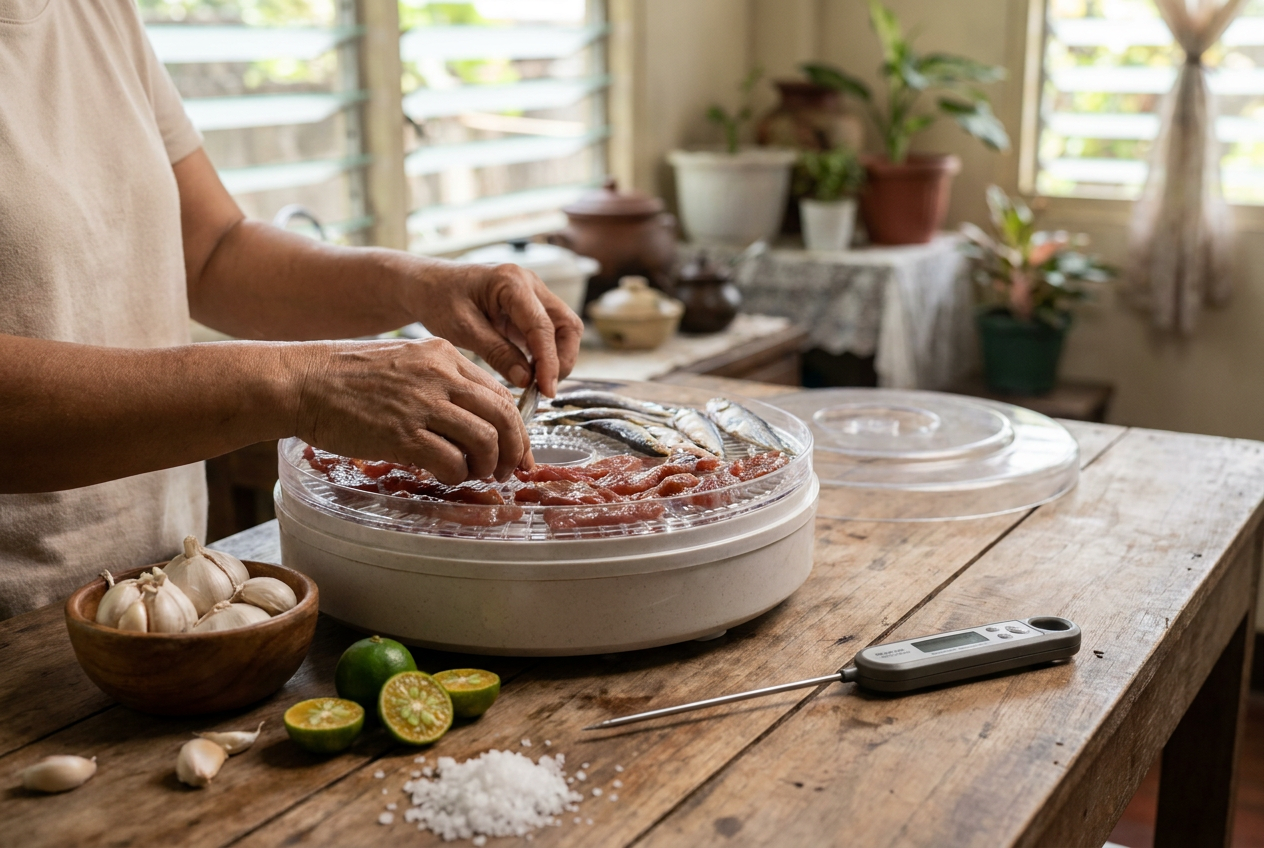
You do not need a dehydrator to start — that is a later step, and a legitimate hobby in its own right once you get into it. To begin, look at:
- Commercially dehydrated or freeze-dried meal packs — the fastest way to get variety and long shelf life into a go bag without touching a kitchen appliance.
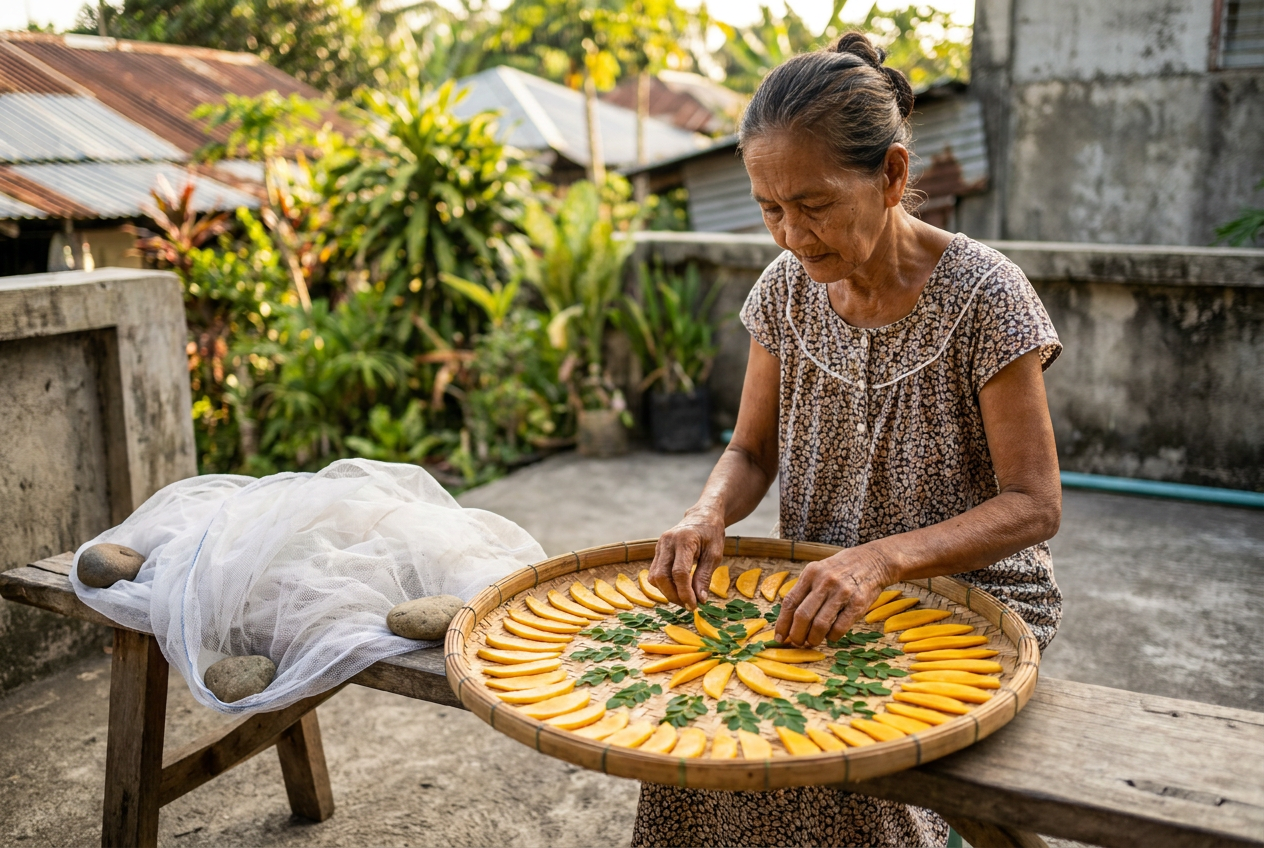
- Dried staples from the wet market and sari-sari store — dried fish (daing), dried mangoes, monggo, and dried malunggay are already part of most Filipino pantries and count as dehydrated reserve food, often at very local prices.
- Vacuum-seal bags or heavy resealable bags with a moisture absorber — the difference between a reserve that lasts a year and one that molds by August.
- A basic food-safe container system for the pantry, separate from your grab-and-go bag stock, so you’re not raiding your go-bag stash for regular cooking.
We’ll cover actual drying technique, food safety, and a proper gear rundown in a later article. For now, the goal is just deciding where dehydrated food fits in your plan.
Common mistakes
Buying a chest freezer as the main emergency plan. It is a great appliance. It is a bad disaster plan on its own, because it fails exactly when disasters cause outages.
Stockpiling only canned goods “because that’s what everyone does.” Canned goods are heavy, bulky, and monotonous by day three. Fine as one layer, not the whole plan.
Treating dried sari-sari store snacks as a reserve without checking the seal and date. A torn plastic pack of dried fish that has been sitting near a humid storeroom is not the same as one sealed properly at home.
Forgetting water. Dehydrated food needs water to rehydrate. A great dried-food stash paired with no backup water supply is only half a plan — check your flood ready preparations alongside this.
Building the stash once and never rotating it. Even long shelf-life food benefits from a “first in, first out” habit, or you will discover expired stock during the actual emergency, which is the worst possible time to find out.
The one thing to remember
No single food category gets your family through a typhoon alone — that was true with canned goods before dehydrated food became easy to buy, and it is still true now. What changes with dehydrated food is the math: less weight, less space, no need for power, and a shelf life that does not care whether the outage lasts six hours or six days. Start by adding it as one more layer, sourced as easily as your nearest wet market or sari-sari store, and let the rest of your pantry do what it already does well.