A Galing Gear Series

Dehydrating at Home: A Filipino Family's Guide to Long-Term Food Storage

A practical, budget-focused series for households who want to turn market produce into shelf-stable emergency food using nothing more exotic than a sun, an oven, or an entry-level dehydrator.

5
parts
5
live now
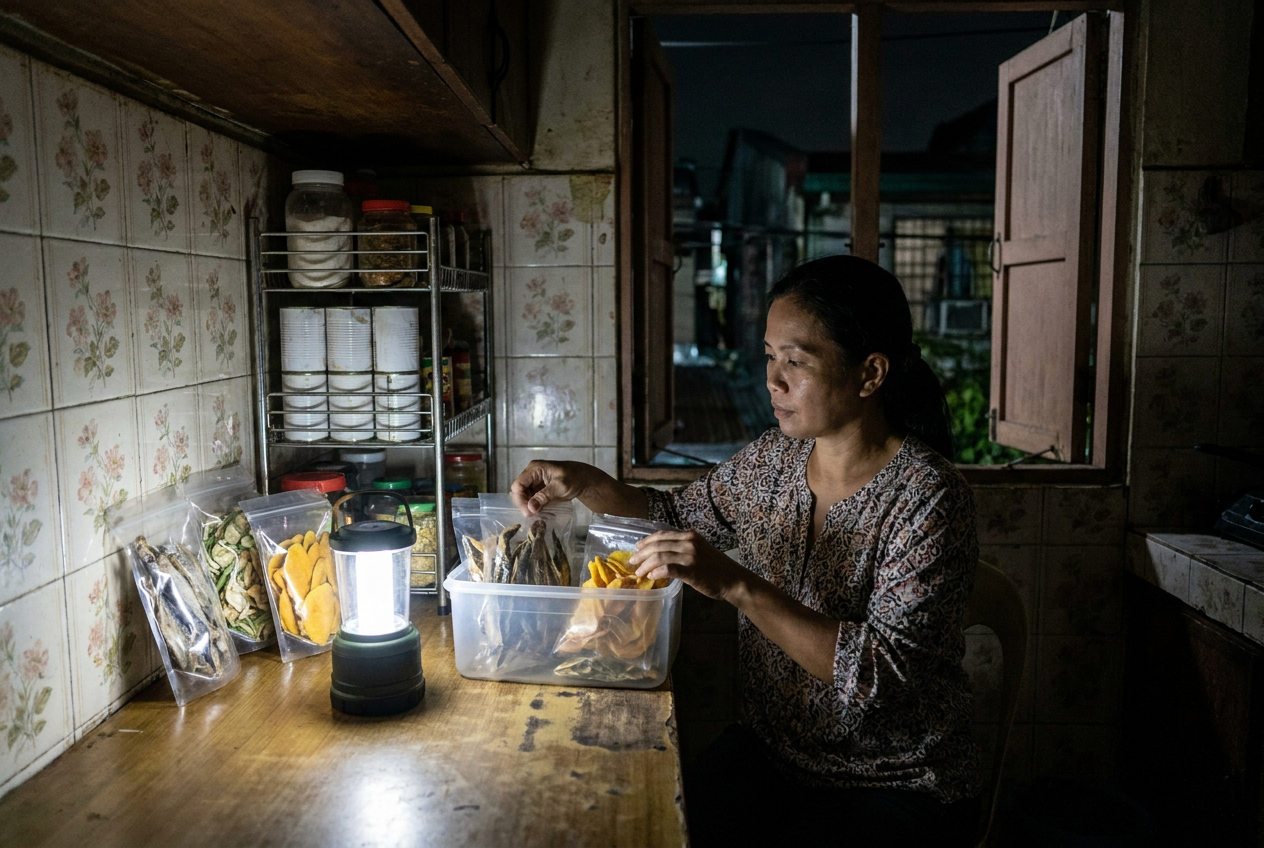
Dried, canned, or frozen: best PH emergency food stashAnchor
Part 1 · start hereDried, canned, or frozen: best PH emergency food stash
Series progress5 of 5 published
1
Anchor · start here

Dried, canned, or frozen: best PH emergency food stash

Dehydrated vs canned vs frozen food: which survives Philippine brownouts and typhoons best? A practical cost, weight, and shelf-life comparison.

Live
2
Part 2

Sun-drying and oven-drying fruits and vegetables at home

Dry mango, banana, malunggay & chili without a dehydrator. Sun-drying and oven-drying steps for shelf-stable pantry food any Filipino home can do.

Live
3
Part 3

Safe meat and fish drying for emergency food stores

Safe tapa, tuyo, and jerky drying for Filipino emergency food stores — exact salt ratios, temperature targets, and humidity risks to avoid.

Live
4
Part 4

Mylar bags vs jars: storing dried food in the Philippines

Store dried food the right way vs PH humidity: mylar bags, oxygen absorbers, vacuum sealing, and safe drying temps for meat and fish.

Live
5
Part 5

Rotate your dried food stash: a FIFO system for typhoon prep

A simple FIFO system to rotate dried food stock in small Filipino kitchens, so nothing expires unnoticed before the next typhoon season hits.

Live